Clean and running right
A unit like this is moving plenty of air and the vane opens fully to spread it across the room. Nothing on the housing blocks airflow, so it can hold 68 to 70 all winter without working harder than it has to.
 I'm done searching
Send the form, and lining up the mini split tune-up stops being yours to chase.
Set it to heat and leave it between 68 and 70. A mini split working through an Illinois winter does better holding steady than cycling up and down while you're out and cranking it back up when you're home. Most of these units lose real output once it's below freezing outside, and some switch to backup heat strip or rely on your gas furnace to carry the coldest stretches. That's normal. It's not a sign the unit is broken.
What wears on a mini split here isn't one cold night, it's the whole run from November through March. The outdoor unit works to pull heat from air that keeps getting colder. The indoor coil, the filters, the drain line, all of it is working longer and harder than it did in October. A unit that goes into winter with a dirty filter or a coil that's already behind on airflow will run worse the whole season, not just on the worst days.
Electric heat costs more here than gas, and a mini split running inefficiently on top of that shows up fast on the bill. Maintenance before the cold sets in, or partway through if it's already underway, is what keeps the unit pulling its weight instead of falling back on backup heat more than it needs to.
If you want someone to look at it, send the request and let that be the end of your part in it. A local contractor who services mini splits through winters like this one gets matched to your job, someone who already knows what tends to go wrong in an Illinois cold snap and what doesn't. One contractor, not a handful calling at once. From there it's on them to reach out.
You've got the thermostat app open again, trying to figure out the right number. Your gas furnace probably still kicks on for backup, and you don't want the mini split working against it or running up the power bill chasing a setting that's too high for what Illinois winters actually do to these units.
A mini split pulls heat from outside air, and that gets harder the colder it gets. Once the temperature outside drops into the teens or lower, which happens plenty through an Illinois winter, the unit has to work harder for the same degree of warmth inside. Setting it high and letting it swing back down when you leave just makes it start that climb over again later, pulling more power to get back to temperature. If your home heats with gas and the mini split is backup or supplemental, a steady 68 to 70 keeps it running efficiently without fighting the furnace or driving up what you pay for electricity, which isn't cheap here to begin with.
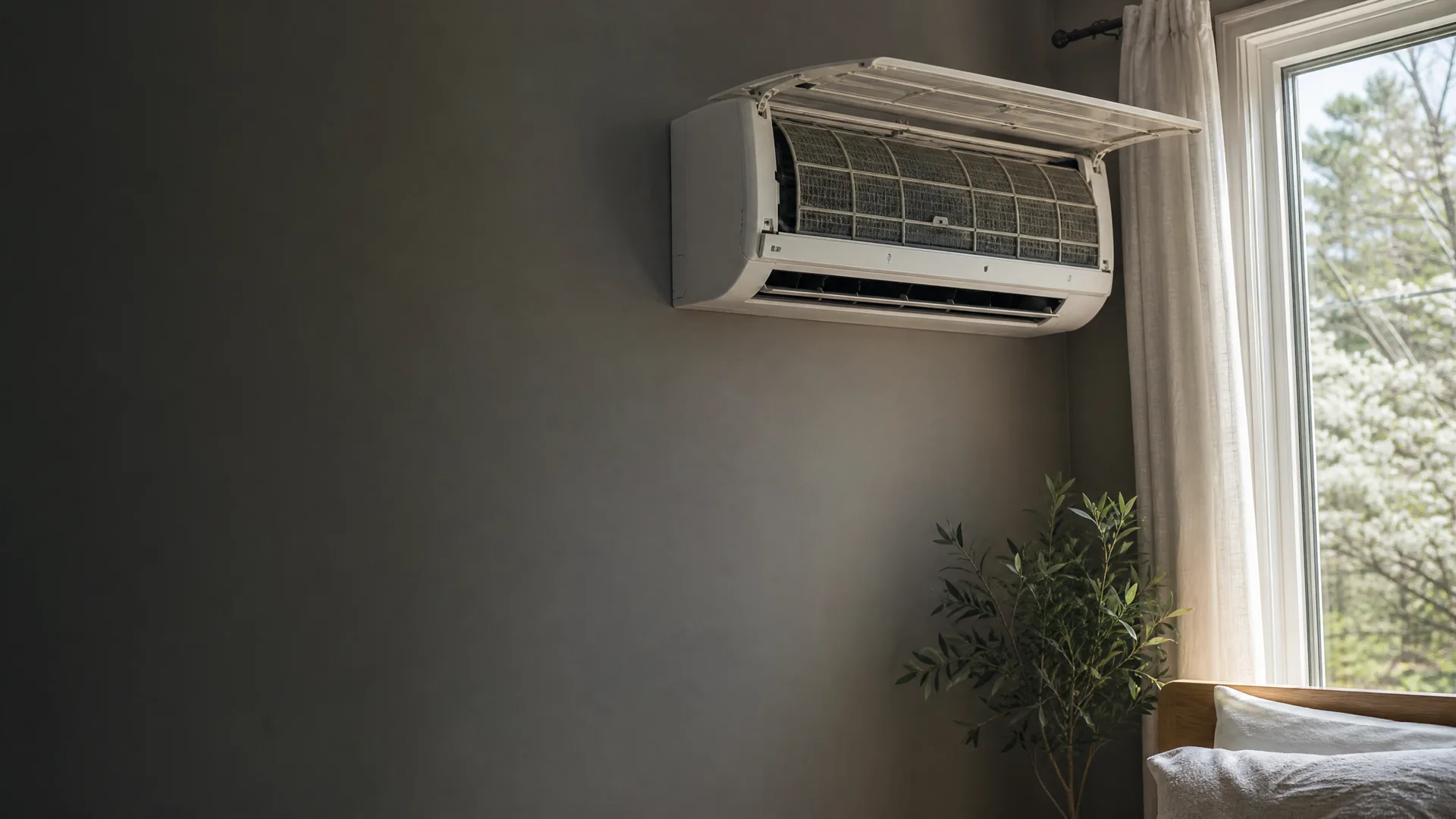
Spring finally came warm enough to open the bedroom up and look. You pop the front cover off the indoor unit and the filter screen behind it is grey with a winter's worth of dust, matted down in a way you can feel before you even touch it. That's four months of the heat pump pulling air through this, ever since you set it and stopped thinking about it back in December. You wipe a thumb across it and the grey comes off in a smear. It explains the bedroom never getting quite as warm as the rest of the house toward February, and the sound it started making when it kicked on. You set it down on the comforter, meaning to rinse it before you put the cover back on.
A mini split run hard all winter needs its filter and coils checked before it has to work through another stretch of cold. Dust on the filter and frost building up on the outdoor coil both make the unit pull more power to put out the same heat, and in Illinois that shows up on a bill that's already higher than most states pay. A contractor who services these units every winter here knows which models struggle to hold output once it drops below freezing, and what that strain does to the compressor over a season. Send the request and it goes to one licensed local contractor, not a handful competing for your callback. You stop tracking down who services this equipment and who's actually available, and just wait to hear back about getting it looked at before the next cold snap.
A mini split doesn't burn anything to heat your house. The outdoor unit pulls heat out of the air, even cold air, and the compressor moves refrigerant between the outdoor and indoor units to carry that heat inside. That's a different job than a gas furnace does, and it changes how the unit behaves on a cold Illinois night. The compressor speeds up and slows down to hold your set temperature, instead of firing on and shutting off the way a furnace burner does. You won't hear it click on and off the same way. When frost builds up on the outdoor coil, which it will in winter, the unit runs a defrost cycle on its own. The indoor fan pauses for a few minutes while that happens, and that's normal, not a malfunction. As outdoor temperatures drop, usually somewhere around 5 degrees, the unit can't pull as much heat out of the air and its output falls off. That's the point where your furnace should be carrying more of the heating load, not the mini split straining to keep up alone. A refrigerant line runs between the two units, and if the charge is low, you'll feel it as weaker heat long before the system stops working altogether. Snow or ice around the outdoor unit blocks airflow across that coil and cuts into how much heat it can move, so keeping that space clear matters as much as anything happening on the thermostat.




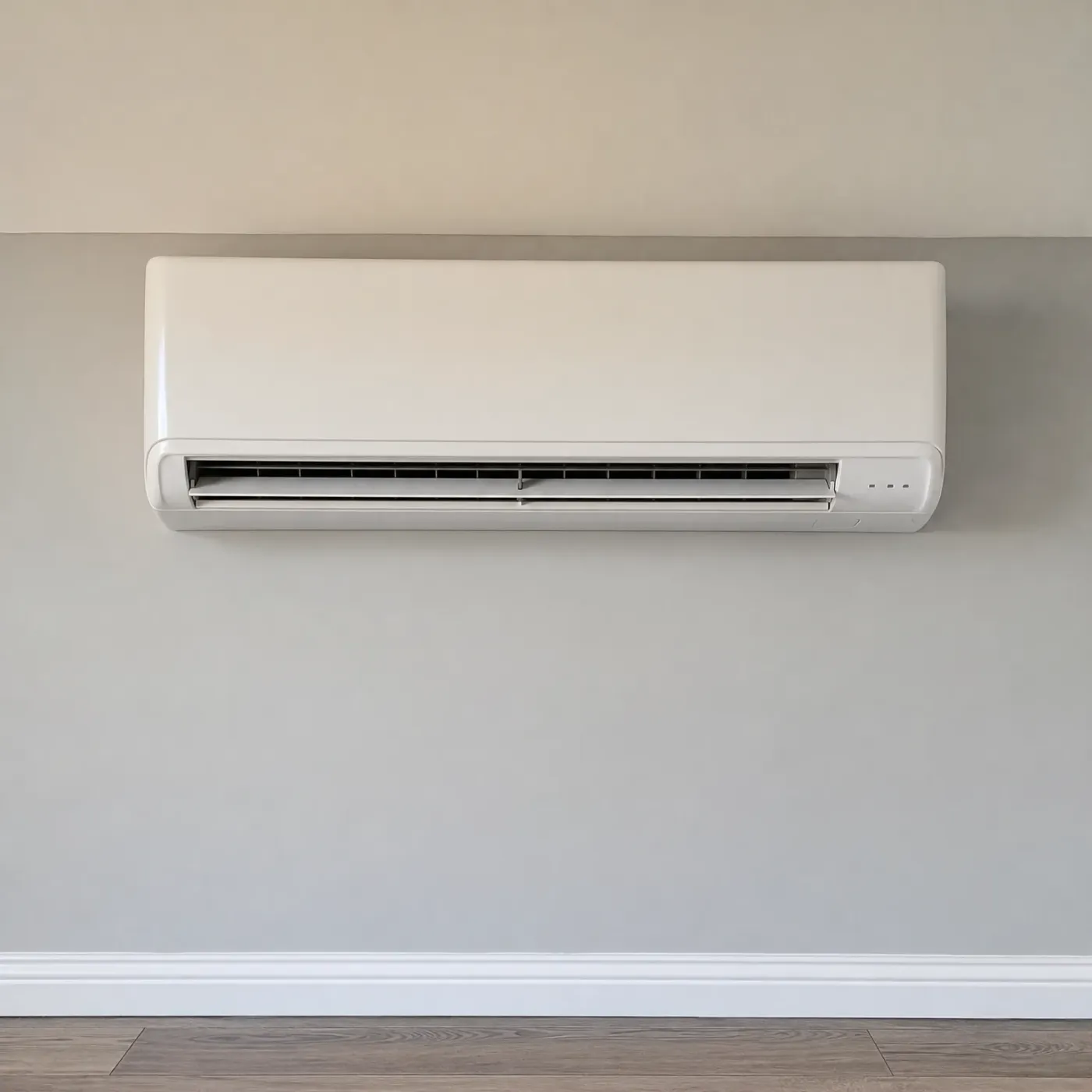
A unit like this is moving plenty of air and the vane opens fully to spread it across the room. Nothing on the housing blocks airflow, so it can hold 68 to 70 all winter without working harder than it has to.
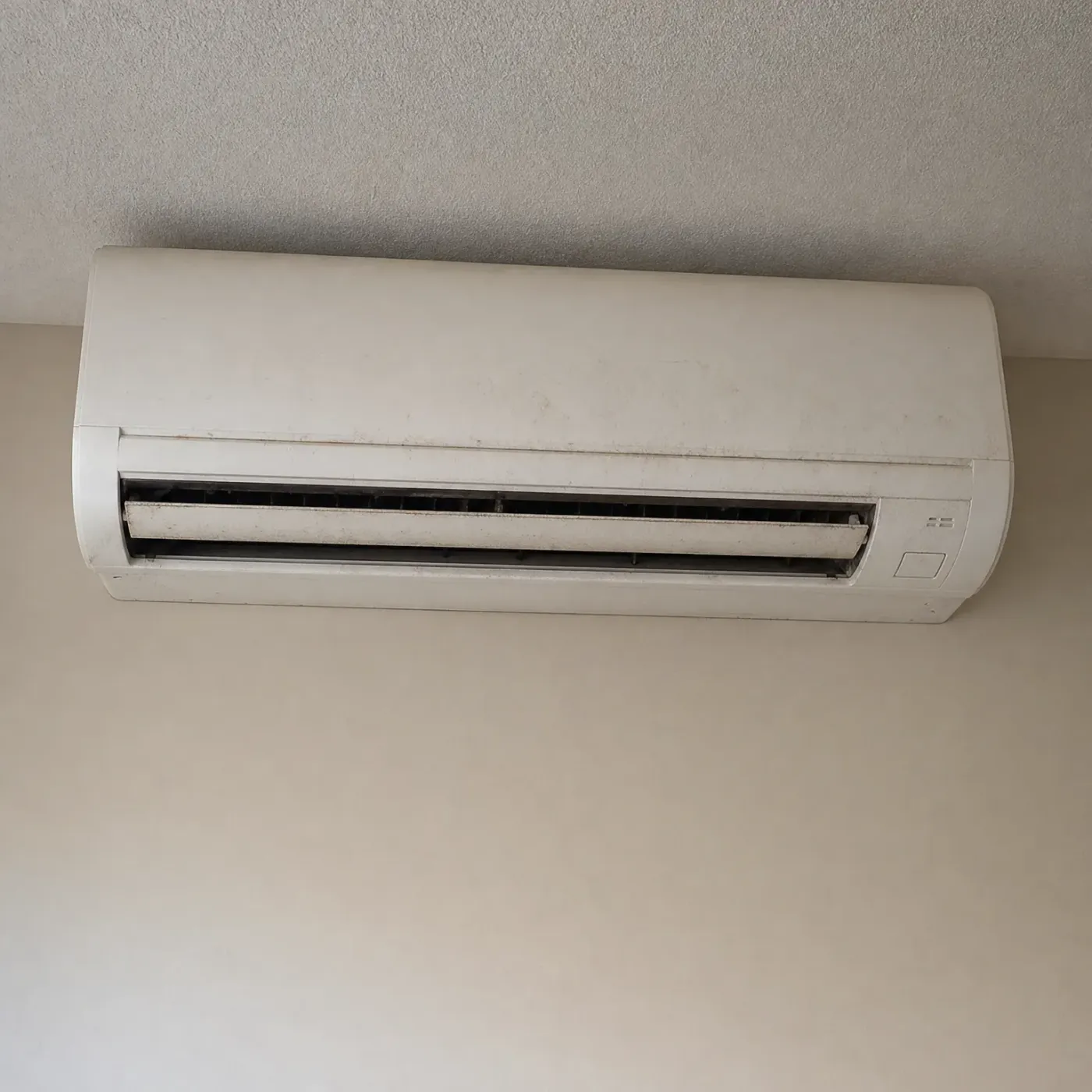
That grime on the housing usually means the filter behind it is just as dirty, and a blocked filter cuts the airflow the unit needs to keep up with an Illinois cold snap. The vane sitting half open like that is doing less work than it should.
At that rate, every extra percent your mini split draws from a dirty filter or a frosted coil shows up fast on the bill. Since power here isn't cheap, keeping it clean is what keeps the heat it makes worth what you pay for it.
EIA-861 2025 statewide residential average
68 to 70, held steady, is still the right number for a mini split getting through an Illinois winter. Keeping it there instead of pushing it up and down is what the unit does best, and a clean filter and coil are what let it actually hit that number without strain. Once the cold settles in and the furnace is doing more of the work, a mini split that's dusty inside and frosted outside is just drawing power for heat it isn't delivering. Checking it before the hard stretch of winter is what keeps that from happening. A local contractor who services this kind of equipment all season knows which part on these units tends to go first and what a winter of real cold does to the coil and the filter, because that's what comes through the door every year. You'd be working with one contractor, not fielding calls from several, and the one you reach is licensed to do the work and close enough to know what Illinois winters actually do to a mini split.
The pro who reaches out is licensed in Illinois.