A local pro who knows mini splits gets your details and gets in touch.
Most mini splits lose real heating power somewhere between 5 and 15 degrees, depending on the unit. Below that, older or lower-end models start to struggle, and the ones without proper cold-climate ratings can stop producing heat at all right around 0. Illinois sees those temperatures most winters, which is why almost every home here still leans on a gas furnace once it gets that cold.
That split responsibility is exactly where things go wrong at install time. A mini split sized and set up to carry your home alone, including in a mild spell, works differently than one meant to supplement a furnace on the coldest nights. Get that wrong and you end up paying for capacity you don't need, or shivering through January because the unit was never meant to do the furnace's job.
Summers here bring their own math. A mini split that's oversized for your cooling load short cycles and leaves the house clammy. Undersized, and it runs flat out on the muggiest days, which costs you on a power bill that's already not cheap in this state. The cold weather answer and the hot weather answer come from the same sizing decision, so it has to account for both.
This is the kind of judgment call that depends on your actual house, your ductwork or lack of it, and what you're asking the mini split to handle versus what your furnace already covers. A contractor who installs these year-round in Illinois, through the humid months and the single-digit ones, has seen which setups hold up and which ones leave homeowners calling back a year later.
Answer a few questions about your home and you'll be matched with one licensed local contractor who takes on jobs like this, not a handful of companies competing for your callback.
Most mini splits start losing real heating power somewhere between 5 and 15 degrees, depending on the unit. Below that, older or lower-end models struggle to keep up, and ones without a proper cold-climate rating can stop producing heat altogether right around 0. That matters in Illinois, where overnight temperatures drop into single digits or below most winters. A standard mini split isn't built for that. A cold-climate model, designed with a different compressor and a larger coil, keeps working well below zero and can still carry a good share of the heating load on the coldest nights. Since most homes here already heat with gas, a mini split in Illinois is usually there to supplement that system, not replace it. Whether it can handle your coldest nights depends on which unit is installed and whether it was sized and placed correctly for your house.
Power costs 17.67 cents per kilowatt-hour statewide
That 17.67 cents a kilowatt-hour matters most when your mini split is straining in single digits. A unit working hard to pull heat from cold air draws more power to do it, and on a gas-heated house that extra draw shows up as pure added cost with nothing offsetting it.
EIA-861 2025 statewide residential average
How a mini split makes heat
A mini split pulls heat from outside air using refrigerant, the same way it moves heat out in summer, just reversed.
Cold air holds less heat energy to begin with, so the compressor has to work harder to extract the same amount.
Below freezing, the outdoor coil can frost over, and the unit runs a defrost cycle that briefly stops heating to clear it.
Cold-climate models use a variable-speed compressor that ramps up output as temperatures drop, instead of running at one fixed speed.
Some units add a base pan heater or a secondary injection cycle to keep the compressor fed with enough refrigerant in deep cold.
The outdoor unit's placement, how far it sits off the ground and whether wind hits it directly, affects how well it holds output in winter.
A mini split does not burn anything to make heat. It moves heat that is already in the outside air into your house, using the same refrigerant cycle that cools your house in summer, just running backward. That works fine down to a point. Below that point, the air simply does not hold much heat to begin with, so the compressor has to run harder and longer to pull out the same amount. Once outdoor temperatures drop below freezing, moisture in the air can frost up the outdoor coil. When that happens, the unit switches into a defrost cycle, where it briefly reverses itself to melt the frost off before going back to heating. You may notice the indoor unit blow cool air for a few minutes during this. Cold-climate models handle the whole problem differently. Instead of running the compressor at one speed, they ramp it up as the temperature drops, pulling more refrigerant through to make up for the thinner heat in the air. Some add a base pan heater underneath the outdoor unit so ice doesn't build up and jam the fan, or a secondary injection cycle that keeps the compressor properly fed with refrigerant in deep cold. Where the outdoor unit sits matters too. One mounted low to the ground or exposed to direct wind loses output faster than one installed with proper clearance, since both snow buildup and wind chill pull additional heat off the coil before it ever gets used.
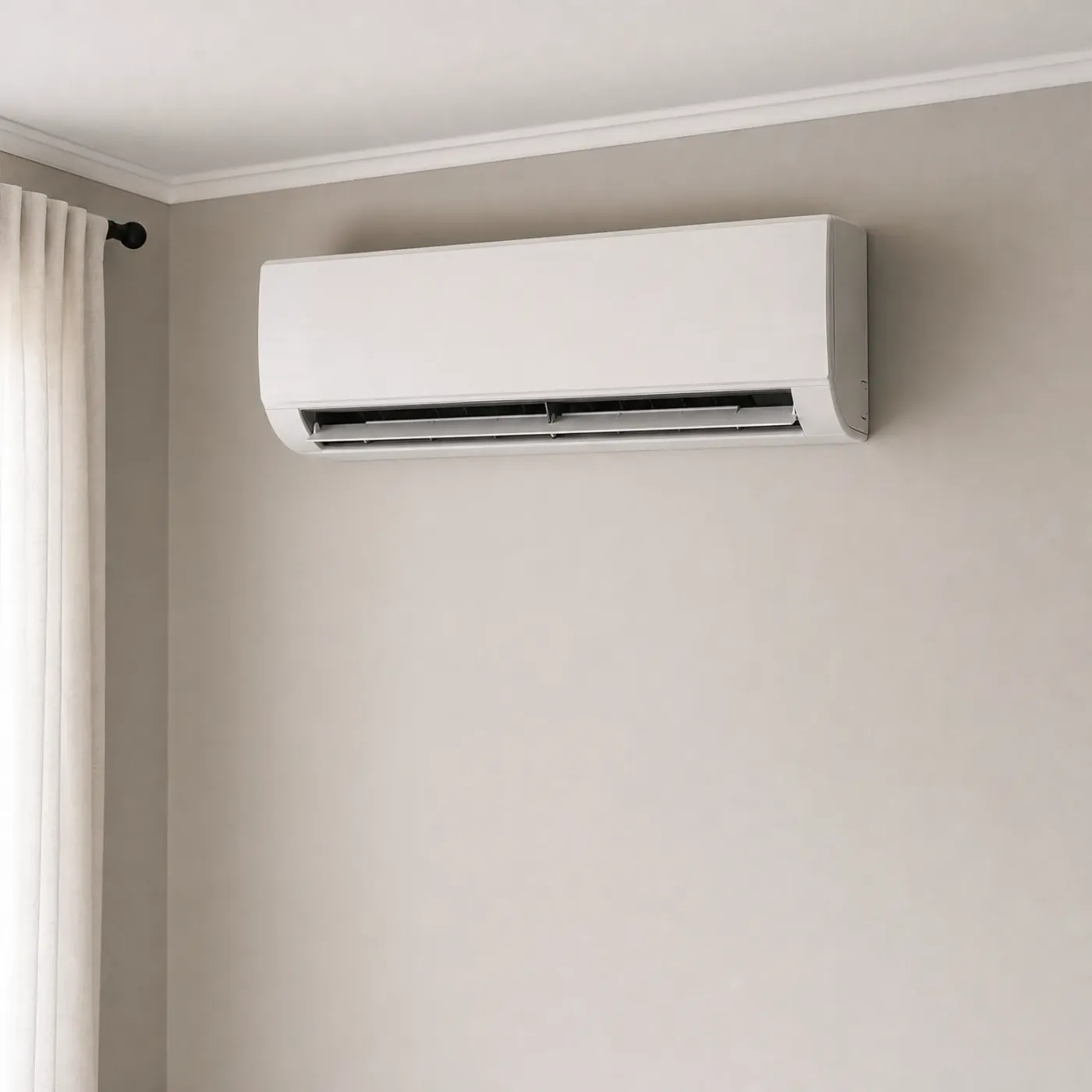
A properly sized and installed mini split keeps pulling heat efficiently through an Illinois winter, with the compressor working within its design range instead of against it.
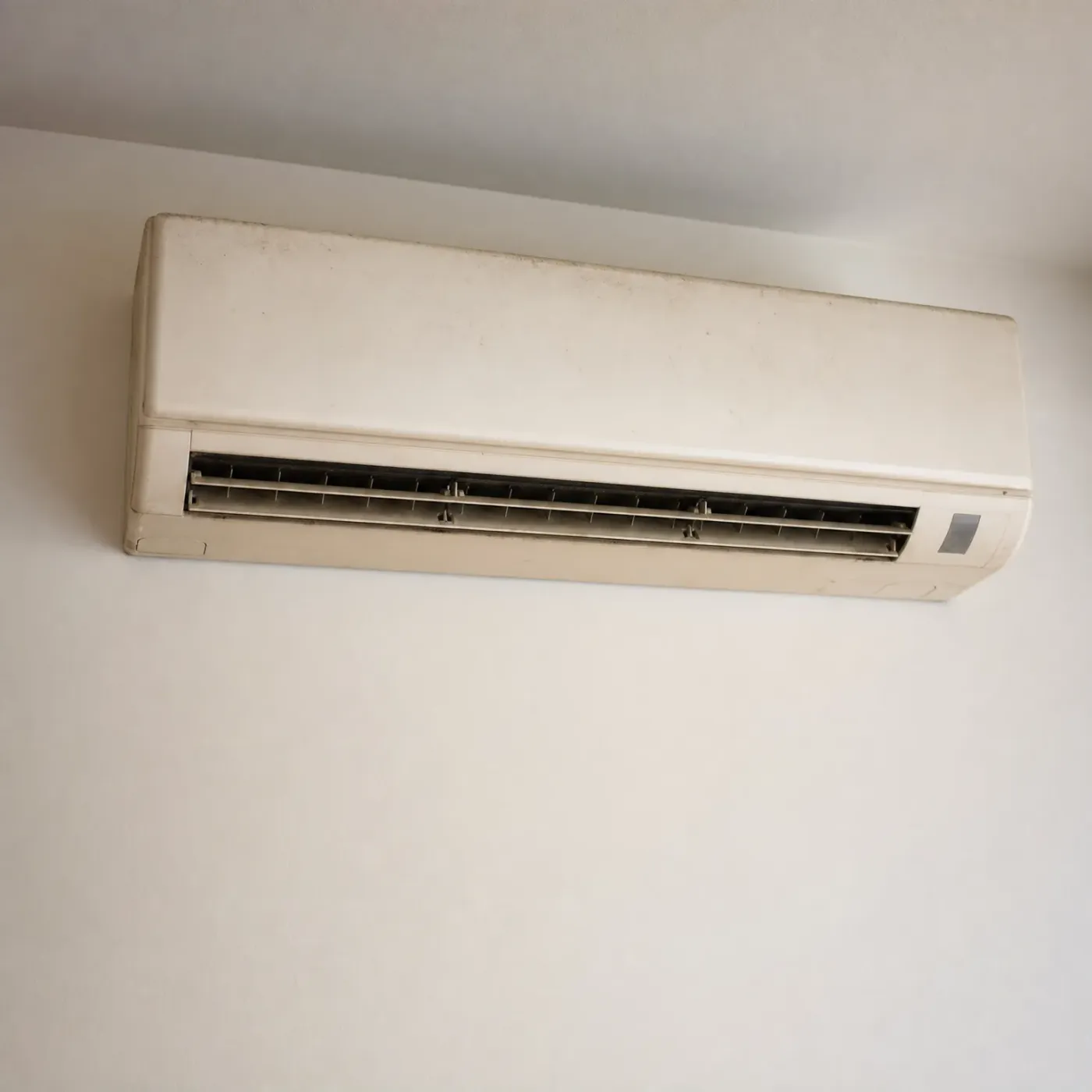
A unit installed without cold-climate sizing in mind shows its age fast, with the casing wear reflecting a compressor that has been straining for years.
Picture the room your mini split actually heats. If it's the only heat source in that room, a hard freeze is when you find out whether it was sized and installed right. An undersized unit runs flat out and still loses ground, and you feel that first in the room farthest from the outdoor unit. If there's a gas furnace behind it, the handoff to gas only happens automatically if that was set up during installation. Without that backup, people reach for space heaters, and those draw power steadily the whole time they run, which adds up fast at Illinois electric rates. Some frost on the outdoor unit during a deep freeze is normal. A unit that can't clear that frost on its own keeps losing capacity the longer the cold holds. Overnight is usually when this shows up, because that's when the temperature is lowest and nobody's awake to notice the room losing heat until morning.
What a cold snap means for your house
If your mini split is your only heat in a back room or addition, a hard cold snap can leave that room genuinely cold, not just chilly.
A gas furnace backing up the mini split means the switch to gas heat happens automatically, but only if the system is set up to hand off that way.
Without a backup, a mini split losing capacity below zero leaves you running space heaters, and those pull power at a rate that shows up fast on an Illinois bill.
A unit that's undersized for your square footage will hit its limit earlier in the cold than one sized correctly for the room it heats.
Ice building up on the outdoor unit during a deep freeze is normal to a point, but a unit that can't defrost itself properly will keep losing output.
If you're depending on the mini split overnight during a cold snap, that's when an underpowered or poorly installed unit falls short first.
Matched to your mini split job
One installer gets your project, so there's no bidding war over it.
Get in touch with a local installer about a new mini split.
No charge to send it. You decide if you hire them.
Why does my mini split get frost on it when it's cold out
You step outside and see ice building up on the outdoor unit when it's cold, and it looks like something's wrong. You're wondering if that frost means the system is failing or straining to keep your house warm, especially on a cheap-power state like Illinois where every bit of strain costs you.
Frost is normal. The defrost cycle handling it is what matters.
When the outdoor coil drops below freezing, moisture in the air sticks to it as frost, the same way it forms on a cold window. A mini split is built to handle this. It runs a defrost cycle that briefly reverses the refrigerant flow, sending warm gas through the outdoor coil to melt the ice off, then switches back to heating. You might notice the outdoor fan stop and steam rise off the unit for a few minutes. That's the system working as designed. What's not normal is frost that never clears, or ice building up thick along the coil fins. That points to a problem with the defrost control, a refrigerant charge that's off, or airflow blocked around the unit, and it's worth having someone look at it.
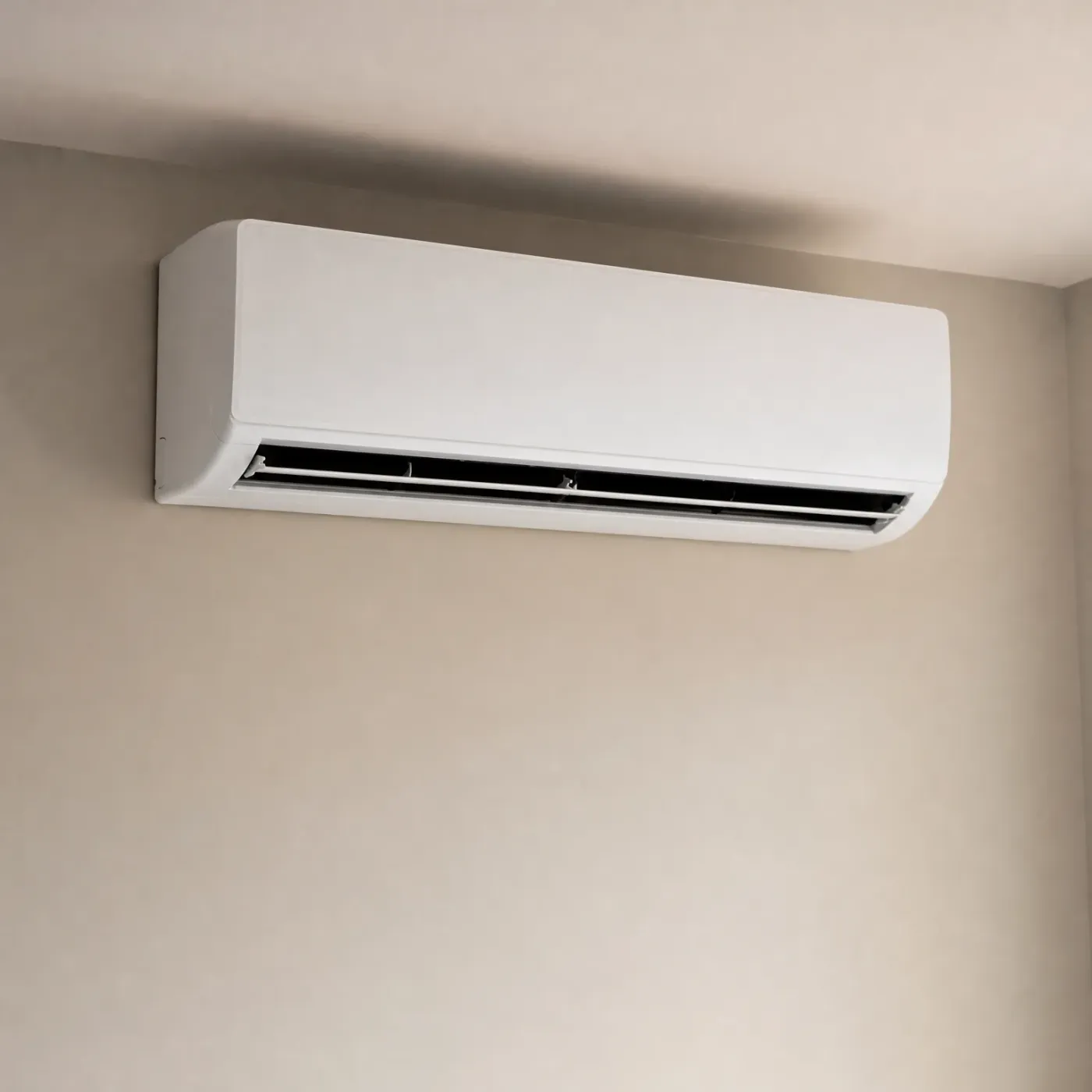
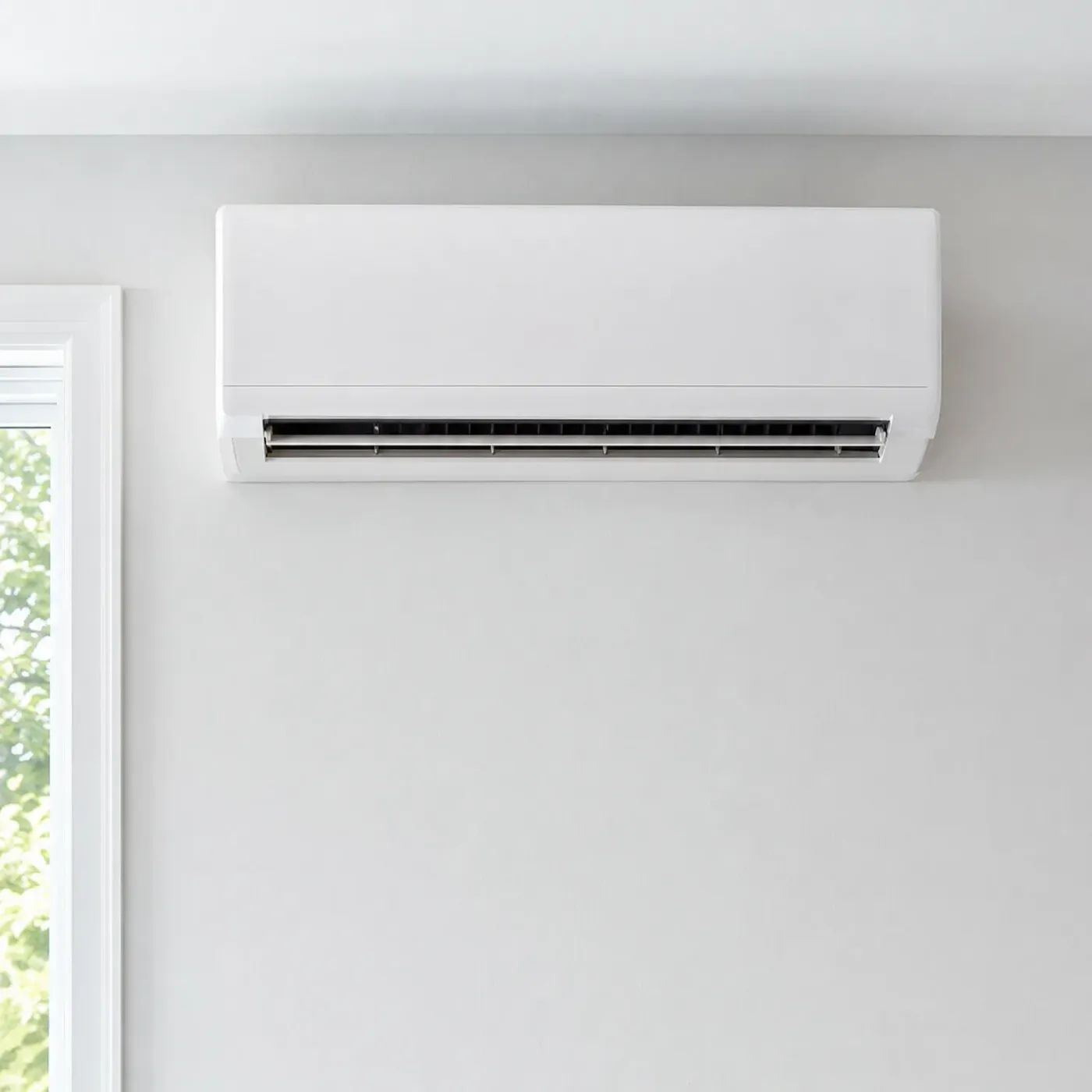
Working the way it should
A mini split like this one is pulling heat steadily, with the compressor running within its range even on a cold Illinois morning. The case stays clean, the vents run clear, and the unit keeps up without laboring to hold the room's temperature.
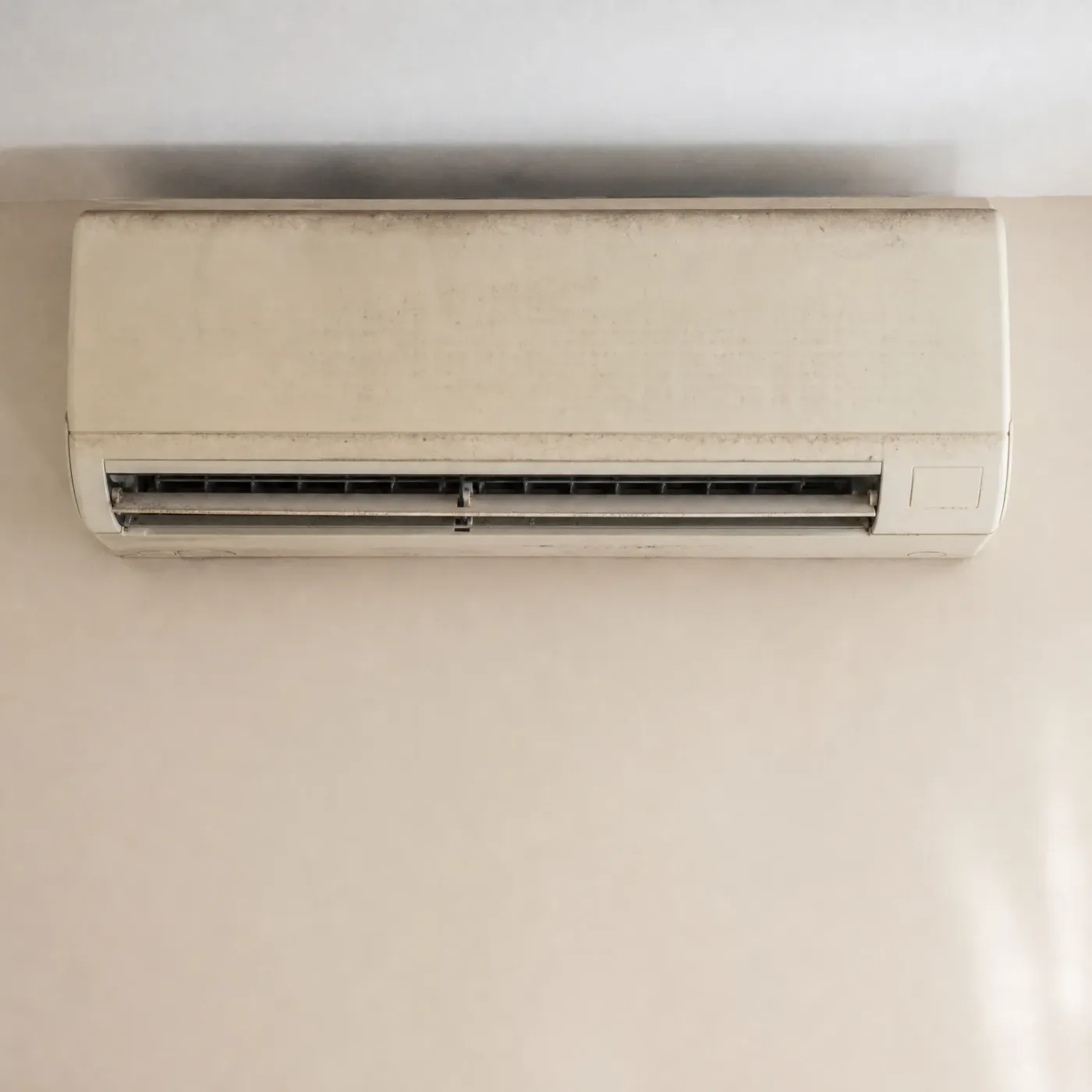
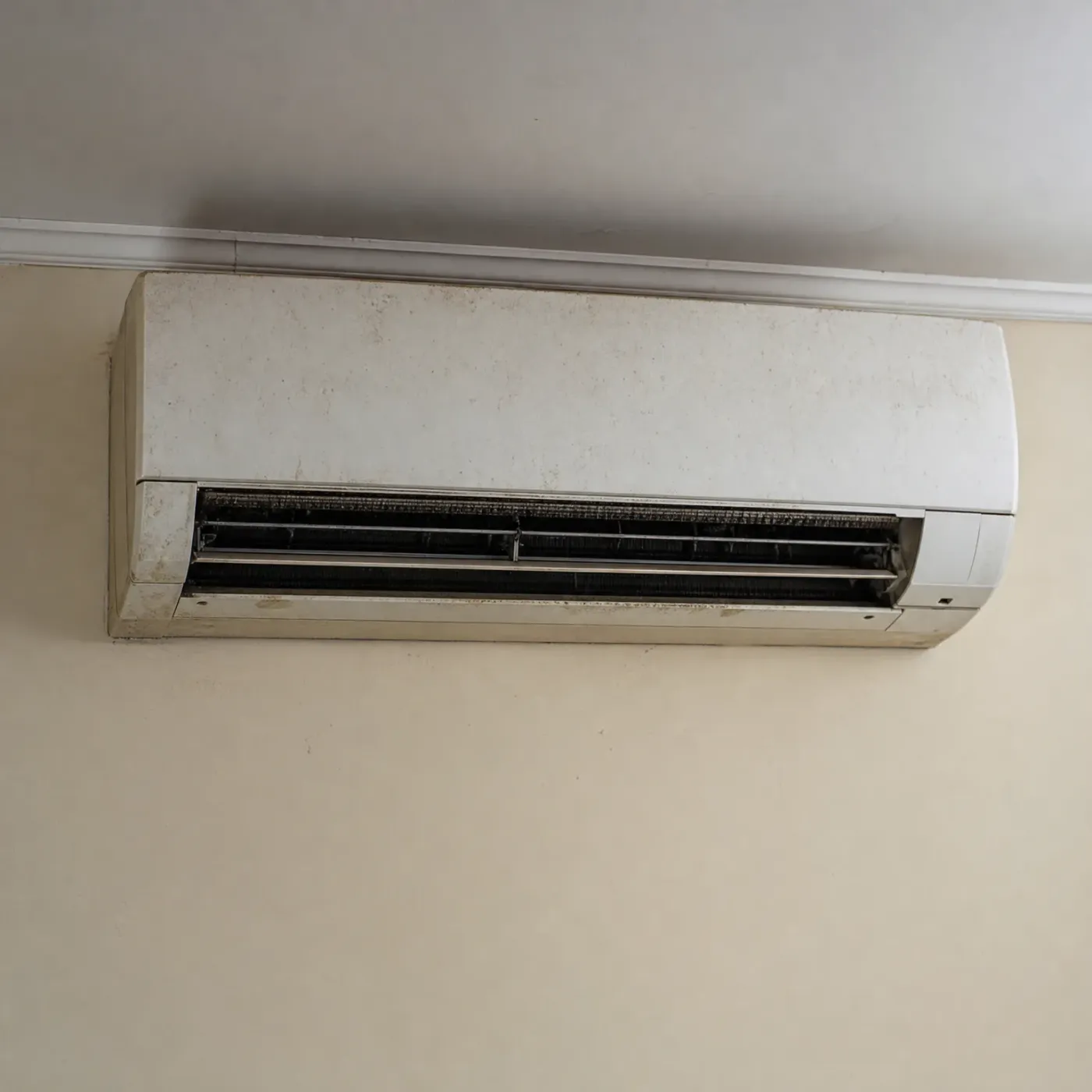
Working harder than it should
Yellowing and dust like this usually mean years of runtime without a proper look inside. An older unit pushed through enough cold snaps starts drawing more power to do the same job, and on a system this worn, a hard freeze can be the thing that finally knocks it out.
Why does my mini split room feel colder than the rest of the house
You notice it in the room the mini split actually heats. The air coming out feels cool instead of warm, or the unit runs long stretches without the room ever catching up. You might hear it cycling more than usual, or see the outdoor unit running almost constantly on a cold morning. The thermostat reading one number while the room feels like another is a common sign the compressor can't keep pace with the outside temperature. If that room has no other heat source, you're left layering blankets or running a space heater to make up the difference, which adds to your power bill on top of what the mini split is already drawing to keep trying.
The cold is what strains a mini split here, but summer humidity puts its own load on the same system. Across June, July and August, the dew point in Illinois averages 63°F, heavy enough that the air feels damp even when the temperature itself isn't extreme. A mini split has to pull that moisture out along with the heat, and the compressor runs longer to do both at once. That's worth knowing because the same unit straining to heat in January is also working through sticky air all summer. A system sized and installed right handles both ends of the year without you noticing the effort.
NASA POWER T2MDEW county cells weighted by homes
Before you get your mini split installationAfter you get your mini split installation
1
Refrigerant in the outdoor coil pulls heat from the cold air outside
2
The compressor presses the refrigerant to raise it to a usable temperature
3
Hot refrigerant travels through the line set to the indoor unit
4
The indoor coil releases that heat into the air blowing through your room
So how cold is too cold
Somewhere below 5 to 15 degrees, your mini split starts losing heating power, and the exact point depends on the unit itself and how it was sized for your house. A system matched to Illinois winters keeps working well past that line. One that wasn't sized for it struggles long before.
That's the part worth getting right before another cold snap finds the weak point in your system. A contractor who installs and services mini splits in your area sees how these units hold up here, which models keep pace through a hard January and which ones start icing over or running constant cycles. Getting matched with one means someone who already knows Illinois winters looks at your actual setup, not a general rule about degrees. You'd hear from that one contractor directly, not a handful of companies competing for the job.