Tell us about the job
Takes about a minute. No obligation.
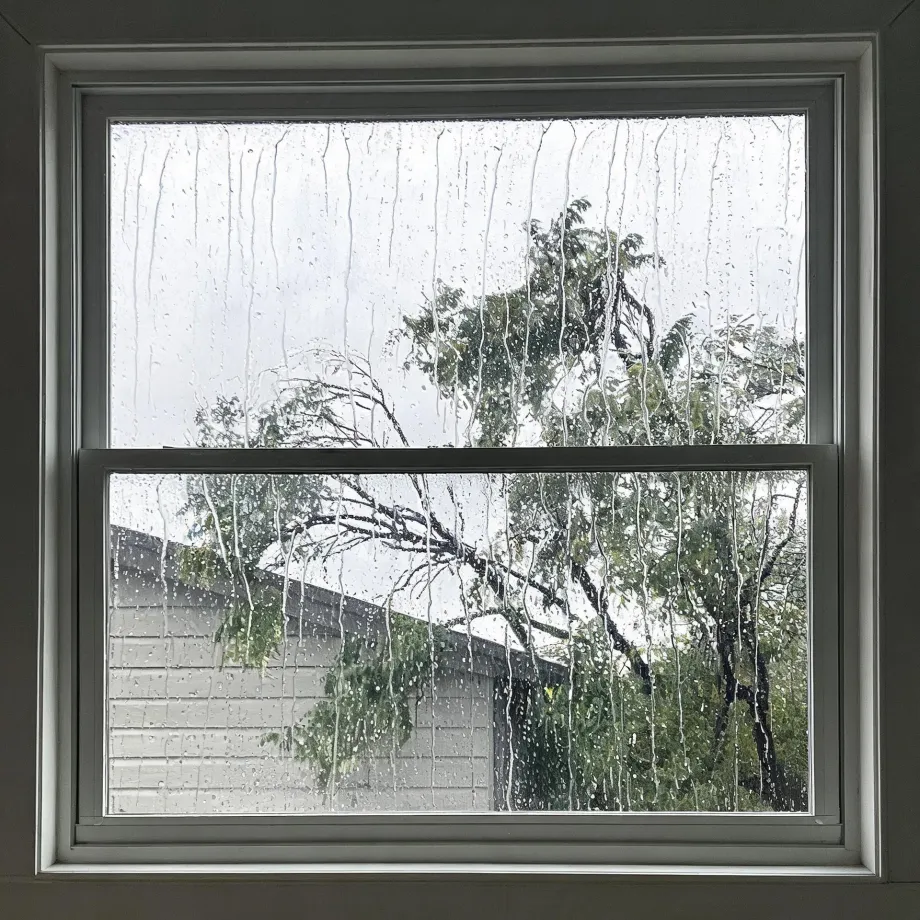
A contractor called out to repair a mini-split in Stark County has to work out what actually drove the failure before they can say which components need replacing. 50 severe weather events were recorded in Stark County, Illinois between 2015 and 2024. At that rate, severe weather is something equipment here encounters now and then, not a grinding background condition that wears systems down year after year. A refrigerant leak or a failed capacitor in this county points a contractor toward the age of the unit and the quality of the original installation first, because the weather record alone does not carry enough load to explain most of what goes wrong.
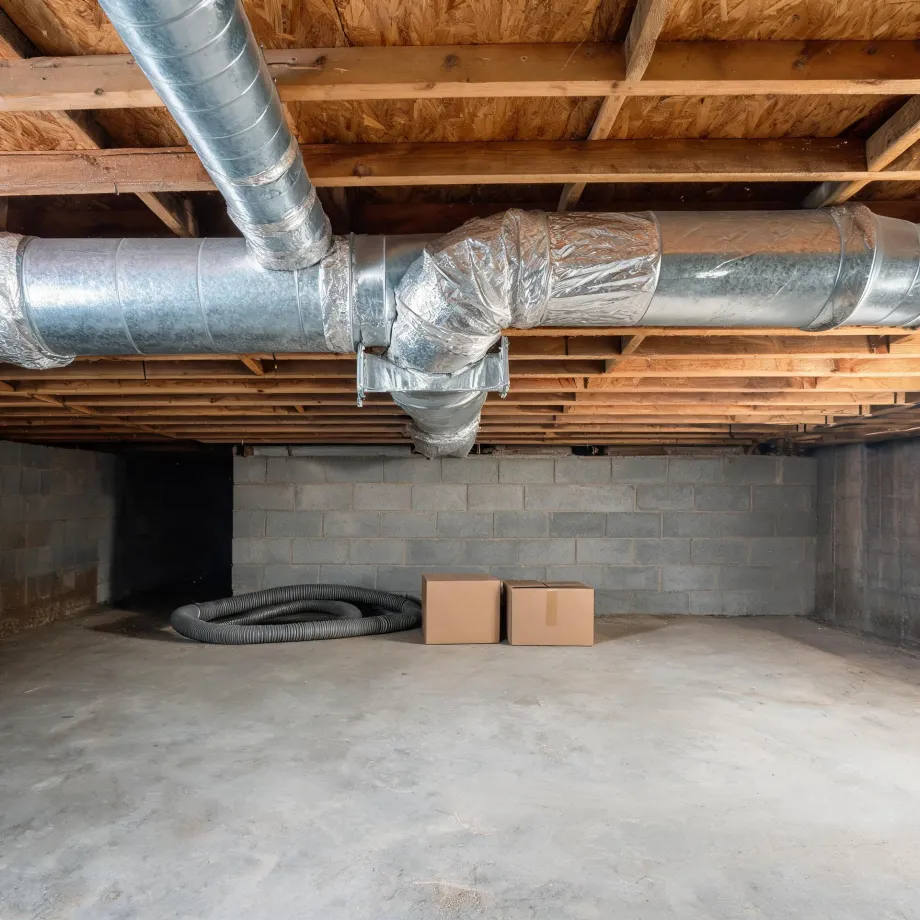
A refrigerant leak or a failed board in a system running in older Stark County housing puts the job on a specific path: once the unit is open, the contractor has to find out whether the parts that system takes are still in production. Half the homes in Stark County, Illinois were built in 1956 or earlier (2020-2024 ACS 5-year). Equipment installed into houses of that age has had time to move through more than one service generation, and some of what those systems call for is no longer stocked at regional suppliers. A part that has dropped off the supply chain turns a straightforward repair into a longer sourcing conversation, and the contractor has to resolve that before quoting anything.
The Parts of a Mini-split a Contractor Checks When Something Goes Wrong
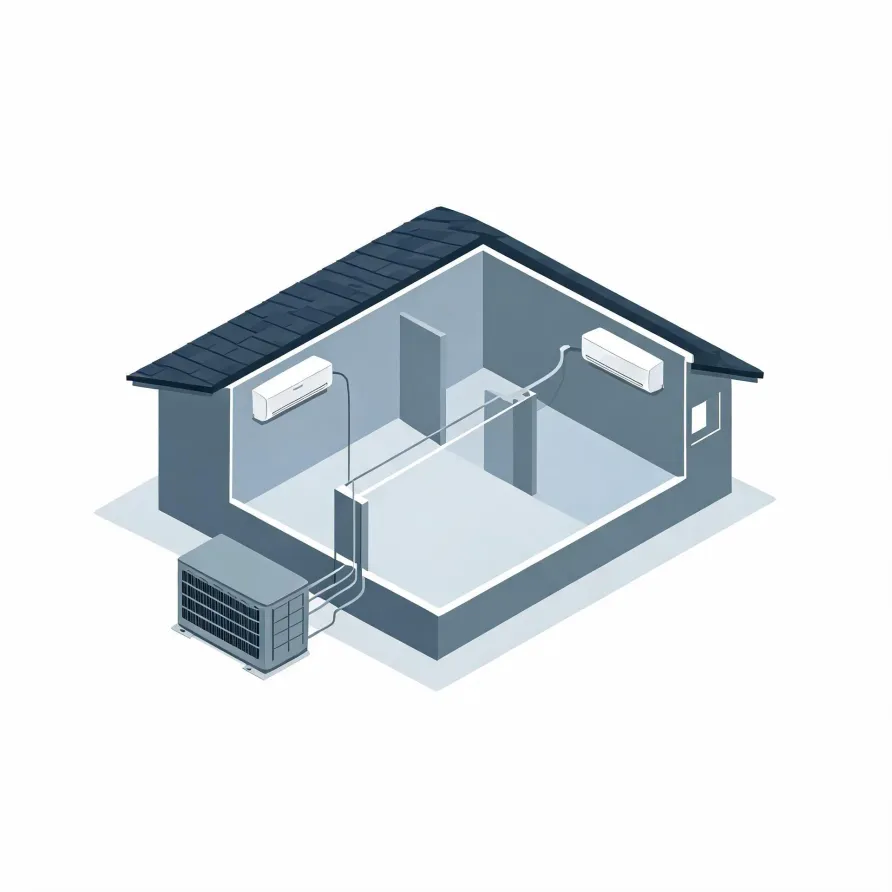
The indoor air handler mounts high on a wall inside the room and is where most problems show up first: a frozen coil, a clogged drain line, or a blower wheel that has stopped moving air the way it should. The outdoor condenser unit sits outside the house and takes more wear from the elements, so its compressor and fan motor are among the first things a contractor looks at when the system is not keeping up.
The refrigerant line set runs between the two units through a small penetration in the wall, carrying refrigerant and condensate out. A refrigerant leak anywhere along that line, or at either connection point, is a common source of lost cooling or heating capacity. The condensate drain line runs from the indoor head to the outside, and a blockage there can trip a safety shutoff or cause water to drip inside the room.
The drawing shows a typical mini-split layout, and a licensed contractor will determine which components apply to your specific installation.
Get matched in Stark CountyStark County, by the numbers
50 severe weather events were recorded in Stark County, Illinois between 2015 and 2024.
NOAA National Centers for Environmental Information, Storm Events Database, bulk CSV export, events 2015-01-01 through 2024-12-31.Half the homes in Stark County, Illinois were built in 1956 or earlier (2020-2024 ACS 5-year).
U.S. Census Bureau, 2020-2024 American Community Survey 5-Year EstimatesStark County, Illinois holds 2,573 housing units (2020-2024 ACS 5-year).
U.S. Census Bureau, 2020-2024 American Community Survey 5-Year EstimatesOwners occupy 80.1% of the occupied homes in Stark County, Illinois (2020-2024 ACS 5-year).
U.S. Census Bureau, 2020-2024 American Community Survey 5-Year EstimatesCodes & Standards Governing Mini-Split Repair in Stark County, Illinois1 sourced rules and standards
Licensing Rules for Stark County, Illinois
Illinois leaves HVAC licensing to the municipality: state law lets the corporate authorities of each city or village examine, license and regulate heating, air conditioning and refrigeration contractors, and caps the licence fee they may charge at $50 — so who licenses you depends on the town you work in.
Severe Weather Events in Stark County
Stark County's climate puts real stress on heating and cooling equipment over time. How hard a mini-split has to work, and how often it needs repair, is tied directly to what the local weather asks of it.
50 severe weather events, 2015–2024. Source: NOAA National Centers for Environmental Information, Storm Events Database.