What a mini split tune-up covers in Illinois

A local pro who knows mini splits gets your details and gets in touch.

Match me with a pro

A mini split tune-up covers the indoor coil, the outdoor condenser coil, the blower wheel, the refrigerant charge, and the drain line. A contractor cleans or pulls the washable filters, checks the line set connections for leaks, and tests the system under a full cooling cycle to see that it holds its temperature and shuts off properly. Illinois summers run humid, and a dirty indoor coil or a clogged filter makes the system work harder to pull that moisture out of the air, which shows up on your electric bill since power here isn't cheap. If your mini split also covers heating for part of the house while gas handles the rest, the tune-up checks that side too, including the outdoor unit's defrost cycle. Catching a weak capacitor or a slow refrigerant leak now means the system isn't struggling through August or failing on a mild March morning.

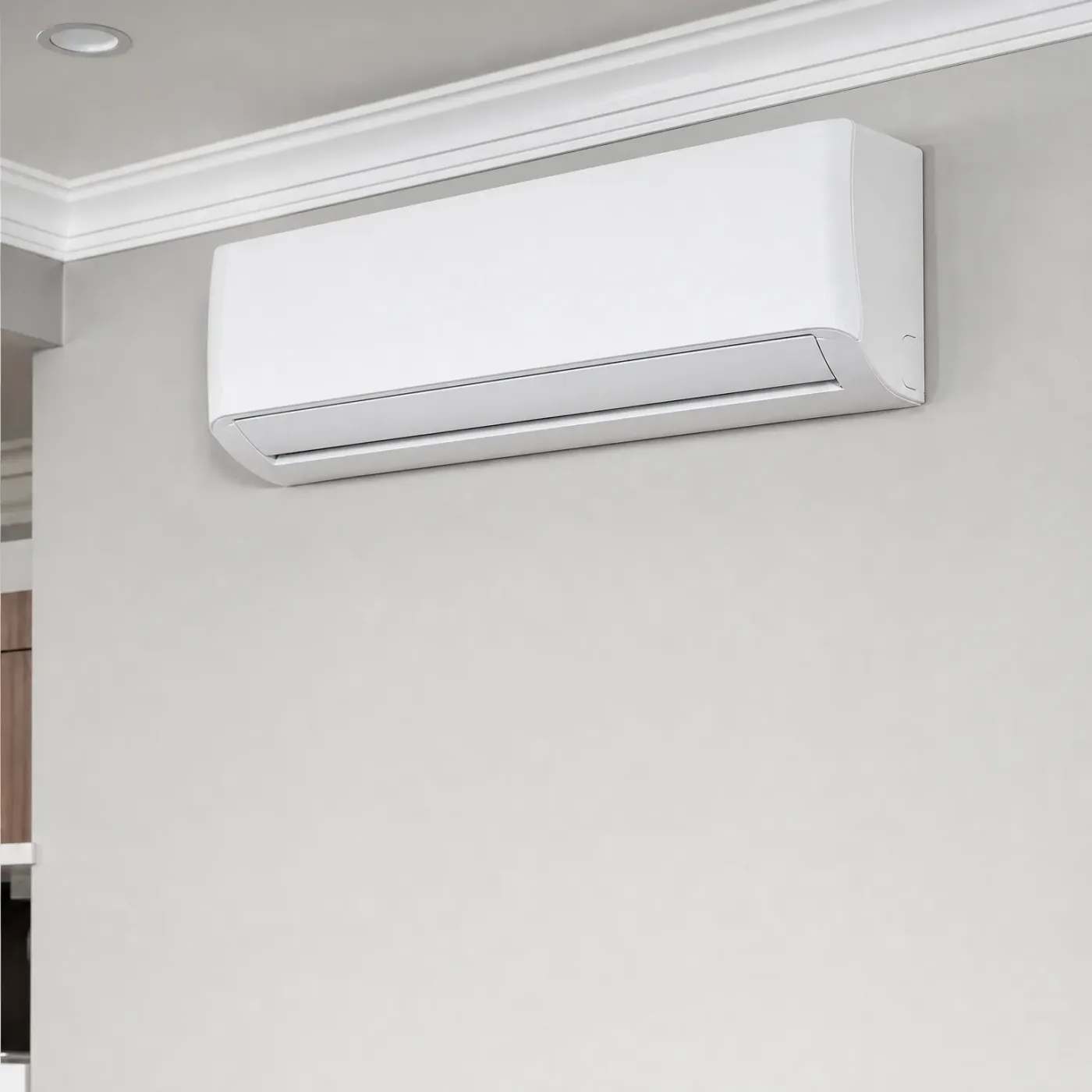
A white wall-mounted mini-split air conditioner installed high on a light gray interior wall below a white crown molding and ceiling with a recessed light.

Running Clean

A mini split that's been serviced pulls air through a clear coil and a clean filter. It holds the charge it's supposed to, cycles on and off the way it's designed to, and doesn't have to work harder than it needs to against a sticky Illinois summer.

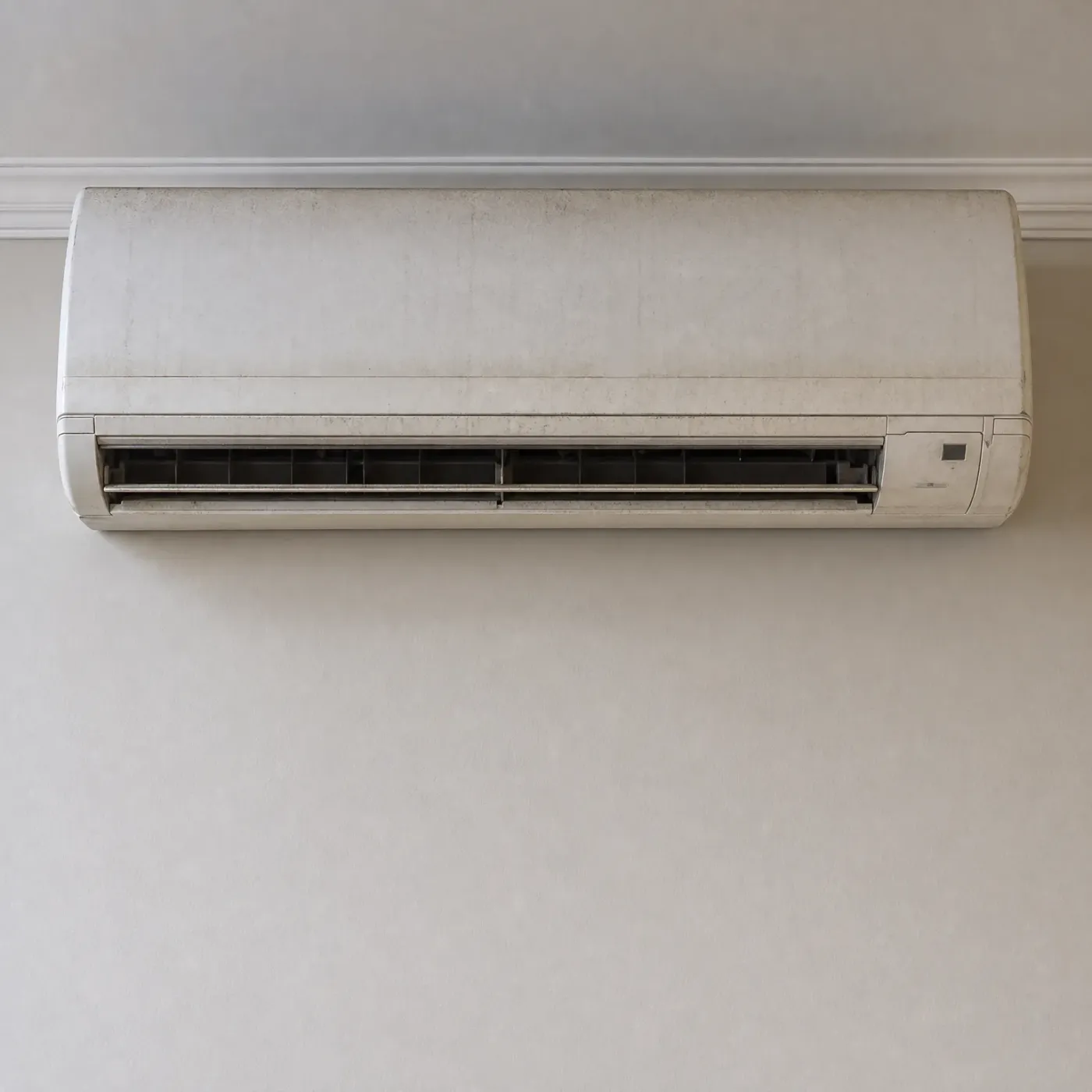
A dusty, discolored white wall-mounted mini-split air conditioner unit installed on a plain beige interior wall below a molding strip.

Running Dirty

Dust builds on the casing first, but the coil behind it is collecting the same film. A dirty coil can't move heat the way it should, so the unit runs longer to hit the same temperature, and that shows up on a power bill that's already not cheap.

A woman with long gray hair wrapped in a checked blanket sits on a sofa by a window with yellow autumn foliage outside, with a lamp, framed picture and plant in the background.
An older woman in a cream knit sweater sits on a sofa by a window, looking out at sunlit trees with yellow and orange autumn leaves, with a bookshelf and lamp behind her.
A woman with gray shoulder-length hair in a dark knit sweater sits on a cushioned seat by a window, looking out at yellow autumn foliage, with a living room, armchair, houseplant and framed picture behind her.
An older woman with gray hair in a bun, wearing a cream knit sweater, sits on a sofa with a gray blanket and looks out a large window toward yellow-green autumn trees, with a lit table lamp and dark armchair behind her.

Twice a year

Mini splits used for both cooling and heat benefit from a check in spring and again in fall, since the coils and filters work through both seasons here.

Skip the calls

One missed filter, one bigger bill

A clogged filter makes the blower wheel work harder to push air through the coil, and that shows up on a power bill that's already not cheap in Illinois.

Skip the calls

Why does your mini split seem to be working harder lately?

You notice it in July and August, when the humidity sits heavy and the unit runs almost nonstop just to hold the room steady. Maybe the air coming out feels weaker than it used to, or you catch a musty smell when it kicks on. Maybe there's a thin film of dust on the indoor filter you haven't pulled in a while, or ice forming on the outdoor unit on a mild day. A mini split that's skipped its tune-up usually shows it in the electric bill first, since power in Illinois isn't cheap and a straining unit pulls more of it. Left alone long enough, a dirty coil or a low charge can shorten the life of the compressor, which is the expensive part to replace.

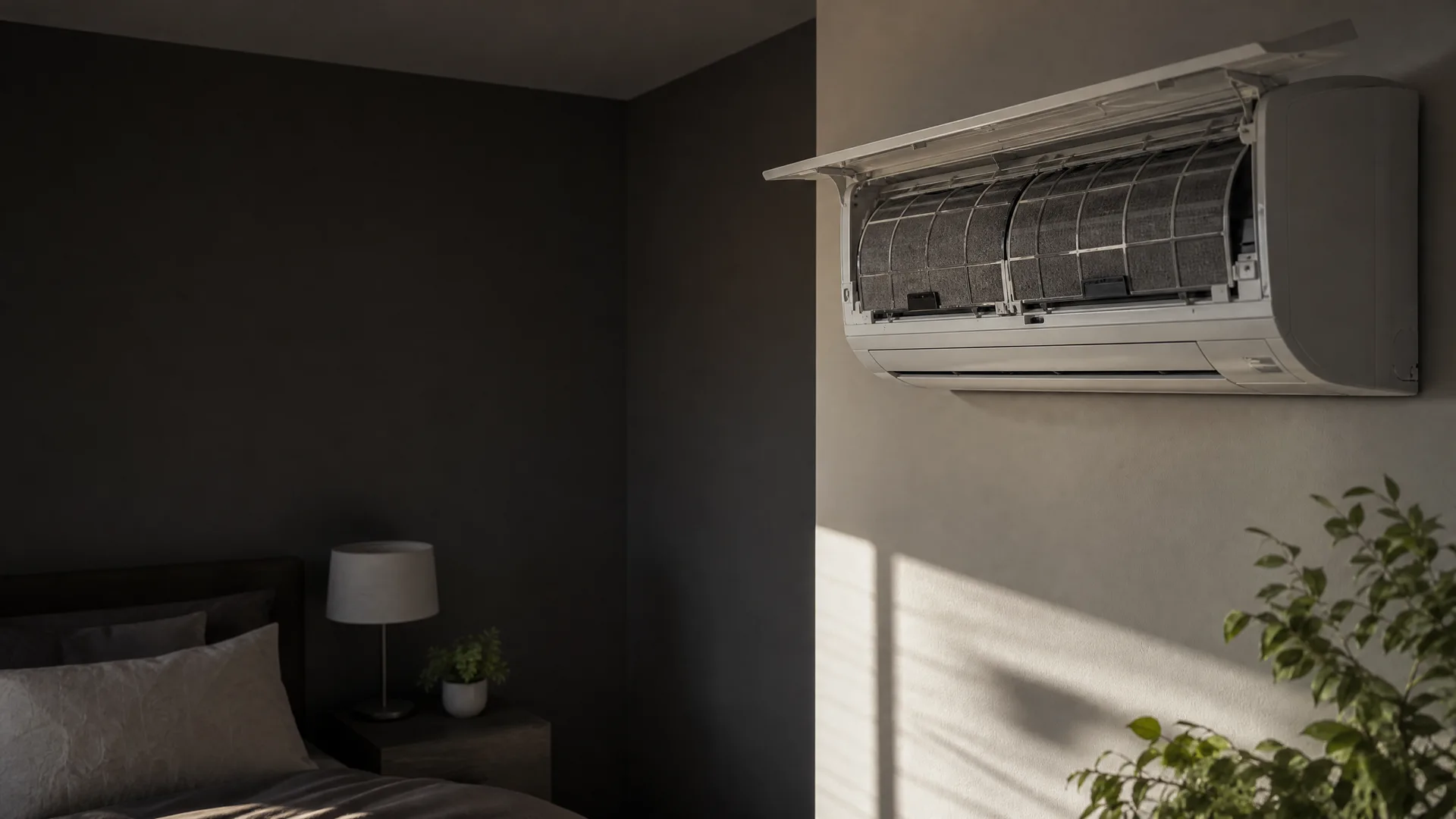
A wall-mounted mini-split air conditioner with its front cover open exposing the filters, in a dim bedroom with a bed, nightstand lamp and a potted plant.

You pop the front cover off the indoor unit on a Saturday in March, just to look. Light from the window falls across the filter screen, and it's gray, matted down with a season's worth of dust. The bedroom still has that early spring chill at the edges, heat not quite needed anymore, cooling not yet. You run a finger across the screen and it comes away dark. You'd meant to check this back in the fall and didn't. Behind the screen the coil fins look dulled, not sharp and clean like they were when the unit went in. You set the cover down on the bed and stand there a minute, filter in hand, trying to remember the last time anyone looked at this thing besides you.


Get your mini split to the right pro

Fill out one short form instead of calling around.

You only hire the pro if you want to.

Skip the tune-up, and you find out in August whether your mini split still holds its charge, when the only contractors with openings are the ones already booked solid for weeks.

Get it looked at in spring, and you know before the heat sets in, with time to get on someone's schedule instead of waiting in line behind every other call in Illinois.

A woman in a cream knit sweater sits in an armchair with her eyes closed and a slight smile, beside an open window showing orange autumn foliage, with a mug, books and a lit candle on a small side table.
An older man with gray hair and a beard leans back on a beige sofa with his eyes closed, in a sunlit room with potted plants, a wicker chair and large windows behind him.

Book it yourself every spring

You could call around each March, ask a handful of contractors if they service mini splits, explain the brand and how many heads you have, wait on quotes, and pick one before the humidity sets in. It works, but it takes a few evenings of calls and comparing, and you're doing it again next year, and the year after. If one contractor is booked out or doesn't answer, you're back to searching. Nothing about the work changes, only how long it takes you to get someone out there.

Get matched once, skip the search

Tell the page what you need and a contractor who services mini splits in your area reaches out to you. No calling three places to see who answers, no repeating what kind of system you have and how many indoor units, no sorting through quotes that all sound the same. You still decide who does the work and when. What goes away is the part where you spend an afternoon tracking down someone who'll actually show up before summer gets going.

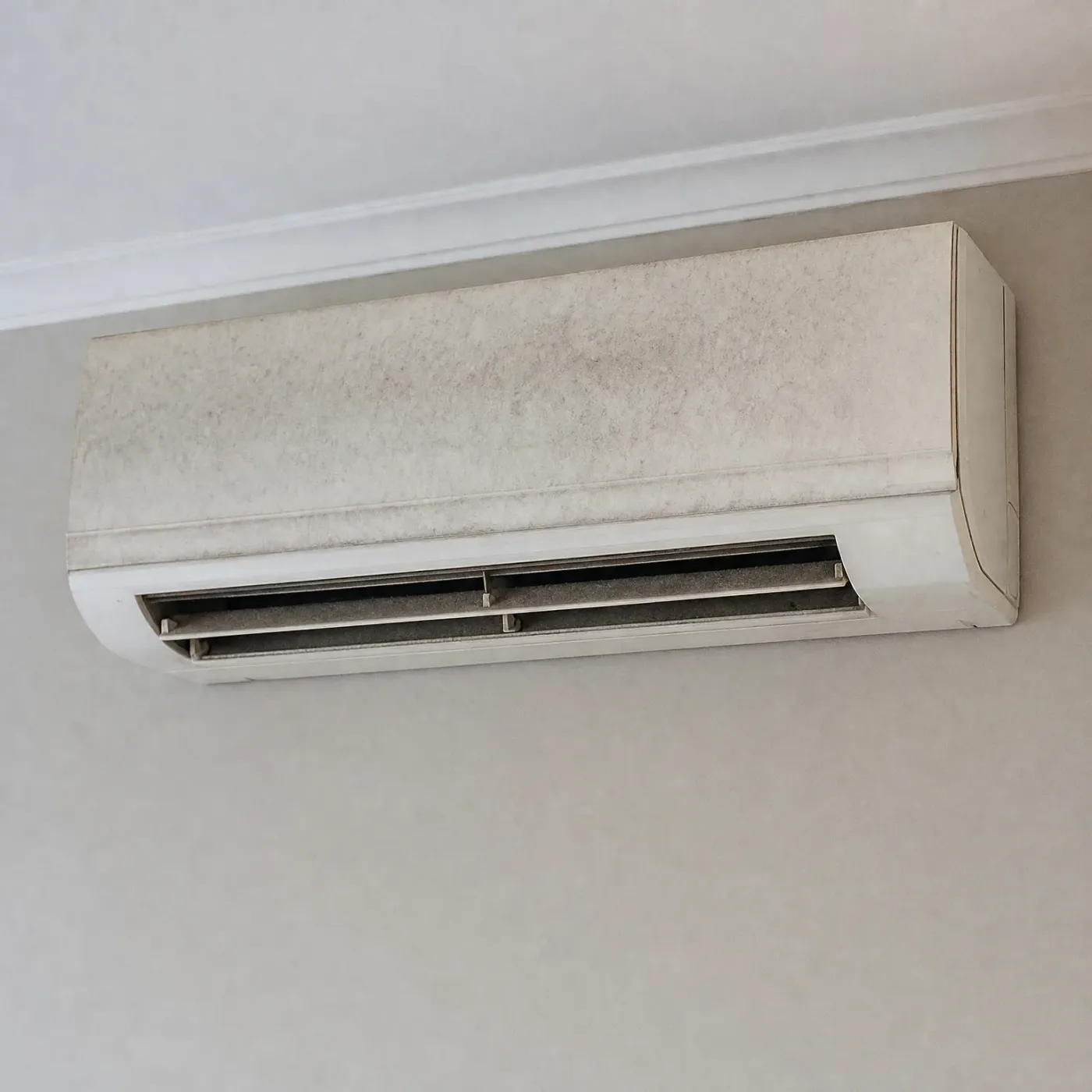
A dusty, discolored white wall-mounted mini-split air conditioner unit installed high on a plain interior wall below a white ceiling molding.
Before you get your mini split maintenance
A white wall-mounted mini-split air conditioner on a beige interior wall, with a cream curtain and window at left, a potted plant on a ledge at right, and a wood floor below.
After you get your mini split maintenance

Doing it yourself takes afternoons

A mini split tune-up is something you could handle piece by piece on your own. You can pull the filters and rinse them. You can wipe down the indoor unit and clear leaves from around the outdoor condenser. What you can't do without the right gauges is check the refrigerant charge, and a low charge is one of the main reasons a mini split struggles against Illinois humidity in July. So the DIY route still ends with you calling around, describing your system to whoever picks up, and waiting to see who actually services mini splits instead of just central air.

Getting matched skips the search

Get matched with a contractor instead, and the part that takes time disappears. No calling three or four companies to ask if they work on your brand of mini split. No repeating how many indoor heads you have, or whether the unit also handles your heat through the winter. No sitting on quotes trying to guess which one actually knows the equipment. You answer a few questions once, and a contractor who services mini splits in your area reaches out to you. The tune-up itself still takes the time it takes. What you skip is everything that used to happen before a contractor ever showed up.

Power costs 17.67 cents per kilowatt-hour statewide

At that rate, a mini split losing its charge or pulling air through a dirty filter costs you more every time it runs longer to make up for it. A unit that's been serviced holds its charge and doesn't run extra hours just to keep up.

EIA-861 2025 statewide residential average

A woman in a cream cardigan and jeans stands with one hand raised facing an open front door of a gray horizontal-siding house, with a black lantern wall light, a potted shrub with yellow flowers, and a stone-faced porch column.

What a tune-up covers, and where that leaves you

A mini split tune-up covers the coils, the filters, the refrigerant charge, the drain line, and a run under load to see that everything holds. That's the full answer to what gets checked. Whether it needs checking now or can wait until closer to summer is something a contractor looks at against your unit, not a calendar.

Finding that contractor is the part that takes the afternoons: the calls, the explaining what you have and how many heads it runs, the waiting on quotes to compare. Answer a few questions here and that part is done. You get matched with a contractor who services mini splits in Illinois, and they reach out to you.

A living room corner with a beige upholstered armchair holding navy and striped cushions, a small round wooden side table with a carved bowl and a potted green plant, a framed landscape picture on a pale wall, built-in shelving, and a curtained window.
A white wall-mounted mini-split air conditioner on a dark gray interior wall above a gray sofa, with a window and curtain at left, a potted olive-like plant at right, and a black vase and bowl on a table in the foreground.

The right pro for this job

Explain the job once and skip repeating it on every call.

Step 1 of 3: Equipment