
Why your mini split blows cold air in Illinois

Fill out one short form instead of calling around.

Skip calling around

A mini split that blows cold air when you've got it set to heat is usually stuck in the wrong mode, or it's losing the battle against an Illinois winter. Check the handset first. Some remotes default back to cool or fan after a power blip, and that alone explains it. If the mode is right and the air still isn't warming up, the outdoor unit may be icing over in freezing temperatures, or it's low on refrigerant and can't move enough heat into the house. A mini split works harder to heat a room than to cool it once it's well below freezing outside, and a unit that's undersized, low on charge, or running with a dirty coil will fall behind fast on a cold January night. If this is your main heat source for that room, cold air blowing out isn't a minor annoyance. It means the system isn't heating, and something inside it needs a look before the next cold snap.

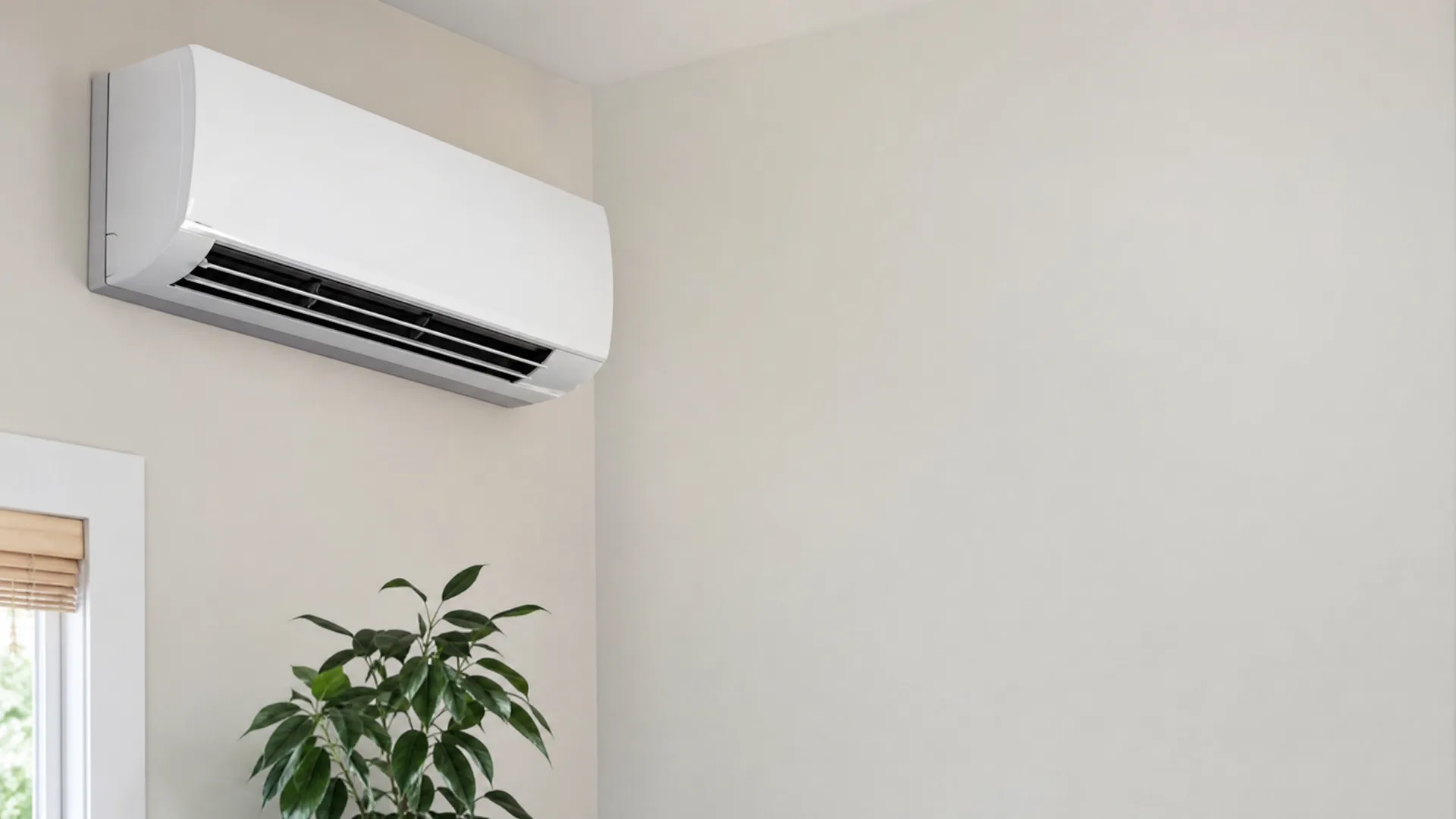
A white wall-mounted mini-split air conditioner near the ceiling of a beige interior corner, with a green houseplant and a curtained window at the lower left.

Why the mode switch matters

A mini split has a reversing valve that changes the direction of the refrigerant so the outdoor unit can pull heat from outside air instead of dumping it there. If that valve is stuck, or the board controlling it misreads the remote's signal, the indoor unit runs like it's set to cool even when the display says heat. The air coming out tells you more than the display does.

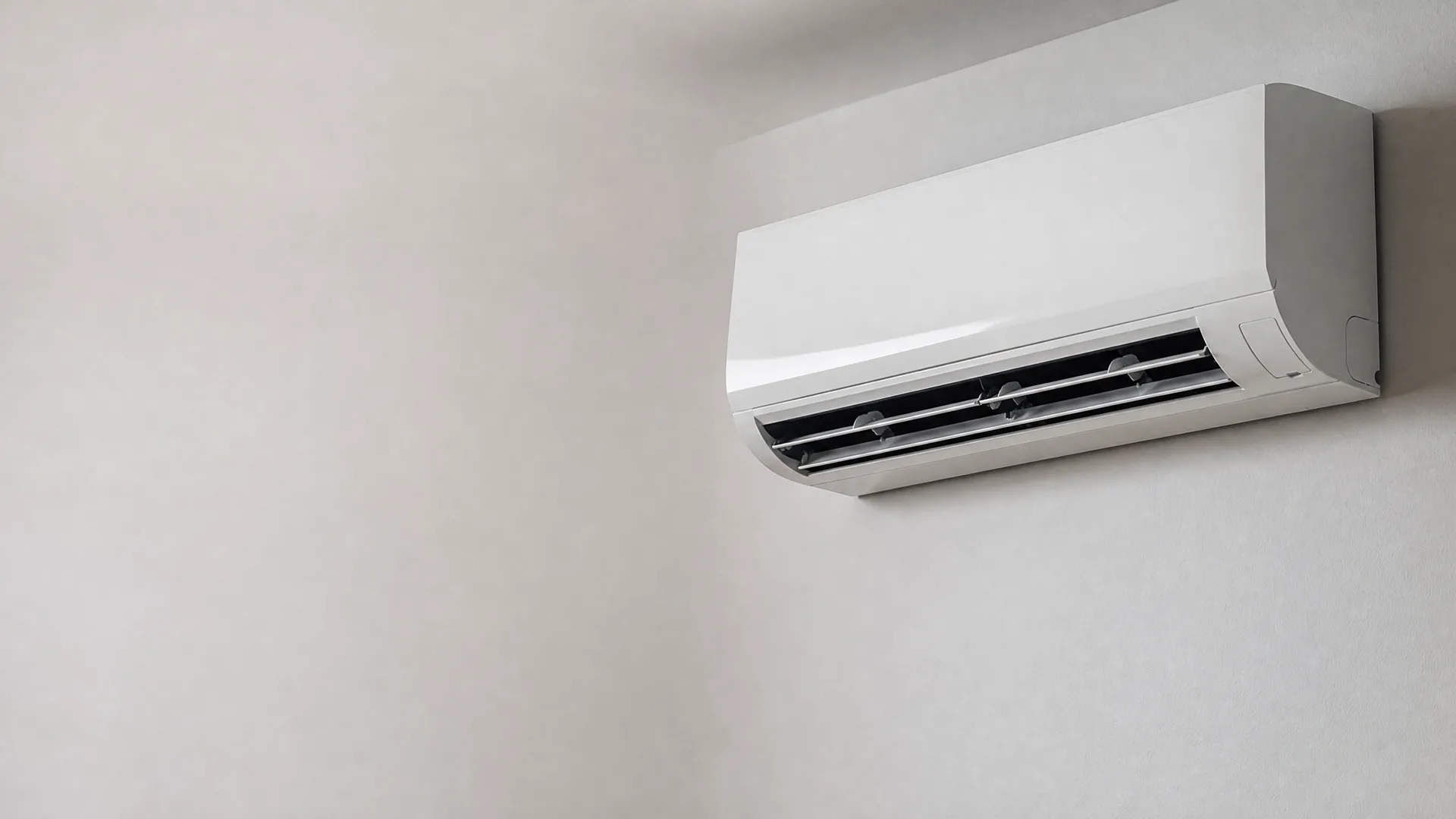
A white wall-mounted mini-split air conditioner indoor unit on a plain light gray wall, positioned to the right of frame.

What cold outside air does to it

Illinois winters push outdoor temperatures well below what some mini splits are rated to handle efficiently. When it's cold enough outside, the outdoor coil has to work harder to pull any heat out of the air, and the system can lose that fight faster than it would in a milder climate. If the unit is undersized for your space or the outdoor coil is iced over, it may run constantly and still put out air that feels cold instead of warm.

Is your mini split keeping up with an Illinois winter

Stand under the indoor head and feel what's actually coming out. Cold or barely lukewarm air means the unit isn't heating, whatever the handset says. Listen for the outdoor unit running constantly, or for it going quiet while frost builds up and stays on the coil instead of clearing itself. Check the room itself: if your gas furnace backup is kicking on more than it used to, the mini split isn't carrying its share of the load anymore. Left alone through a cold stretch, a unit stuck like this either runs nonstop trying to catch up, driving up what you're paying for power, or it shuts down and leaves that room or that whole house relying on the furnace alone.

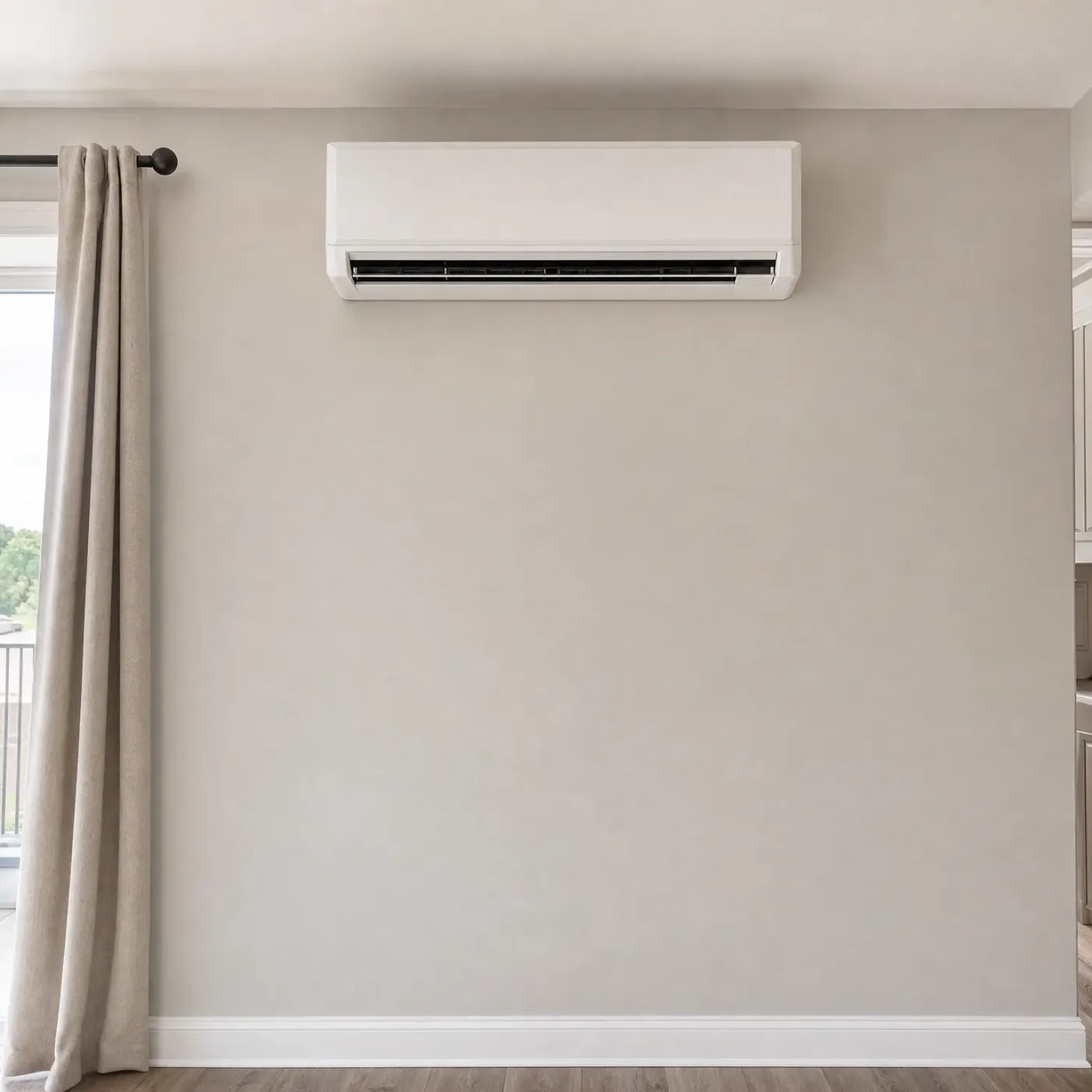
A white wall-mounted mini-split air conditioner unit high on a light gray interior wall, with a beige curtain and window at the left and wood-look flooring below.

Running clean, switching modes the way it should

A mini split in good shape looks almost plain: a white head near the ceiling, no streaking, no noise that catches your attention. It moves between heat and cool on command because the reversing valve and the board behind it are doing their job.
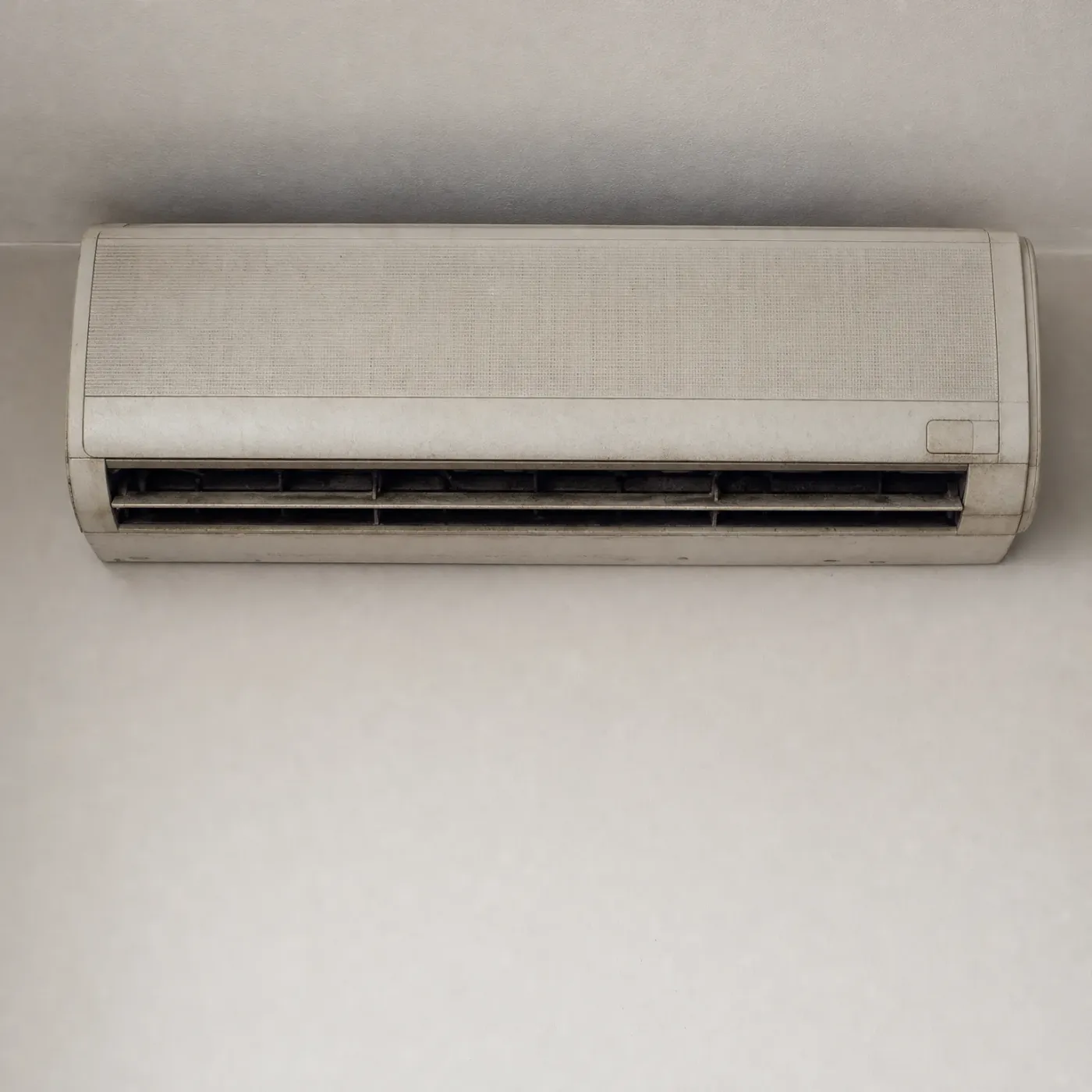

A dusty white wall-mounted mini-split air conditioner indoor unit with open louvers, installed near the ceiling on a plain light-colored wall.

Grime like this points past the remote

Dark buildup around the vents means air has been dragging dust and grime through the unit for a while. That residue can foul the coil and the sensors near it, which is a different problem than a mode stuck on the handset, and one a local tech who services these year-round will recognize on sight.

Repair the mode switch, or replace the system

Call it a repair

  • The reversing valve or its solenoid coil can be tested and often replaced without pulling the whole system apart.
  • A control board that's misreading the valve position can be swapped for a working one, usually in a single visit.
  • If the issue is a stuck defrost cycle or a sensor feeding the board bad information, replacing that one part fixes the mode switch.
  • A system that heated fine last winter and only recently started blowing cold air points to a specific failed part, not a system past its service life.
  • Refrigerant that's low from a slow leak can be found, sealed, and recharged, which often restores proper heating without new equipment.
  • Repair costs less upfront and keeps a system running that may otherwise still have years of useful life in it.

Call it worn out

  • A mini split that's cycled through several failed parts in the same season is telling you the system as a whole is wearing down.
  • Outdoor units that run constantly in cold weather and still can't heat the room may have a compressor losing its ability to compress properly.
  • If the reversing valve has failed once already, a second failure within a year or two often means the whole valve assembly is degrading.
  • Older units matched to Illinois winters sometimes can't move enough heat at the coldest outdoor temperatures, no matter what's repaired.
  • Replacing a system that keeps breaking means no more guessing at which part failed this time or scheduling another repair visit by spring.
  • A new system sized and installed for how cold it actually gets here heats reliably instead of straining against it.
A gray-haired man in a dark long-sleeve shirt sits on a gray sofa in a living room, looking toward a sunlit window with sheer curtains.
A gray-haired man in a dark green sweatshirt sits on a sofa in a living room, looking toward a bright window, with a houseplant, lamp, fireplace and framed art behind him.
A gray-haired bearded man in a dark green collared sweater sits on a sofa in a living room with a window, houseplant, floor lamp and bookshelves, looking off to the side.
A gray-haired man in a dark green sweater sits on a sofa in a sunlit living room, looking off to the side, with a framed landscape painting, dining table and shelving behind him.
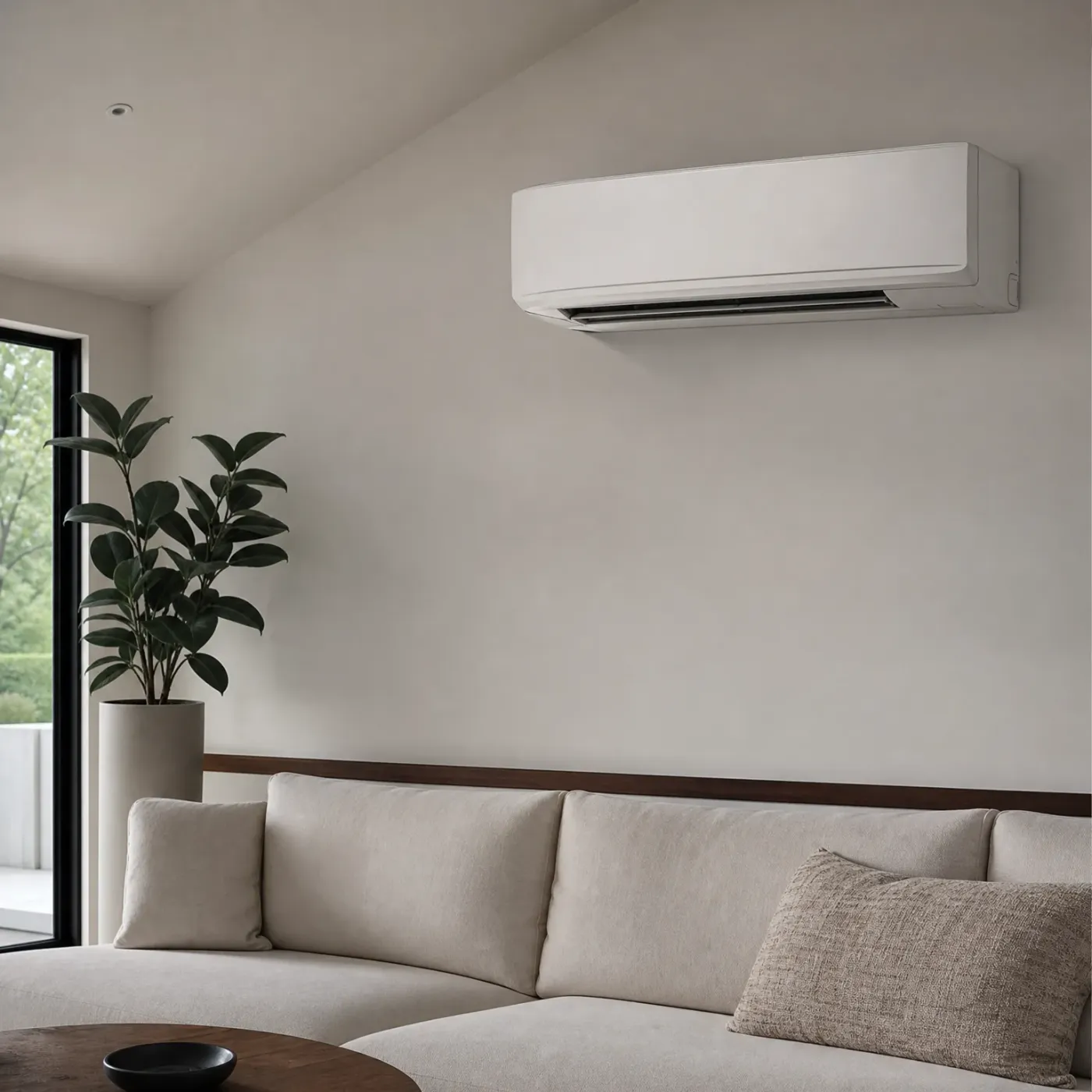
A white wall-mounted mini-split air conditioner near the sloped ceiling of a living room with a light sectional sofa, cushions, a potted plant, and a window showing greenery.

Skip the search

Your request goes to one pro, not a list of companies.

Explain the job once and skip repeating it on every call.

Get a licensed local pro

There's no charge for the request.

A closed dark laptop and a ceramic mug of coffee on a wooden dining table, with wooden chairs, a dark kitchen cabinet with cutting boards and a potted plant, and a leafy plant by a window in the background.

What happens inside the unit when the valve won't switch

The reversing valve sits on the outdoor unit and slides back and forth on a signal from the board. Slide one way, refrigerant runs the normal direction and the indoor head blows cool. Slide the other way, the flow reverses and the indoor coil gives off heat instead of absorbing it. That slide is done by a small solenoid coil mounted on top of the valve. When the coil weakens or the valve body sticks from wear, the slide doesn't finish, and the system keeps running in cooling even though the board thinks it switched. Everything downstream, the fan speed, the compressor, the thermostat reading, is working off a mode that never actually changed.

A technician who works on these units through an Illinois winter knows that symptom on sight and knows what order to check it in. Finding someone like that on your own means calling a handful of HVAC companies, explaining the same thing to each one, then sitting on quotes trying to tell them apart. Ask here and the request goes to one licensed local contractor who already knows this failure, so you're not fielding five callbacks to sort out who actually does mini splits.

A gray upholstered sofa with a beige cushion and knit blanket beside a curtained window, with a white mug and a book on a dark wooden table in the foreground and a lit lamp in the background.
  1. The thermostat or handset sends a call for heat to the board.

  2. The board sends voltage to the reversing valve's solenoid coil.

  3. The valve slides to redirect refrigerant flow through the system.

  4. The outdoor unit starts pulling heat from the outside air.

Power costs 17.67 cents per kilowatt-hour statewide

At 17.67 cents per kilowatt-hour, a mini split stuck blowing cold air while it tries to heat your house is running the outdoor unit hard for nothing. If the reversing valve can't switch, you're paying for a compressor working overtime with no warmth to show for it.

EIA-861 2025 statewide residential average

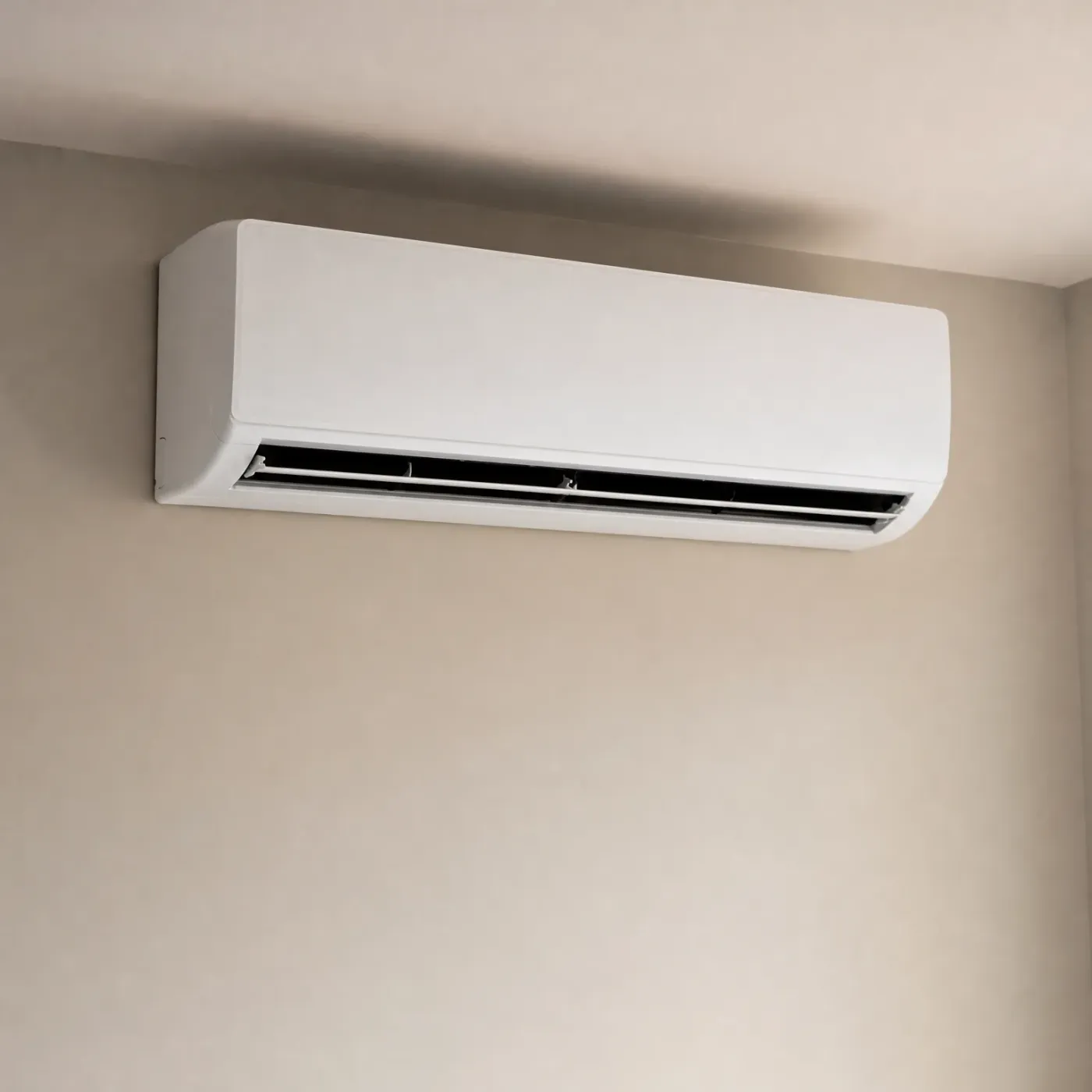
A white wall-mounted mini-split air conditioner installed near the ceiling on a plain beige interior wall.
A mini split that's switching modes the way it's supposed to sits quiet most of the time, with a closed, even panel and no trouble finding its set point.
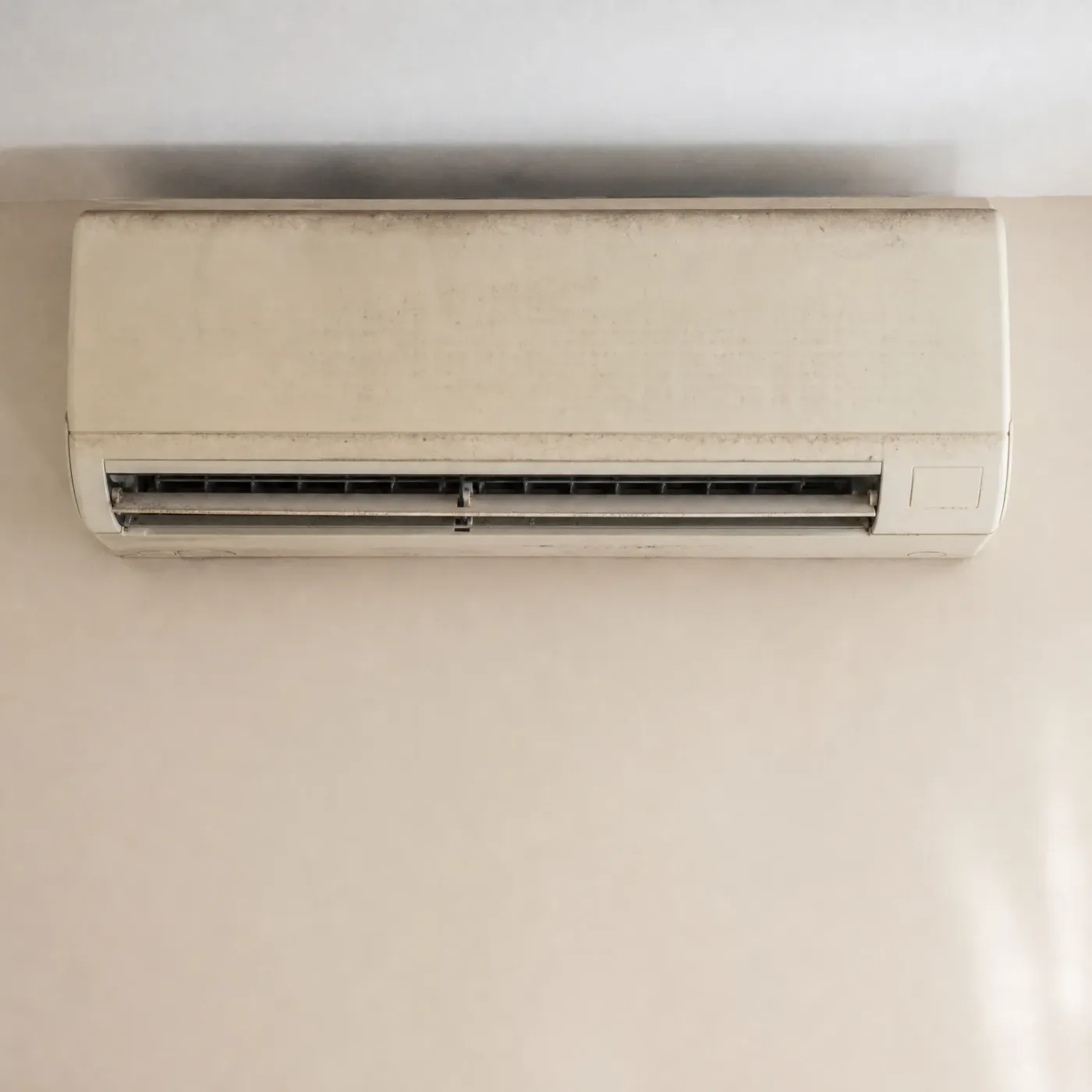
A dusty, discolored wall-mounted mini-split air conditioner unit near the ceiling of a plain beige interior wall.
Heavy discoloring and dust like this usually mean years of running without anyone checking the reversing valve or the coil behind it.
A woman with shoulder-length dark brown hair in a cream knit cardigan sits in an upholstered armchair beside a window, looking off to the side, with a white bookshelf and potted plant blurred behind her.
A woman with dark hair in a bun sits wrapped in a chunky knit blanket on a couch with a child resting his head on her shoulder, eyes closed, beside a lit lamp and bookshelf indoors.

Where this leaves you

  • Cold air on a heat call almost always traces back to the reversing valve, its solenoid coil, or the board telling it what to do.
  • A gas furnace can carry the house while the valve or board gets fixed, so you're not stuck without heat in the meantime.
  • A technician who services mini splits all winter in Illinois has likely seen this exact fault more than once this season.
  • Running the outdoor unit while it blows cold adds to a power bill that's already high at Illinois rates, with nothing to show for it.
  • Matching with one licensed, local contractor means a single technician looking at your unit, not several companies working the same lead.
  • Checking the handset settles whether this is a quick fix or a part that needs a trained eye.

Cold air on a heat call means the mode switch isn't happening the way it should, and in a system that heats with a reversing valve, that comes down to the valve itself, the solenoid coil that moves it, or the board sending the signal. That's the short list. None of those three require guessing, and a technician checking them in person will know within a visit which one is at fault. If your house heats with gas, the furnace is doing the real work regardless, so a stuck valve costs you on the electric bill rather than leaving you cold while it gets sorted out. That matters at Illinois power rates, where an outdoor unit running hard for no heat is money spent for nothing. What you're looking for now isn't a diagnosis you do yourself. It's someone who's already seen this fault this winter, because mini splits in this climate get worked hard enough that a local technician who services them every season has likely run into a bad reversing valve or a misreading board more than once already. Matching here means one contractor looking at your specific unit, not a handful of companies calling about the same job. That's one technician, local to Illinois, who already knows what tends to fail in these systems when the thermostat says heat and the air coming out says otherwise. The mode switch is either working or it isn't, and now you know what to ask about when someone's standing in front of your outdoor unit.

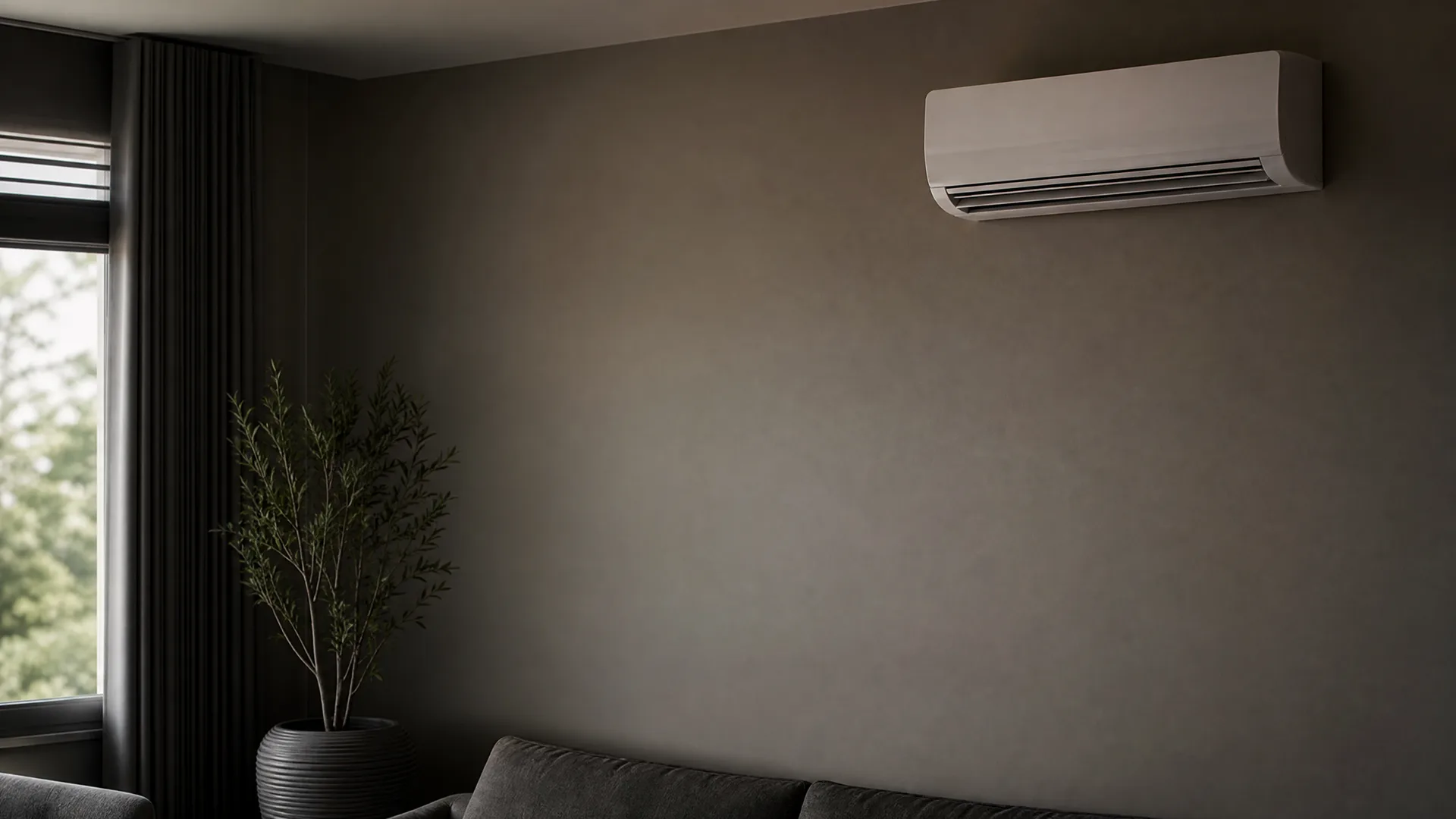
A white wall-mounted mini-split air conditioner high on a dim gray interior wall, with a potted thin-leaved plant, dark curtains and a window at left and a dark sofa at bottom.

Explain it one time

The pro who reaches out is licensed in Illinois.

Step 1 of 3: Equipment