
Running clean
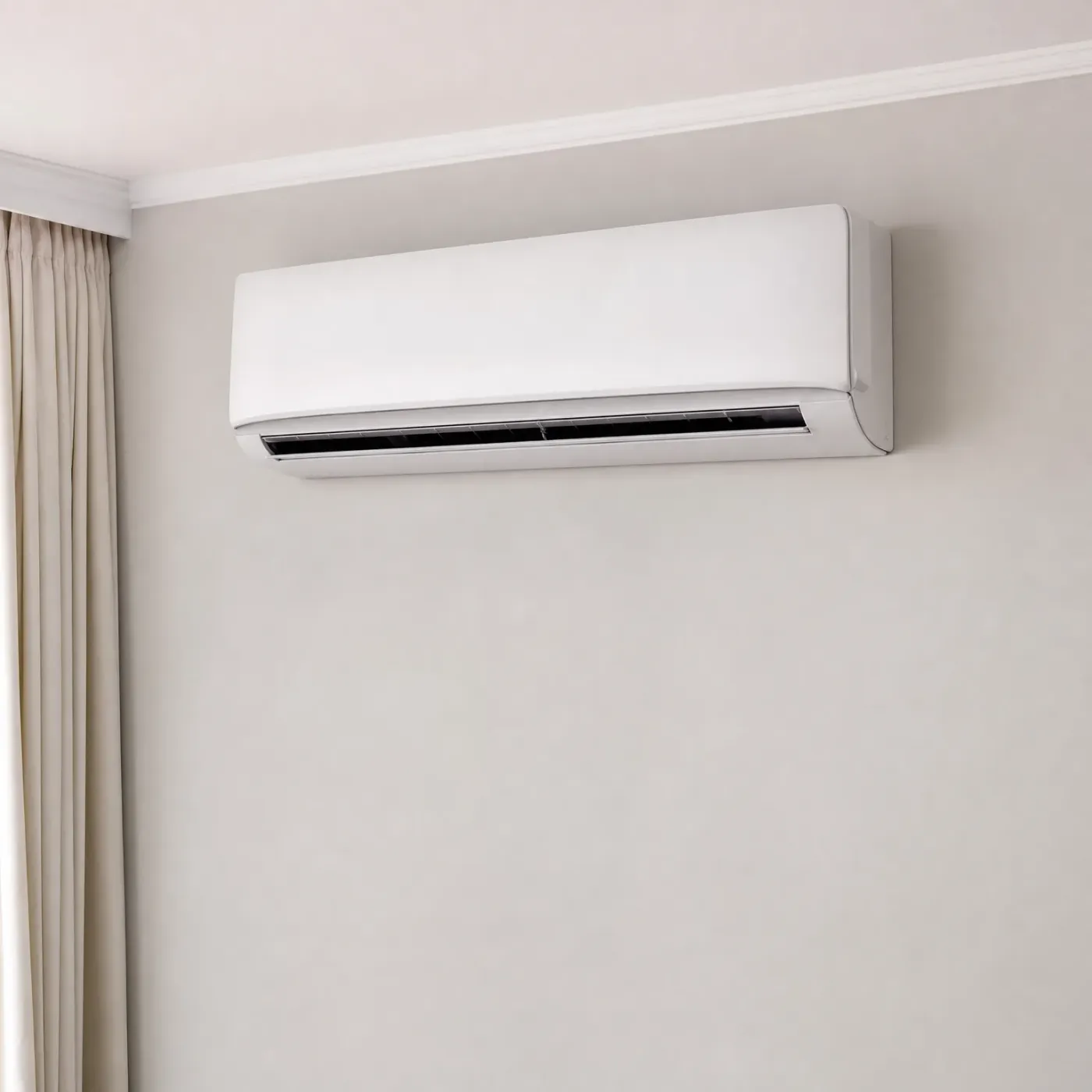
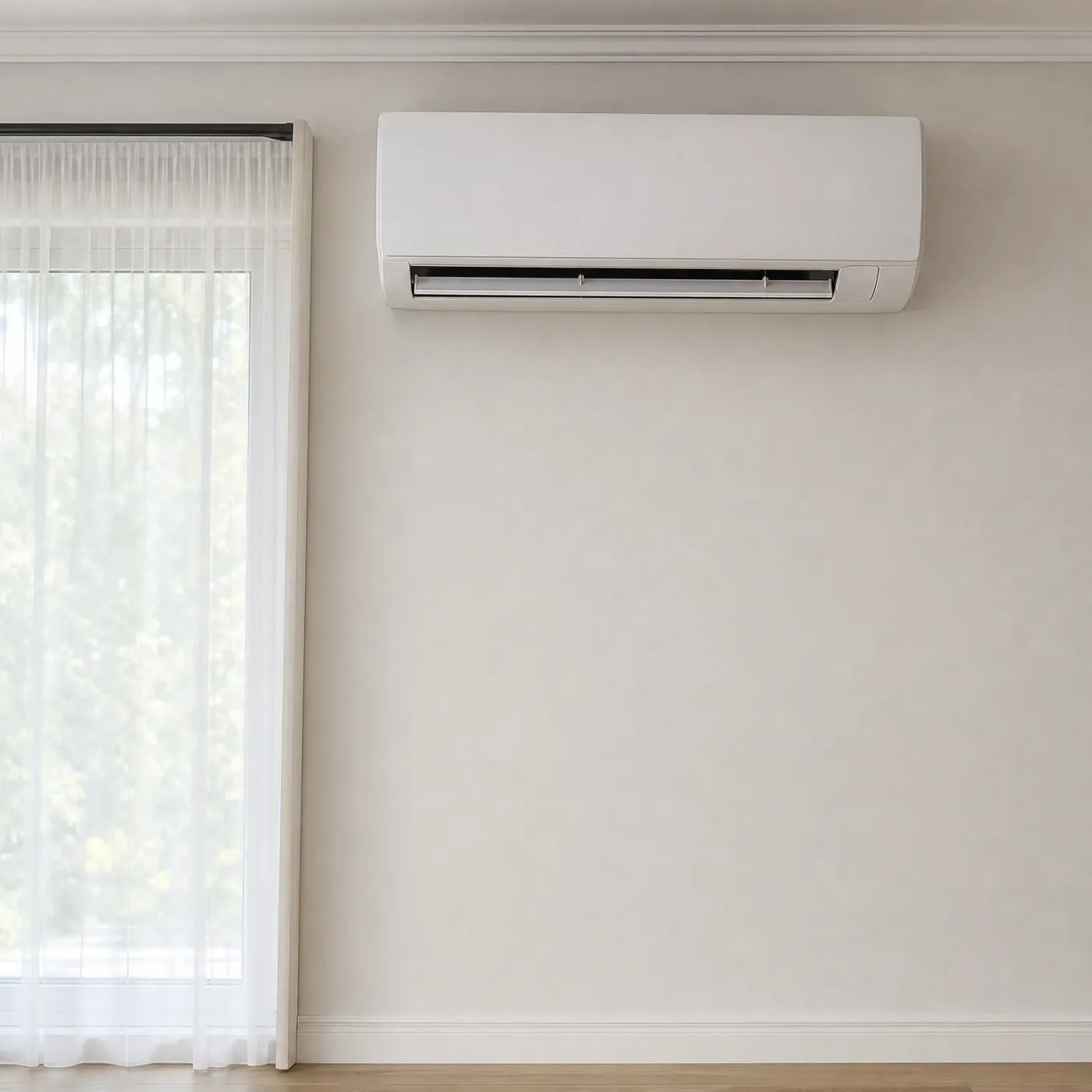
This is what a mini split looks like when nothing's wrong. The coil sheds its frost on schedule, the fan keeps moving air, and the case stays dry. No buildup, no dark streaks, nothing holding onto moisture it shouldn't.

Finding a pro stops being your job
Ice on your mini split in the middle of an Illinois winter usually means it's trying to heat the air outside when conditions are working against it, or something is actually wrong, like a stuck defrost cycle or a refrigerant leak. This page gets into what's normal and what's not, and how to get the unit looked at without chasing down who to call yourself.
Let a pro reach outA thin coat of frost on the outdoor unit is normal. Your mini split pulls heat out of cold air, and moisture in that air freezes on the coil as it runs. The system should notice this on its own and switch into defrost mode every so often, melting the frost off before it builds up. Ice that keeps growing, covers the coil solid, or won't go away after a defrost cycle means that process has stopped working the way it should. On an Illinois winter day with the temperature well below freezing, a unit with a stuck defrost sensor, a low refrigerant charge, or a fan that's slowed down will ice over fast, because the coil runs colder than it's supposed to and the frost never gets the chance to melt off. A heavy, spreading layer of ice is the system telling you it can't clear itself. Left alone, it blocks airflow across the coil and the unit works harder for less heat, so it's worth having someone look at it before that gets worse.





Summers here run humid, with a dew point averaging 63°F across June, July and August, according to NOAA climate data. That's the same outdoor unit working the other direction in winter, and a coil that sat wet and sticky all summer doesn't get a break before the freezing starts. In winter, moisture clings to that coil every time the defrost cycle runs, and if drainage is slow or a fan isn't clearing air the way it should, ice builds up faster than it melts off. You'd notice the outdoor unit caked in frost that doesn't clear in a few hours, or the indoor air blowing cooler than it should.
NASA POWER T2MDEW county cells weighted by homes
The indoor coil pulls heat out of the air passing over it.
Refrigerant carries that heat outside through the line set.
The outdoor coil dumps the heat and gets cold doing it.
Moisture in the air freezes onto that cold outdoor coil.
Look at the outdoor unit. If ice is building on one spot instead of spreading evenly, or if it's thick enough that you can see it from the window, that's past normal. Listen for the fan still running while the coil looks frozen solid, or for a hissing or gurgling sound from the line set, which can point to a refrigerant leak. Check whether warm air is still coming from the indoor head. If the air has gone cool or stopped, or if ice has crept onto the indoor unit itself, the system is running without heating your house, and in an Illinois winter that's a problem that gets worse the longer it sits, especially overnight while you're asleep.
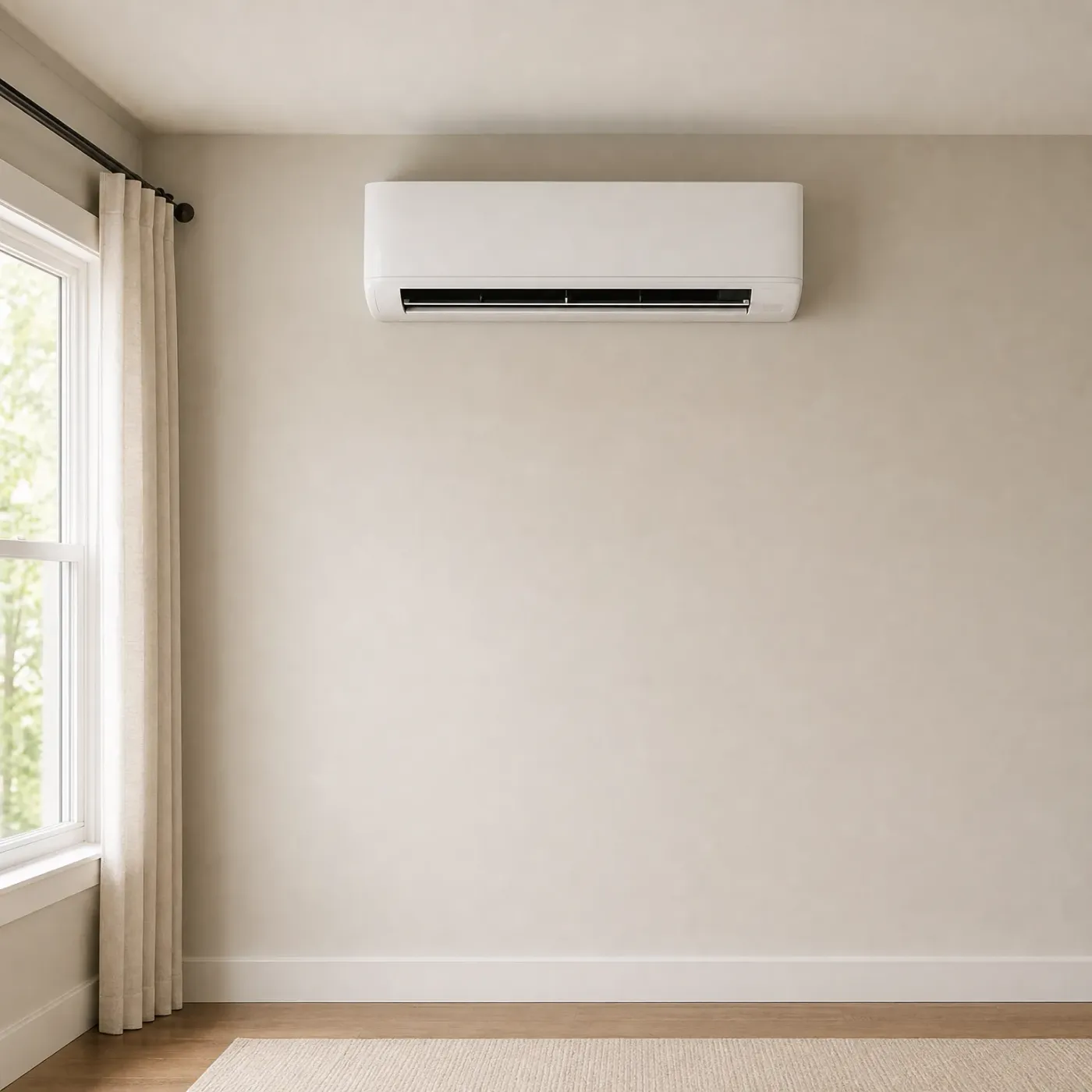
This is what a mini split looks like when nothing's wrong. The coil sheds its frost on schedule, the fan keeps moving air, and the case stays dry. No buildup, no dark streaks, nothing holding onto moisture it shouldn't.
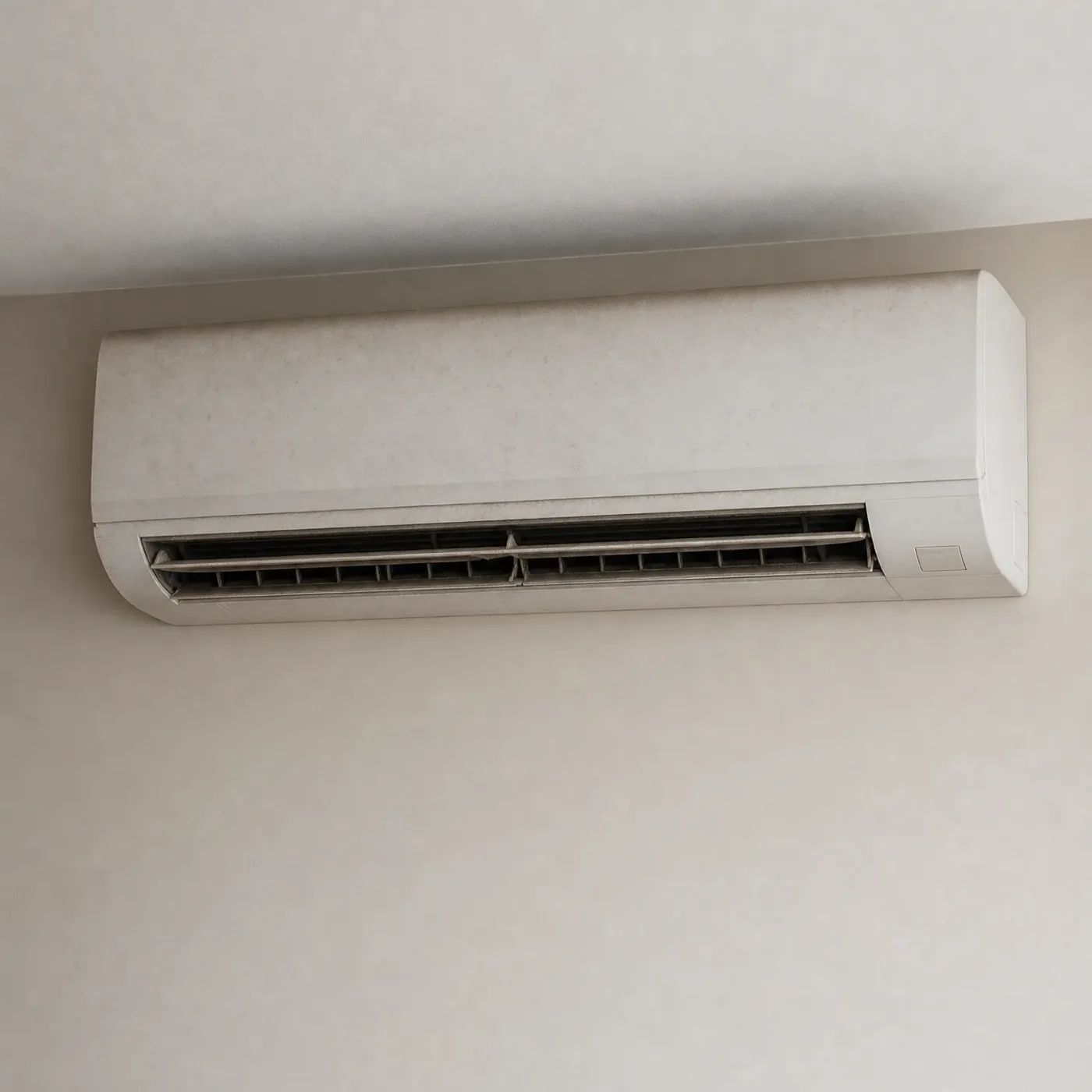
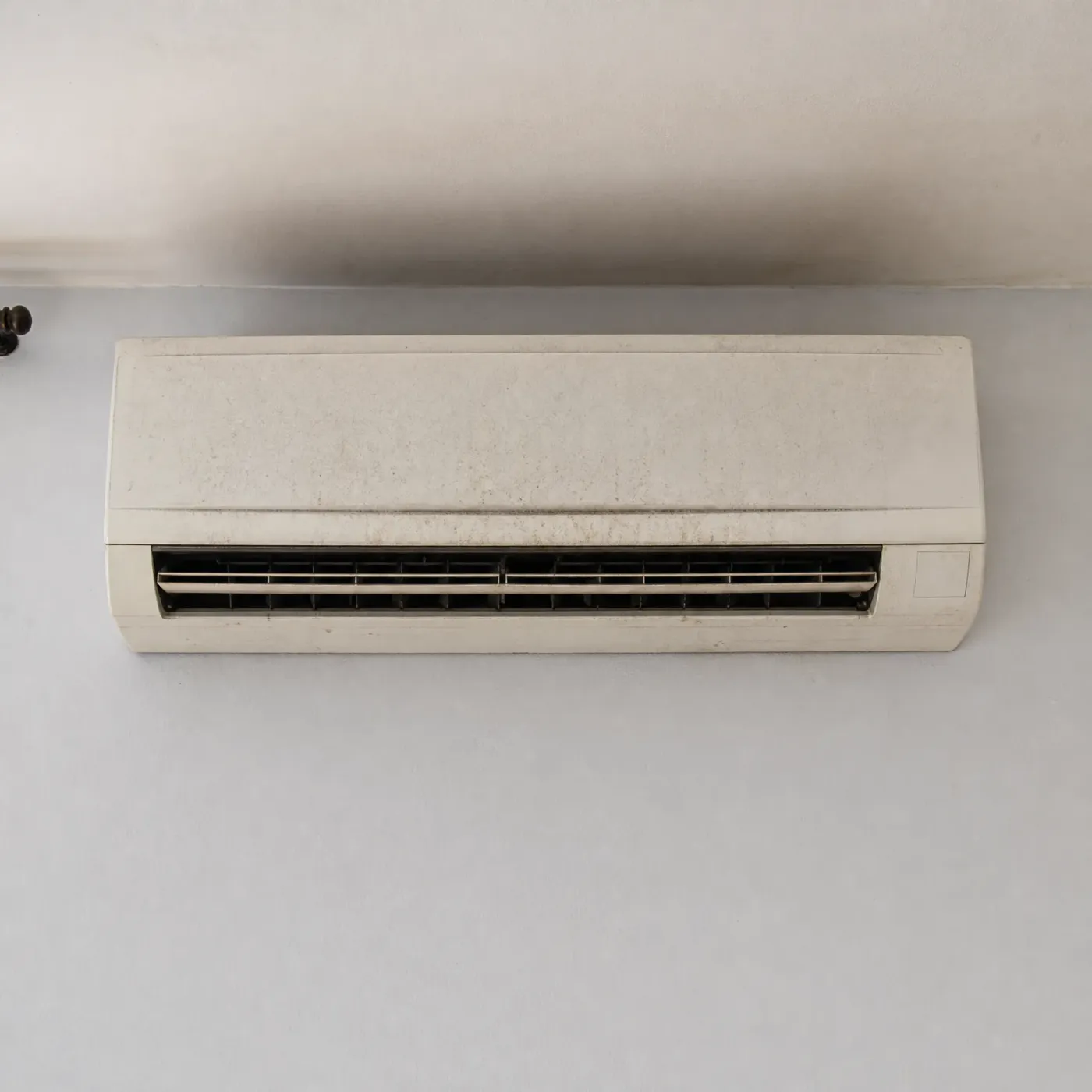
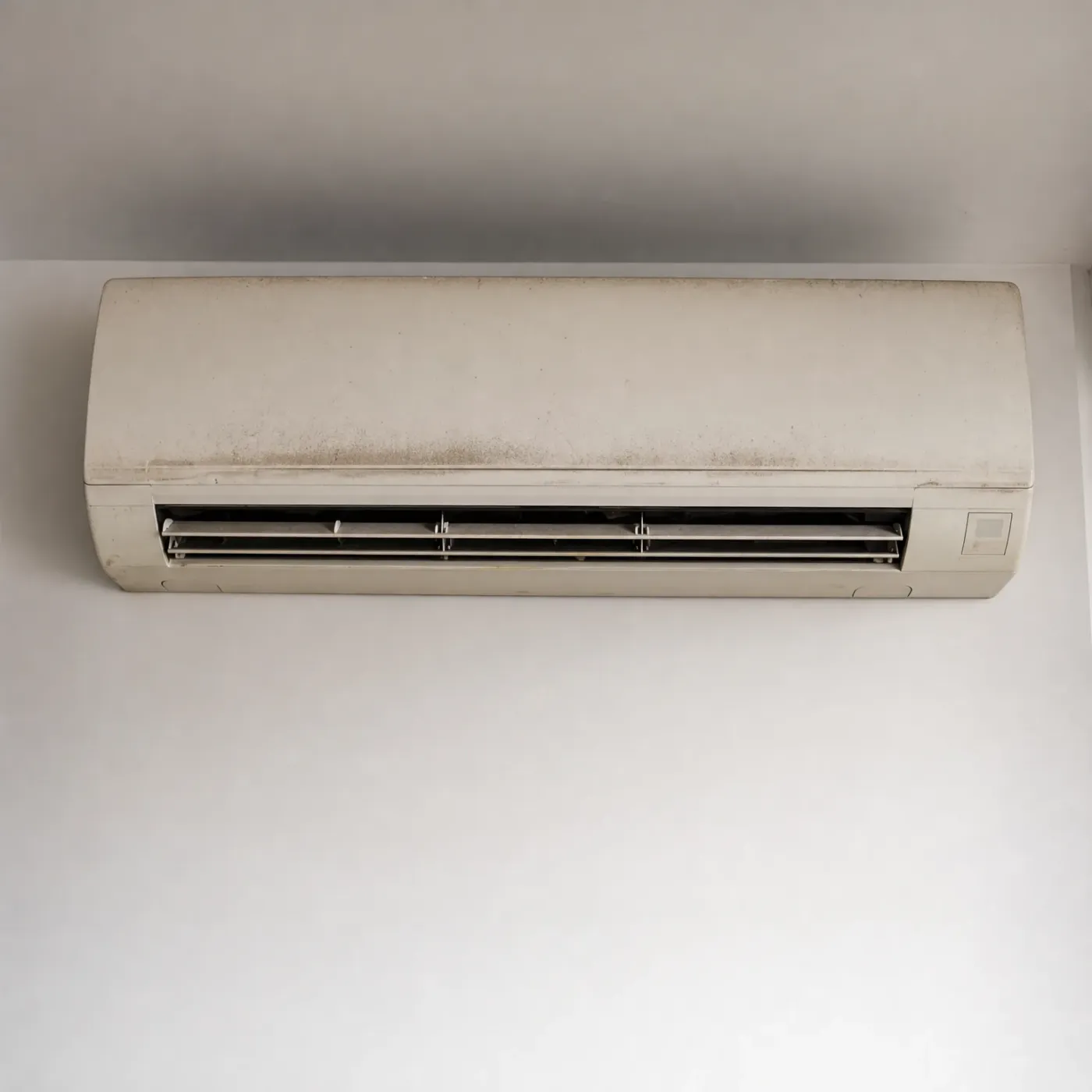
Dust and grime like this on the casing usually sit on the coil underneath too. That film holds water against the metal instead of letting it drain, and a coil that stays wet is a coil that ices over faster than it defrosts.
You've probably watched the outdoor unit and tried to figure out if the frost melting off is on a timer or if the system is actually sensing something. It matters because if that sensing part fails, the unit can keep heating instead of defrosting, and the ice just builds until something else goes wrong.
A thermistor clipped to the outdoor coil reads its temperature the whole time the unit runs. Once that coil drops to a point where frost starts forming fast, the control board switches the system into defrost. It reverses the refrigerant flow for a few minutes, which sends heat back out to that outdoor coil and melts the ice off, then switches back to heating once the coil warms up. None of this is on a fixed schedule. It's the thermistor's reading that decides, along with how long the unit has been running since the last defrost. If that sensor is giving a bad reading, or sending no reading at all, the board never gets the signal to start, and frost just keeps building with nothing to stop it.
Your request goes to one pro, not a list of companies.
No fee to send it, and nothing to sign.
Most houses in Illinois heat with gas, so a mini split running as the main heat source is already the exception, not the rule. That means the unit works harder on the coldest nights, running longer stretches to keep up, and a longer runtime gives frost more chances to build between defrost cycles. If the defrost sensor or control board is slow to respond, the coil has more time to ice over before the system corrects itself, and with power costing what it does here, a unit straining against ice is burning money while it struggles.
A mini split that can't clear its coil doesn't just lose heat, it starts pulling more current trying to push air through ice-covered fins. The compressor works against a blocked coil instead of a clean one, and that strain shows up on the electric bill before you ever see the ice from the window. Left alone, the same stuck defrost cycle that let frost build in the first place keeps feeding itself, since a frozen coil can't shed heat efficiently, which means more runtime for less warmth every day it goes unchecked.
At 17.67 cents a kilowatt-hour, a mini split stuck in a bad defrost loop costs you more than a few minutes of noise. Every extra cycle trying to melt ice it can't clear is drawing power the whole time, and on an electric heat setup that shows up on your bill fast.
EIA-861 2025 statewide residential average
You can get through a cold snap with ice on the unit if the heat isn't shutting off and the house is staying warm enough. Keep the area around the outdoor unit clear of snow drifts so air can still move through the coil. Don't chip at the ice yourself. A scraper or a stream of hot water can bend the fins or crack the coil, and then you're looking at a part replacement instead of a repair. If the mini split is your only heat and it's losing ground on a night in the teens, that's not a wait-it-out situation anymore.
A stuck defrost cycle or a low refrigerant charge doesn't fix itself, and leaving it alone usually means more ice next time, not less. Someone who services these units all winter in this area has seen which boards fail and which lines develop slow leaks, and can tell the difference from what's happening at the unit rather than guessing. One contractor looking at your system beats several trying to win the job over the phone. Once you send the request, the search for who's available is off your plate, and you can go back to watching the thermostat instead of the ice.


Frost that comes and goes on its own is just the unit doing its job. Ice that sticks around, builds up, or sits there while the fan stalls or the warm air stops is a sign something in the defrost cycle isn't working the way it should. A stuck sensor, a failed reversing valve, or a refrigerant leak can all look the same from your window: ice that won't clear.
Snow piled against the outdoor unit or a coil caked in dust won't cause that kind of failure on its own, but it keeps a struggling unit from recovering the way a clean one would. And on an electric system working through an Illinois winter, every hour spent stuck in a bad defrost loop is an hour of power going toward melting ice instead of heating your house.
None of this is something to diagnose by watching through a window for a few more days. Once you know the frost isn't clearing on schedule, the next step is having someone look at the actual unit: the defrost board, the sensor, the charge.
Mini splits aren't the default heat source in most Illinois homes, which means whoever looks at yours should already know this equipment, not be learning it on your roof. A local contractor who works on these units all winter has likely already seen this failure on a system like yours. Send one request and you hear from that one contractor, not a handful of companies competing for the job.
One request and it's handed off
