Why your mini split makes noise in an Illinois winter

Fill out one short form instead of calling around.

Skip the calls

Why does my mini split make so much noise in winter in Illinois?

Cold snaps bring out sounds your mini split doesn't make the rest of the year. A clicking when it starts, a rattle from the outdoor unit, or a steady hum that seems louder than it was in summer. You want to know if this is just how the system handles an Illinois winter or if something is actually wrong with it.

Most of that noise is the defrost cycle, and it's normal at Illinois temperatures

Below freezing, the outdoor unit builds frost on its coil and has to clear it off to keep working. That means the reversing valve switches back and forth, the fan changes speed, and sometimes the unit runs a brief defrost that sounds like it's working harder than usual. A clicking at startup and a whoosh when defrost kicks in are both part of this. What's not normal is a grinding or rattling that wasn't there before, or noise that gets louder as the winter goes on. Gas furnaces don't have to manage frost this way, so a mini split working through an Illinois winter will always sound busier than the furnace it's paired with.

A gray-haired man in a dark sweater sits on a light gray sofa in a living room, looking toward a sunlit window with trees outside.
A gray-haired man in a dark blue sweater sits on a light gray sofa in a sunlit living room, looking off to the side, with a potted plant, shelving unit, and large glass doors behind him.
A bearded man with graying hair in a dark green sweater sits on a sofa in a living room, looking off to the side, with a sliding glass door and a dim kitchen doorway behind him.
A gray-haired man in a dark knit sweater sits on a light gray sofa in a living room, looking toward a sunlit window, with houseplants, a lamp, and framed art in the background.
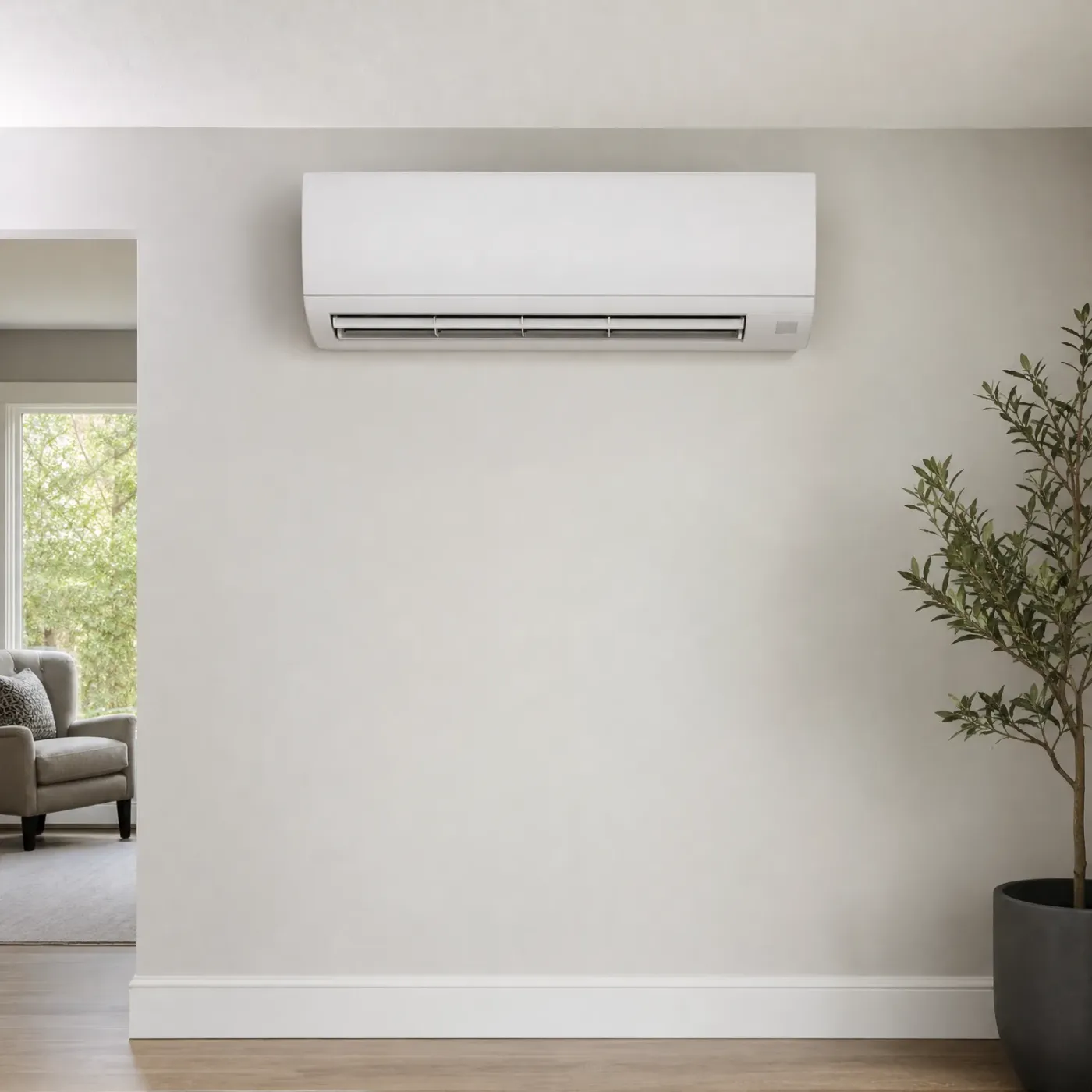
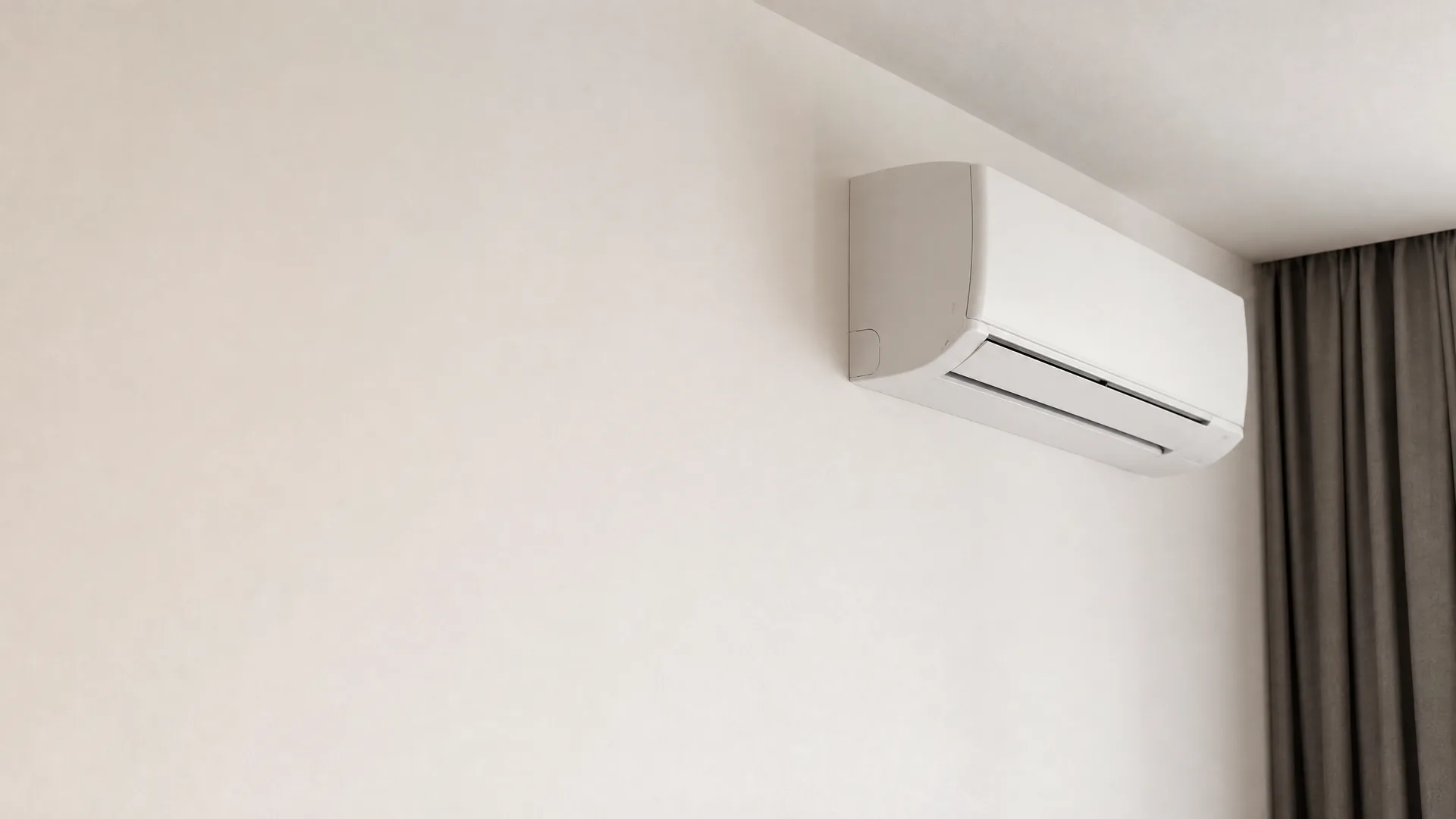
A white wall-mounted mini-split indoor unit high on a beige interior wall, with a potted olive-like tree at right and an armchair and window visible through a doorway at left.
A mini split that's running fine keeps a steady, low sound, nothing you'd notice over a conversation.
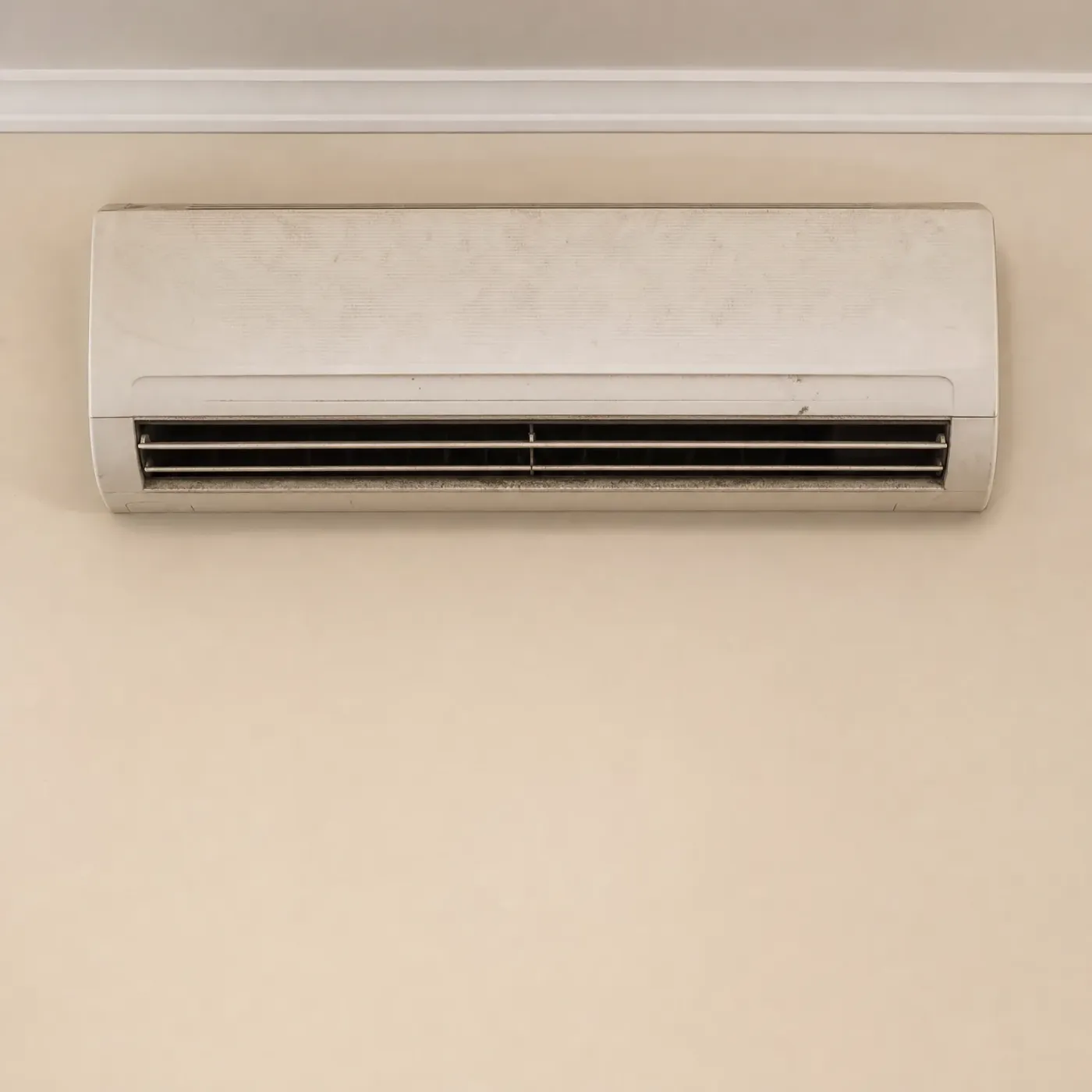
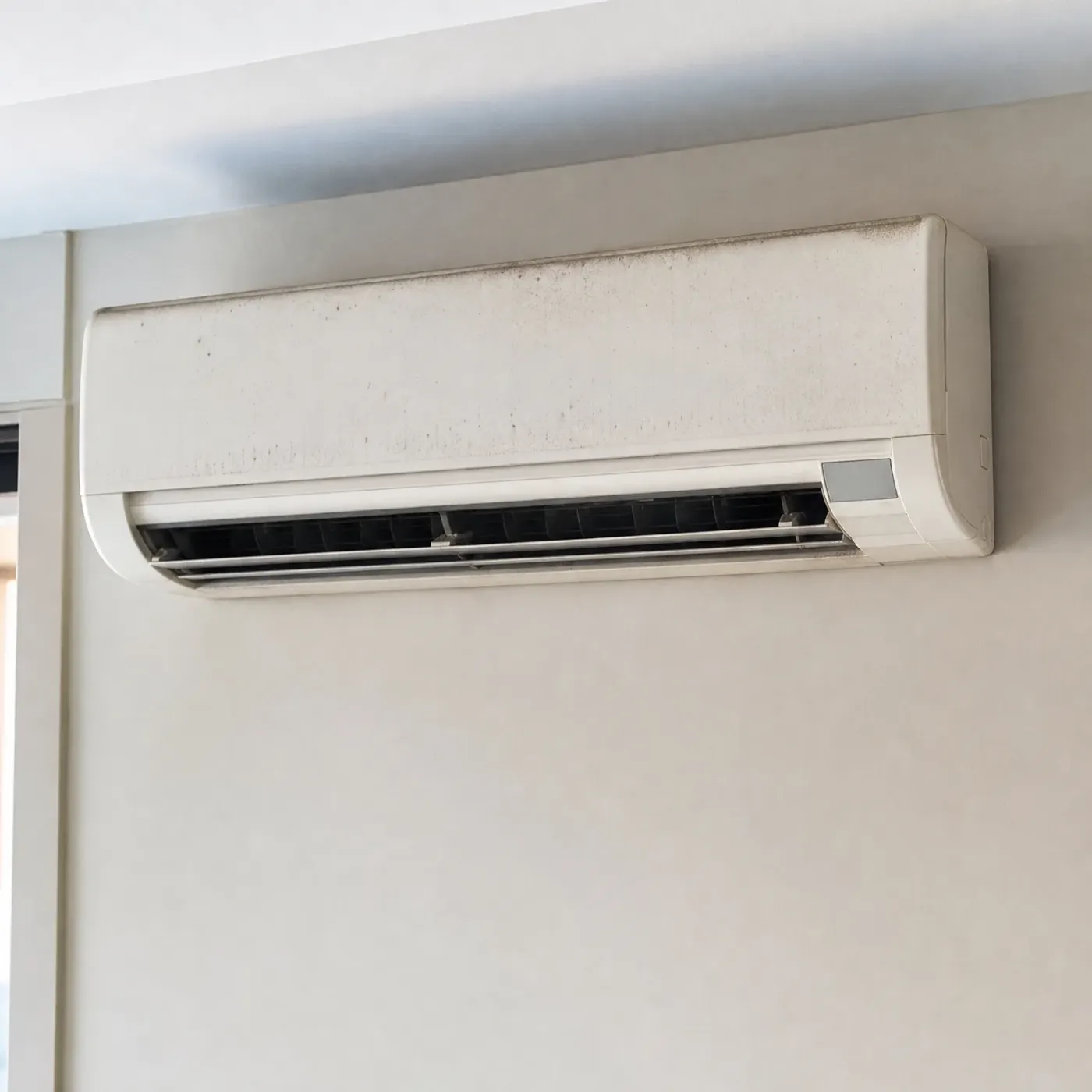
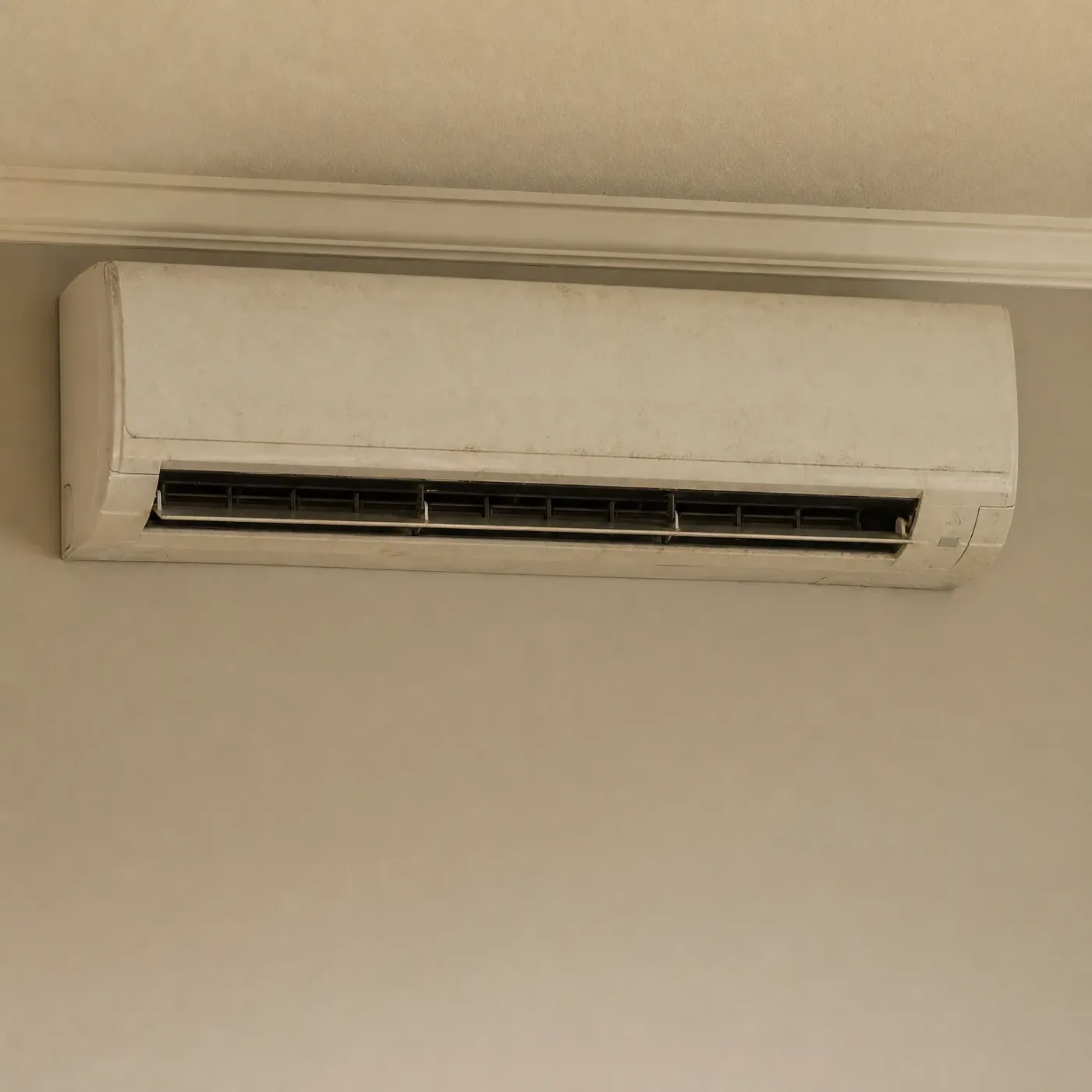
A wall-mounted mini-split air conditioner indoor unit with visible dust and staining, installed on a beige interior wall below white crown molding.
Caked dust on the coil and vents makes the unit labor, and that strain is where the clicking and rattling start.
A two-story house with light beige horizontal siding, a gabled roof, a small covered front porch with dark door, and shrubs along the foundation, set behind a mown lawn and wet sidewalk with large leafy trees on both sides.

Summers here run humid, with the dew point averaging 63°F across June, July and August according to NOAA climate data. That kind of air holds a lot of moisture, and your mini split's coil has to pull that moisture out along with the heat. Over a humid summer, that coil picks up more grime than it would in a drier climate, and caked dust holds onto dampness instead of shedding it. By the time cold weather hits, a coil that went into winter dirty is working harder to move air, and that extra strain shows up as the clicking and rattling you hear when the unit starts in the cold.

NASA POWER T2MDEW county cells weighted by homes

Normal Sound or a Problem

Normal cold-weather sound

  • A soft whoosh or airflow hum when the system ramps up to meet a cold snap, settling once the room catches up.
  • A brief clicking at startup or shutoff as the refrigerant valve and relays switch, lasting only a few seconds.
  • A low outdoor fan hum that runs longer on single-digit nights because the unit has more work to do.
  • A quiet defrost cycle every so often, sometimes with a faint hiss, as the outdoor coil sheds frost buildup.

Sign something needs attention

  • A rattle from the outdoor unit that doesn't stop, which can mean a loose panel, fan blade, or ice buildup on the coil.
  • Clicking that repeats over and over instead of just at startup, which often points to a failing relay or a refrigerant issue.
  • A grinding or squealing from the indoor or outdoor fan motor, which usually means a bearing is wearing out.
  • A hum that's noticeably louder than it was last winter, which can mean the compressor is straining under a low refrigerant charge.
  • Banging or knocking from the line set, which can mean refrigerant is moving through in slugs instead of a steady flow.
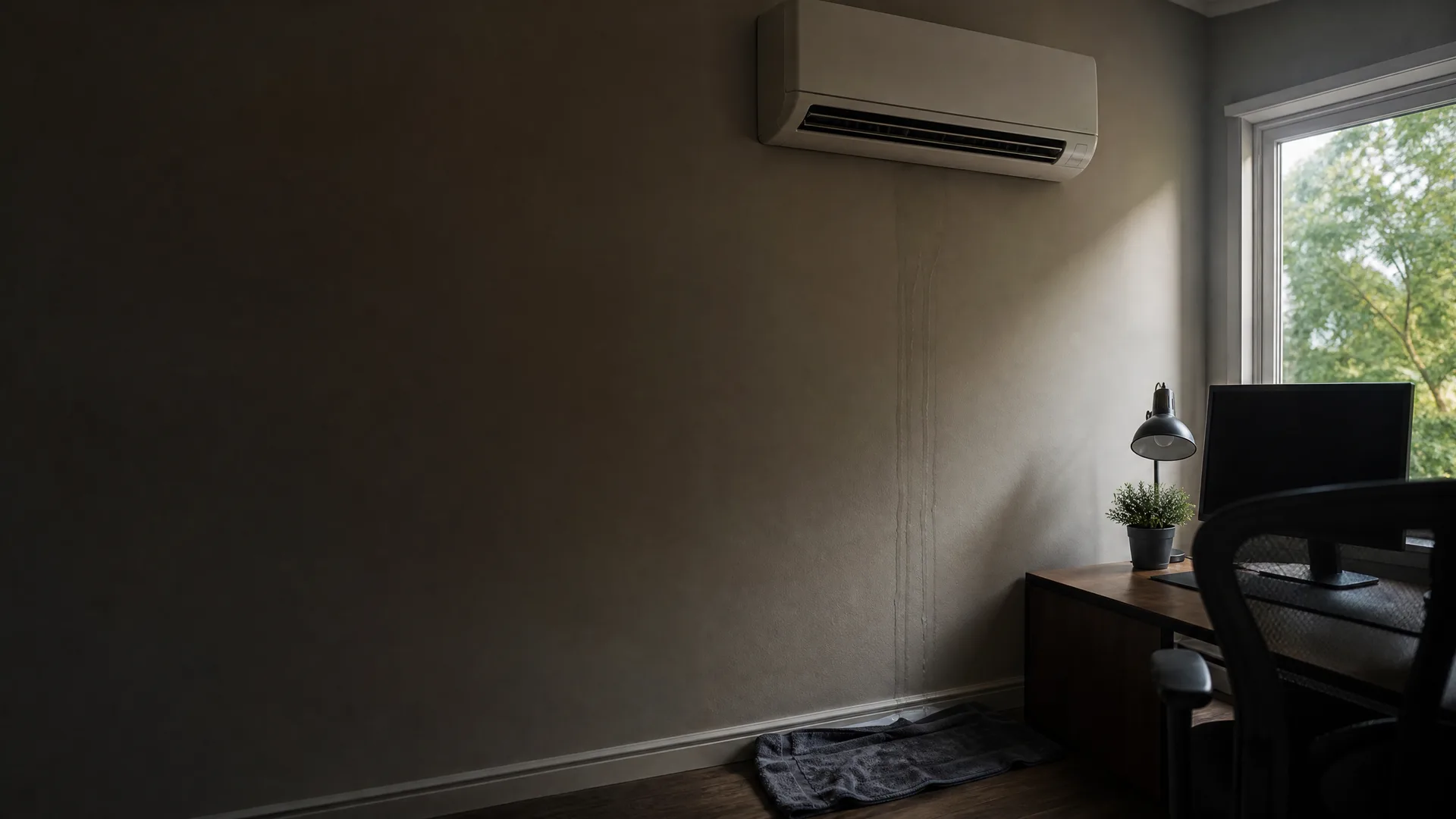
A dim room with a wall-mounted mini-split air conditioner above a faint vertical stain running down the wall, a folded grey towel on the wood floor at the baseboard, and a desk with monitor, lamp, small plant and office chair by a window.

Mid-July, late afternoon, and you're at the desk in the home office when you notice the carpet feels damp under your chair. You look up and see it: a wet streak running down the wall below the mini split's indoor unit, the paint starting to bubble at the edge of it. You grab a towel from the hall bathroom and drop it on the floor, pressing it against the baseboard. Outside, the air sits thick the way it does most July afternoons here, and the unit is still running, still blowing cool air into the room like nothing's wrong. You stand there a minute, towel under your foot, wondering how long the water's been getting into the wall before you ever saw it on the carpet.


A closed silver laptop and a ceramic mug of dark coffee sit on a wooden table in front of two chair backs, with a kitchen counter, tiled backsplash, wooden cutting boards, a vase of greenery and a potted plant by a window behind.

What's actually happening inside the unit when it gets cold

A mini split heats by running the defrost cycle in reverse, pulling heat out of outside air that's near freezing. When the outdoor coil gets too cold, ice builds up on the fins. The system senses this and switches into defrost mode, reversing the refrigerant flow to melt it off. That reversal is what you're hearing: a thump or a whoosh as the valve switches, then a louder fan surge as the unit works to clear the coil before going back to heating. On a night in the teens or colder, that cycle can run several times.

A tech who works on these year-round can tell from the sound alone whether that defrost cycle is doing its job or straining against a dirty coil, a low refrigerant charge, or a fan motor on its way out. Finding someone like that usually means calling around to a few companies, explaining the sound over the phone, then again in person, and waiting on quotes to compare. Here you'd be connected with one licensed contractor local to Illinois, someone who already knows what a mini split's defrost cycle sounds like when it's struggling in this kind of cold.

Interior corner of a living room with a beige upholstered sofa and dark cushion in the foreground, a ceramic vase of leafy branches on a dark side table by a curtained window, a framed picture on the wall, and a wood-surround fireplace at right.
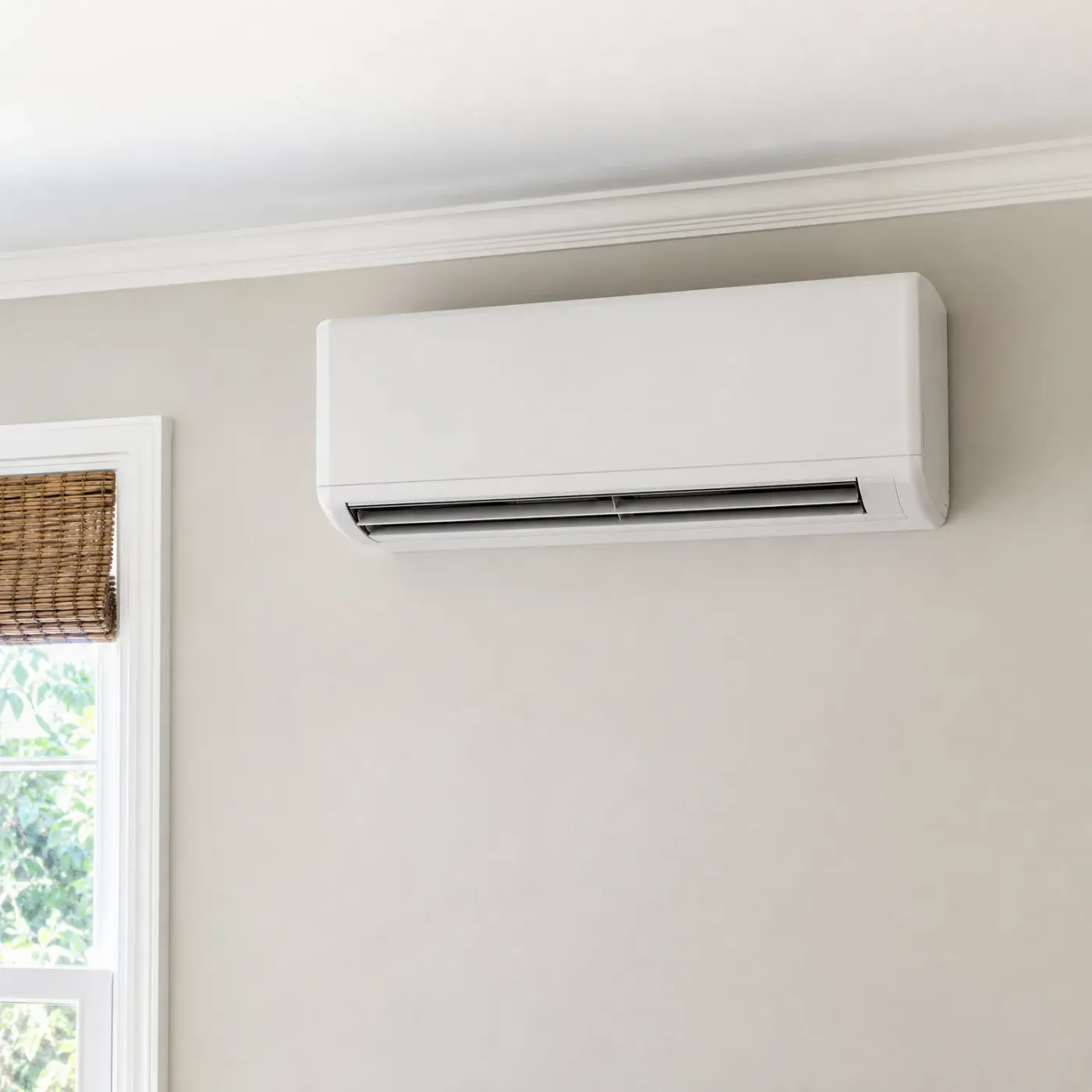
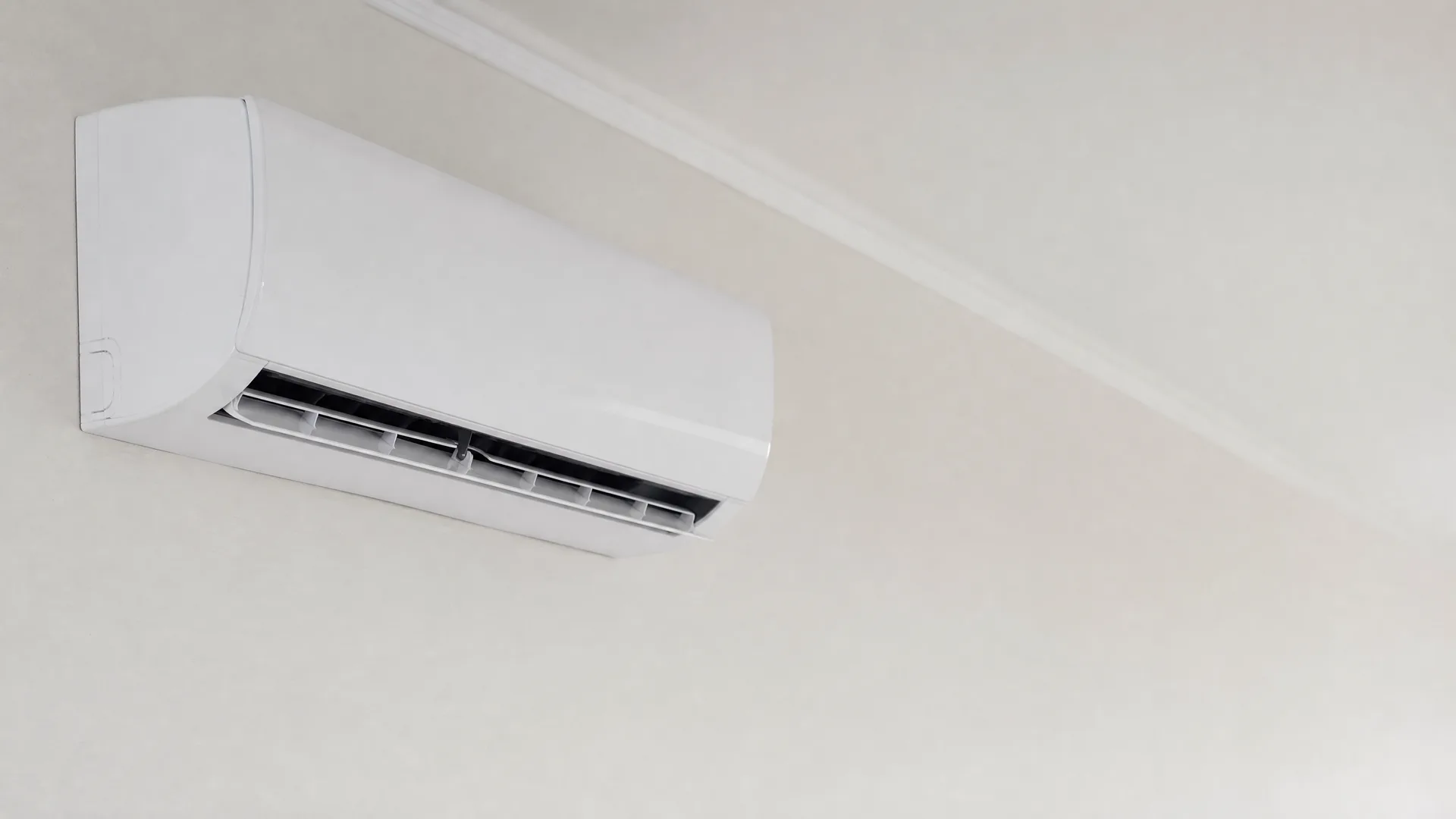
A white wall-mounted mini-split air conditioner unit installed high on a beige interior wall below white crown molding, with a window and woven shade at the left edge showing green foliage outside.

Running clean

A mini split like this cycles on and off without announcing itself. You hear a soft whoosh when it ramps up, then nothing worth noticing once the room's up to temperature. The coil and vents stay clear, so the fan and compressor aren't working any harder than they have to.

A dusty, stained white wall-mounted mini-split air conditioner indoor unit installed high on a plain off-white interior wall near the ceiling.

Choked with dust

Dust built up on the coil and vents like this makes the unit labor to push air through, and that strain shows up as noise. In an Illinois winter, a unit already working hard against the cold has even less room to spare. Left alone, it keeps drawing on power you're already paying a premium for.

A white wall-mounted mini-split air conditioner indoor unit with dark louvered vents, installed near the ceiling on a beige wall below white crown molding.
Before you get your mini split repair
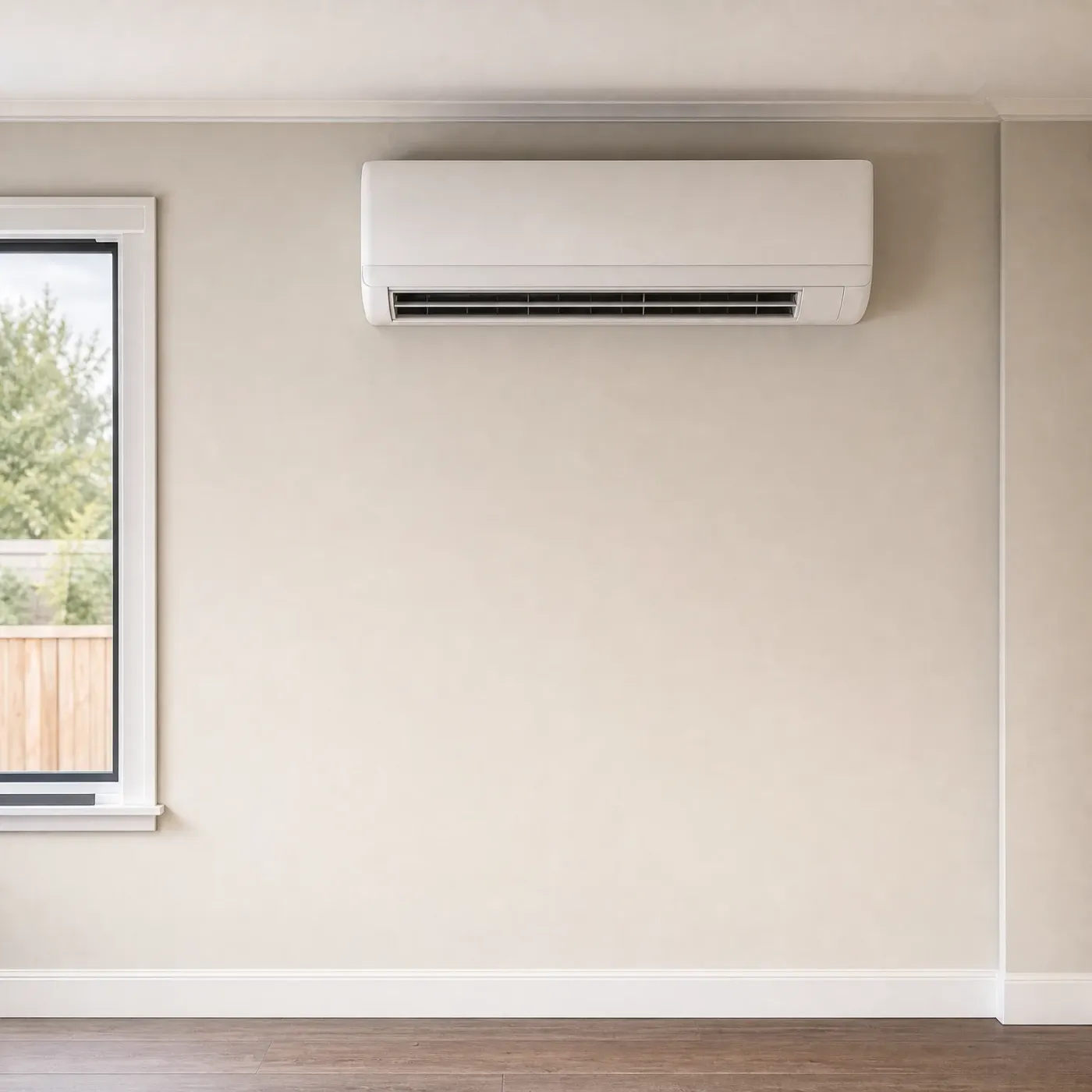
A white wall-mounted mini-split air conditioner on a beige interior wall, with a window at left showing trees and a wooden fence, and dark wood flooring below.
After you get your mini split repair
Living room with a grey sectional sofa, wall-mounted white mini-split air conditioner above it, a potted tree beside sliding glass doors with beige curtains, and a wooden coffee table with a vase of foliage in the foreground.

No phone calls to make

Only one pro gets your request, so you hear from one company.

Explain the job once and skip repeating it on every call.

Answer a few questions

It costs nothing to send, and you don't have to hire anyone.

Is this noise something to worry about?

You might notice it most at night, when the house is quiet and the outdoor unit kicks on with a rattle or a clatter that wasn't there last winter. Inside, the indoor head might buzz against the wall mount, or you'll hear a hum that carries into the next room. Some households notice the unit running longer to hit the same temperature, which shows up on the power bill. If ice has built up on the outdoor coil and the noise is coming from a fan blade knocking against it, running the system that way can wear the fan motor or bend the blade, turning a repair into a replacement.

A white wall-mounted mini-split air conditioner indoor unit installed near the ceiling on a plain beige wall.

The defrost cycle running in reverse

When outdoor temperatures drop toward freezing, your mini split's outdoor coil frosts over the same way a car windshield does. The system reverses itself for a few minutes, sending warm refrigerant gas through the outdoor coil to melt that frost. You'll hear a whoosh or a change in pitch, sometimes a hiss, as the valve switches and refrigerant flow changes direction. That sound is the system working as designed, not a sign of trouble, and it should stop once the coil clears.

A white wall-mounted mini-split air conditioner on a plain off-white interior wall, with a gray curtain at the right edge.

Why cold makes metal parts louder

Refrigerant lines and the housing around the outdoor unit are metal, and metal contracts as it gets colder. A line that fit snugly in its clip in October can rattle against that same clip once temperatures drop into the teens or lower, because the metal has pulled in slightly. Panels on the outdoor unit can do the same thing, loosening enough to buzz in the wind. None of this means a part has failed. It means the cold has taken up the slack that summer heat kept tight.

Power costs 17.67 cents per kilowatt-hour statewide

At 17.67 cents per kilowatt-hour, a mini split working harder than it should to push past a rattle or a frozen coil shows up fast on your bill. A unit straining through winter is pulling more power the whole time it's making that noise, not just running loud for nothing.

EIA-861 2025 statewide residential average

Living with the noise for now

You can wait it out and see if it clears up on its own once the weather breaks. Some of it might. But a coil that's icing over or a fan that's rattling against a bent guard doesn't usually fix itself, and running the system through that strain all winter costs you in power at 17.67 cents a kilowatt-hour the whole time. If the noise is new this year, something changed inside the unit, and the cold snaps between now and spring will keep testing it the same way.

Getting someone out to look

A contractor who works on mini splits all winter in this area has heard these sounds before and knows what a frozen coil versus a loose fan blade sounds like from the driveway. One visit, one diagnosis, instead of you searching around, calling a few places, and walking through the same description of the rattle three separate times. Whatever's causing it gets found and fixed, and you're not guessing whether the noise means something serious or something that can wait until spring.

A middle-aged woman with shoulder-length dark hair, wearing a gray cardigan over a cream top, sits in an upholstered armchair and looks toward a sunlit window, with a shelf holding framed pictures and a plant behind her.
A woman and a child wrapped together in a knitted gray blanket on a couch, with the child's head resting on her shoulder and a lit table lamp and houseplant in the background.

A mini split that rattles or clicks through an Illinois cold snap is telling you something specific: ice on the coil, a loose fan blade, or a part wearing out from running harder than it should. None of that clears up by itself once the weather turns colder. Finding someone who actually works on mini splits, not just furnaces and central air, usually means a few calls and a few different answers about what's wrong. Here you get matched with one licensed Illinois contractor who services this equipment all winter and knows the difference between a defrost cycle doing its job and a coil that's frozen solid because something failed. No stack of quotes to sort through, no retelling the same story to three different companies. Just the one call, to someone who already knows what a mini split sounds like when it's struggling in weather like this, and what it takes to get it back to running quiet.

A single-story stucco house at dusk with a lit paver walkway lined by low path lights, desert plants and boulders in front, and distant mountains under an orange and blue sky.

Mini Split Repair

One form, no calling around

Step 1 of 3: Equipment
  • A beige upholstered armchair with an olive cushion sits in a sunlit corner beside a wooden side table holding a ceramic vase with leafy branches, under a framed abstract artwork, on a woven rug over a wood floor.
    • Tell a local repair pro what your mini split is doing.
    • Describe your mini split job, and a local pro who handles it gets in touch.
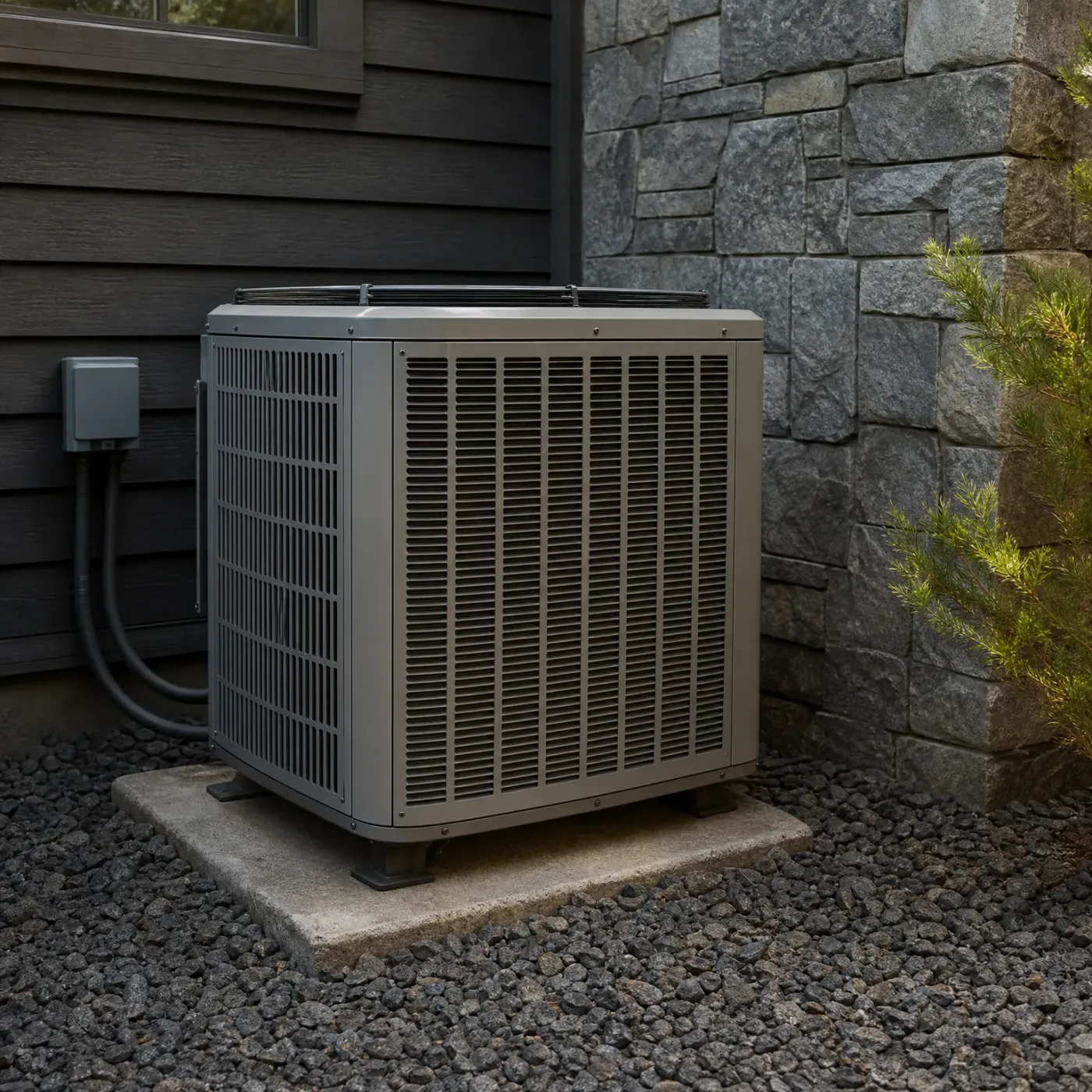
  • A gray outdoor condenser unit on a concrete pad surrounded by dark gravel, beside a dark wood-sided wall with an electrical disconnect box and a stone veneer wall with a small evergreen shrub.
    • Send the request today and let a mini split pro reach out to you.
    • Get the mini split repair search off your mind today.
  • A beige upholstered oversized armchair with a matching cushion and a knit throw draped over one arm, beside a round wooden side table holding a vase of greenery near a curtained window, with a framed landscape print on the wall and a woven rug on a wood floor.
    • One form replaces the calls you'd make to find a mini split pro.
    • Describe what your mini split is doing once, in one form.
  • Sunlit living room corner with a beige upholstered sofa, cushion and knitted throw, a round wooden side table holding a white ceramic vase of leafy branches and a small wooden bowl, a framed landscape painting on the wall, and a window at right.
    • Your request goes to one pro, not a list of companies.
    • The pro who reaches out is licensed in Illinois.