
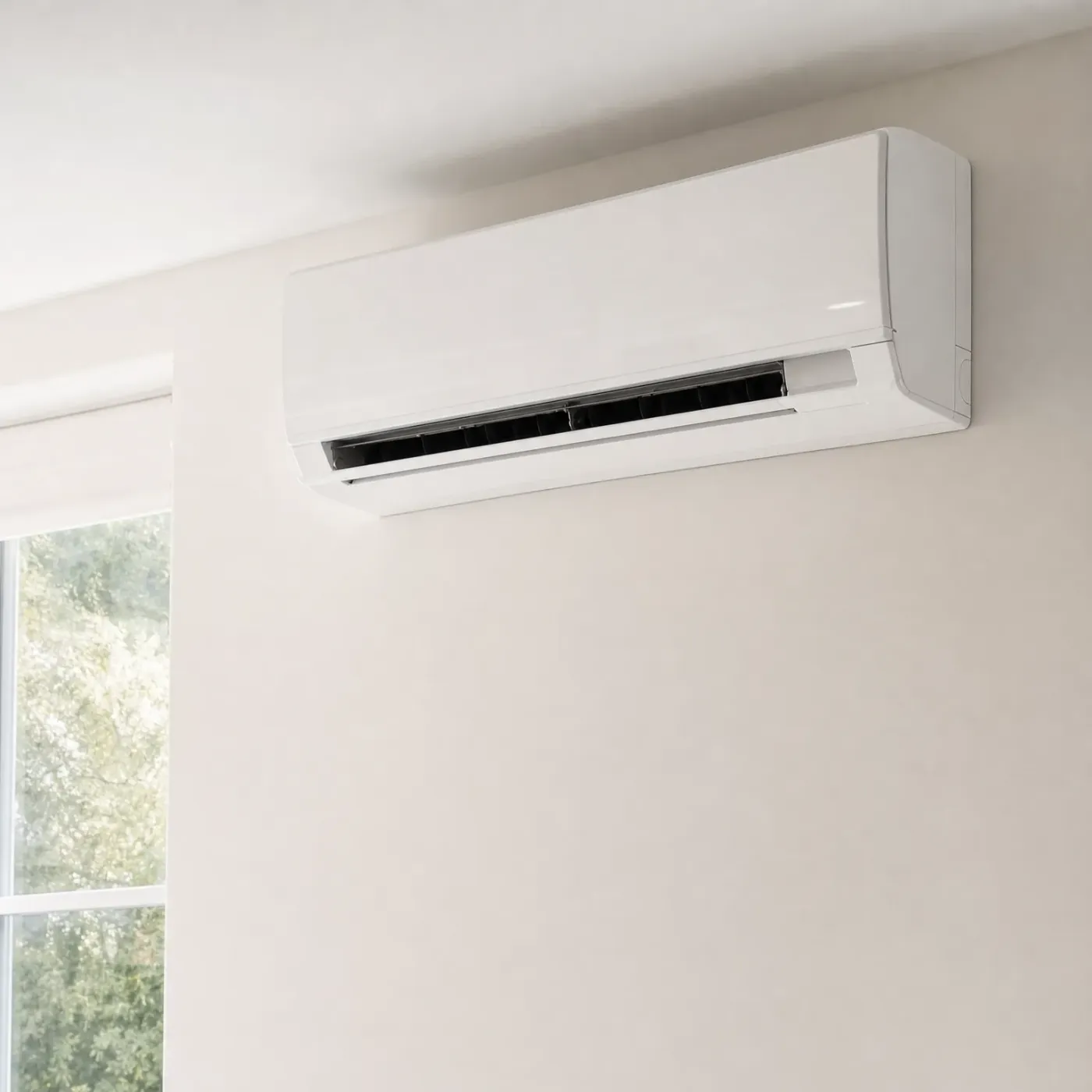
Running clean
No smell at all once the unit has been heating for a few minutes. The air coming off the indoor unit is just warm, nothing else. That's what a clean coil and a clean filter smell like, which is to say they don't smell like anything.
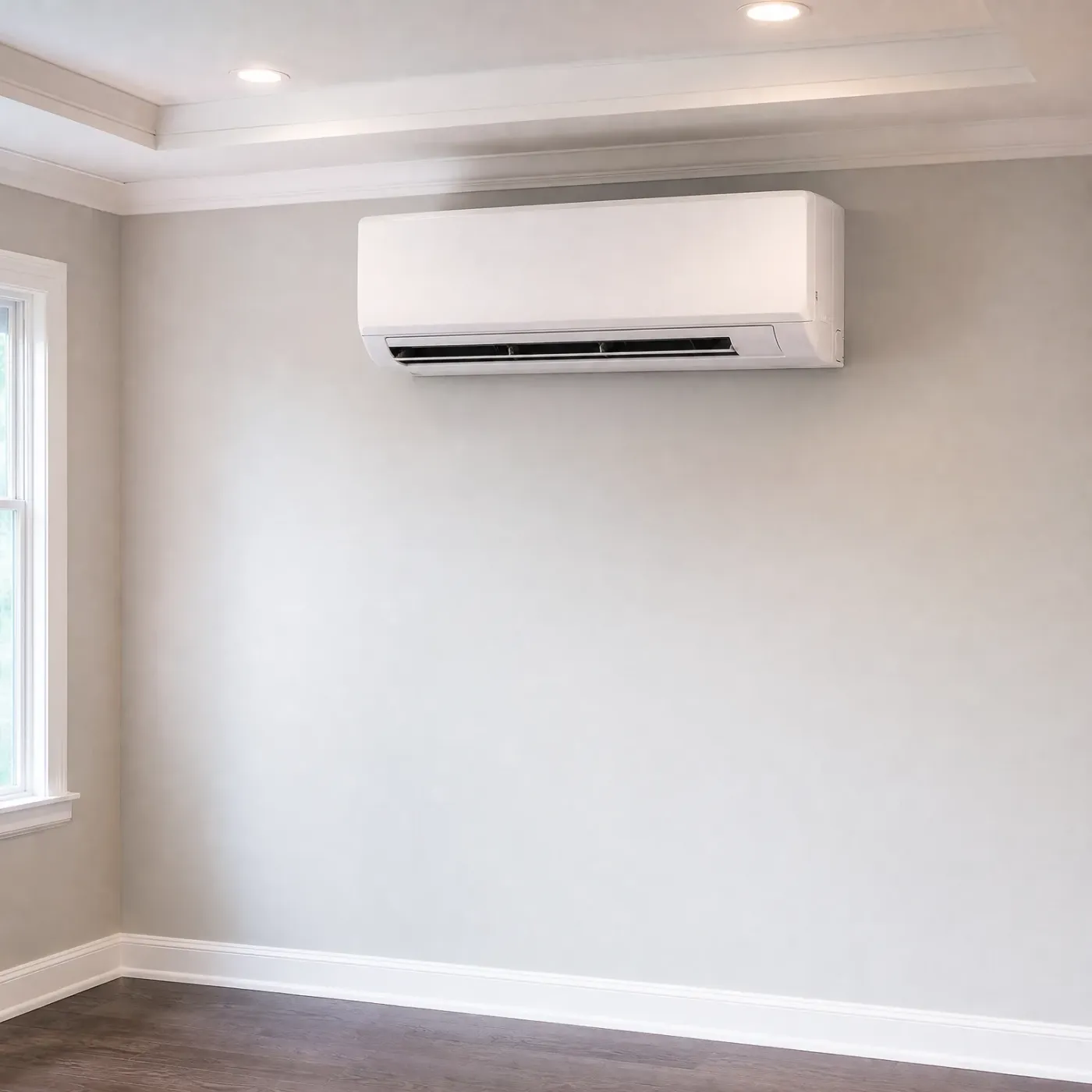
A burning smell when your mini split starts heating usually means dust burning off the heating element or coil, and it should clear up in a few minutes. That happens more in fall when the unit hasn't run heat in months. A musty smell is different. It points to mold or mildew growing in the indoor unit, often on the coil or in the drain pan, and it won't go away on its own. A plastic or chemical smell right after installation or a repair can mean wiring or a part is overheating, and that one is worth shutting the unit off for. Since most homes in Illinois heat with gas and only run the mini split for backup or supplemental heat, a smell might be the first sign something's off, since you won't notice daily like you would with your main furnace. Catching it now is a lot cheaper than catching it when the coil's full of mold or a wire's actually damaged.

The image doesn't match the smell though. It's July, late afternoon, and you're at your desk when you notice it: a wet streak down the wall under the indoor unit, soaking into the paint above the baseboard. You grab a towel and press it against the drywall, but the water keeps coming. The mini split is running cool air like always, condensation dripping somewhere it shouldn't. Illinois summers run humid, and this unit has been pulling moisture out of the air for months without a problem. Now water is finding its way into the wall instead of the drain line, and the longer it sits there, the more it smells like something other than dust.
No smell at all once the unit has been heating for a few minutes. The air coming off the indoor unit is just warm, nothing else. That's what a clean coil and a clean filter smell like, which is to say they don't smell like anything.
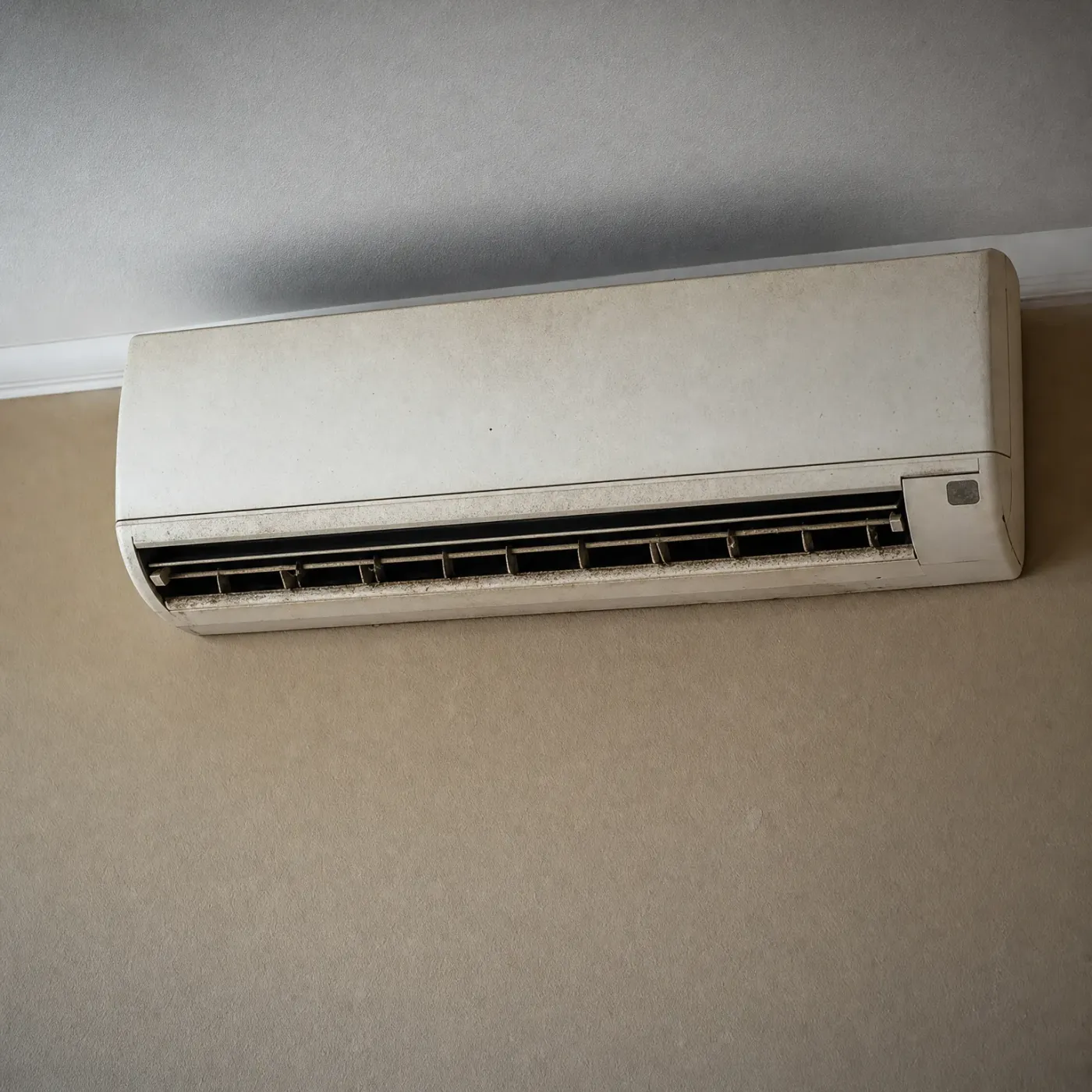
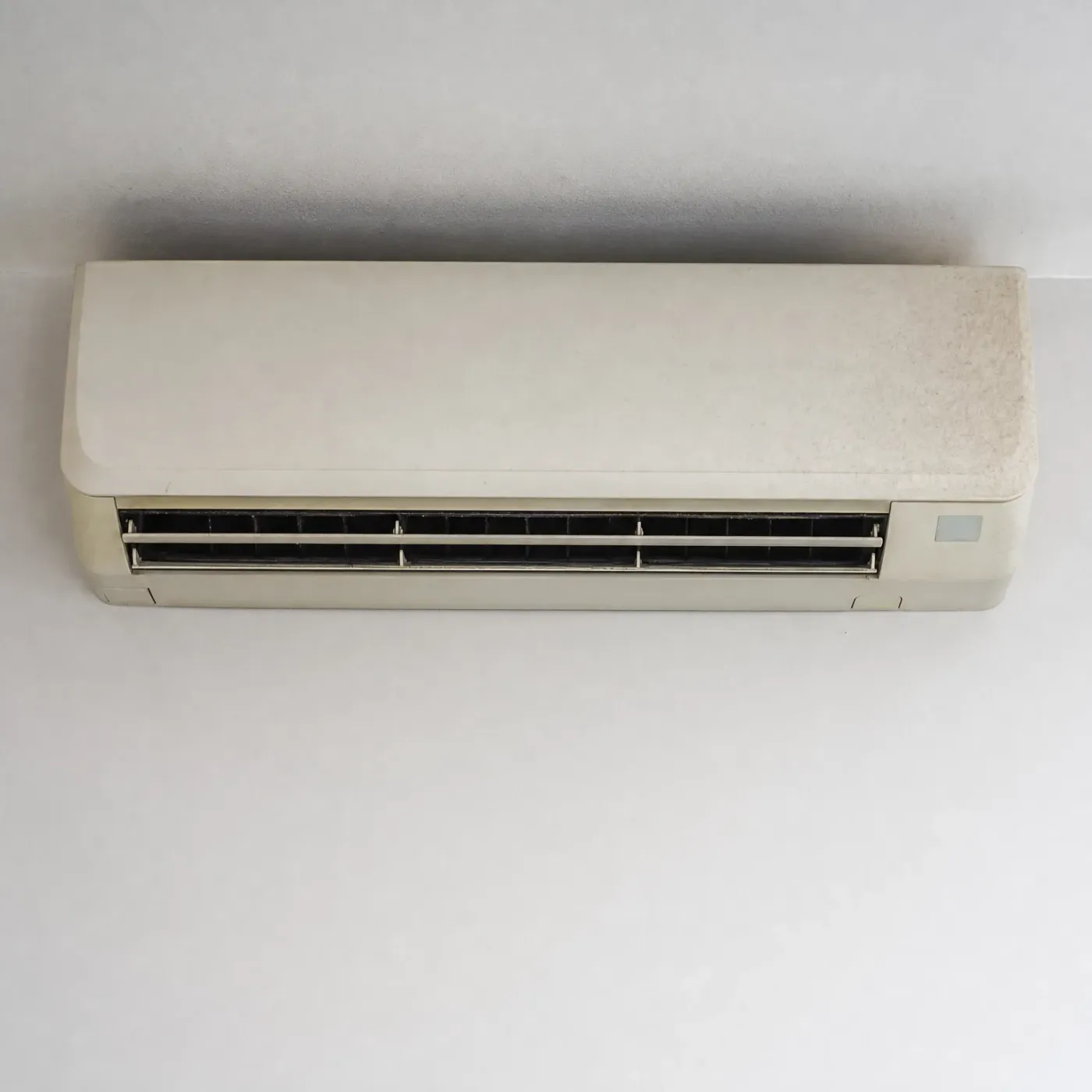
A film of dust sits along the vents and the lower intake grille, thick enough to see from across the room. That buildup is what scorches when the heat kicks on, and it's also what a contractor would need to clean out before the smell stops coming back.




A musty smell that keeps coming back every time the heat kicks on isn't dust burning off, and it won't clear up on its own. That smell is mold or mildew growing somewhere in the unit, usually on a coil that stays damp between uses. In Illinois, that's often tied to how the mini split ran all summer pulling moisture out of sticky air, and now that it's heating, it's pushing that smell through the same path. Finding out whether it's the coil, the drain pan or something behind the wall takes someone looking at the actual unit, not more guessing. Instead of calling around to find a contractor who works on mini splits, explaining the smell and when it happens to each one, then weighing quotes against each other, you can hand that off. One contractor who knows these systems gets your situation and reaches out, so you can get back to figuring out what's actually growing in there instead of just noticing it.
A mini split's indoor coil pulls moisture out of the air all summer. Some of that water sits as a thin film on the coil fins even after the unit switches to heat. Dust in the air settles onto that film and feeds mold instead of burning off clean. That's why the smell lingers instead of clearing in a few minutes like a dry-dust smell does.
Below the coil is a drain pan and a small condensate line that carries the water outside. If that line clogs with algae or dust, water backs up into the pan and sits there instead of draining. Standing water next to a dusty coil is exactly the combination mold needs. A contractor can check the line and pan directly, which isn't something you can see from the filter.
You've noticed the smell isn't constant. It shows up right when the unit switches on and kicks into heat mode, then it's gone, every single time. That pattern itself is a clue, and it's worth understanding before you decide whether this is something to leave alone or something to get looked at.
The smell shows up at startup because that's when the coil and heating element are warming from room temperature. Whatever is sitting on the coil, whether it's dust or a film of mold, only gives off a smell once it hits a certain temperature. A few minutes in, the coil is fully warm and stays at that temperature, so there's nothing new burning or growing to release a smell. If it's dust, that layer burns away the first time and won't come back until dust builds up again. If the same smell returns every time you switch on heat, the coil isn't burning the stuff off. It's growing it back between uses.
At 17.67 cents per kilowatt-hour, every hour your mini split runs heat with a dirty coil costs you more, since a unit fighting through mold or dust buildup pulls more power to push out the same heat. A quick inspection now beats a bigger power bill or a bigger repair later.
EIA-861 2025 statewide residential average



You already know which one you're dealing with. If the smell burns off in the first few minutes and doesn't come back, that was dust on the heating element, and you're done thinking about it until next fall. If it keeps coming back every time the unit kicks into heat, that's the coil, and it won't clear up on its own no matter how many times you run it.
A dirty or moldy coil doesn't get better by waiting, and in the meantime it's pulling more power to do the same job while Illinois electric rates sit where they are. Instead of searching around for someone who works on mini splits, calling a few places, and explaining the smell and when it happens all over again to each one, you can skip that part. Answer a few questions about what you're noticing and a contractor who handles this equipment will reach out to you directly about what to do next.


Answer a few questions instead of calling shop after shop.
Asking costs nothing, and the choice to hire stays yours.