Running clean
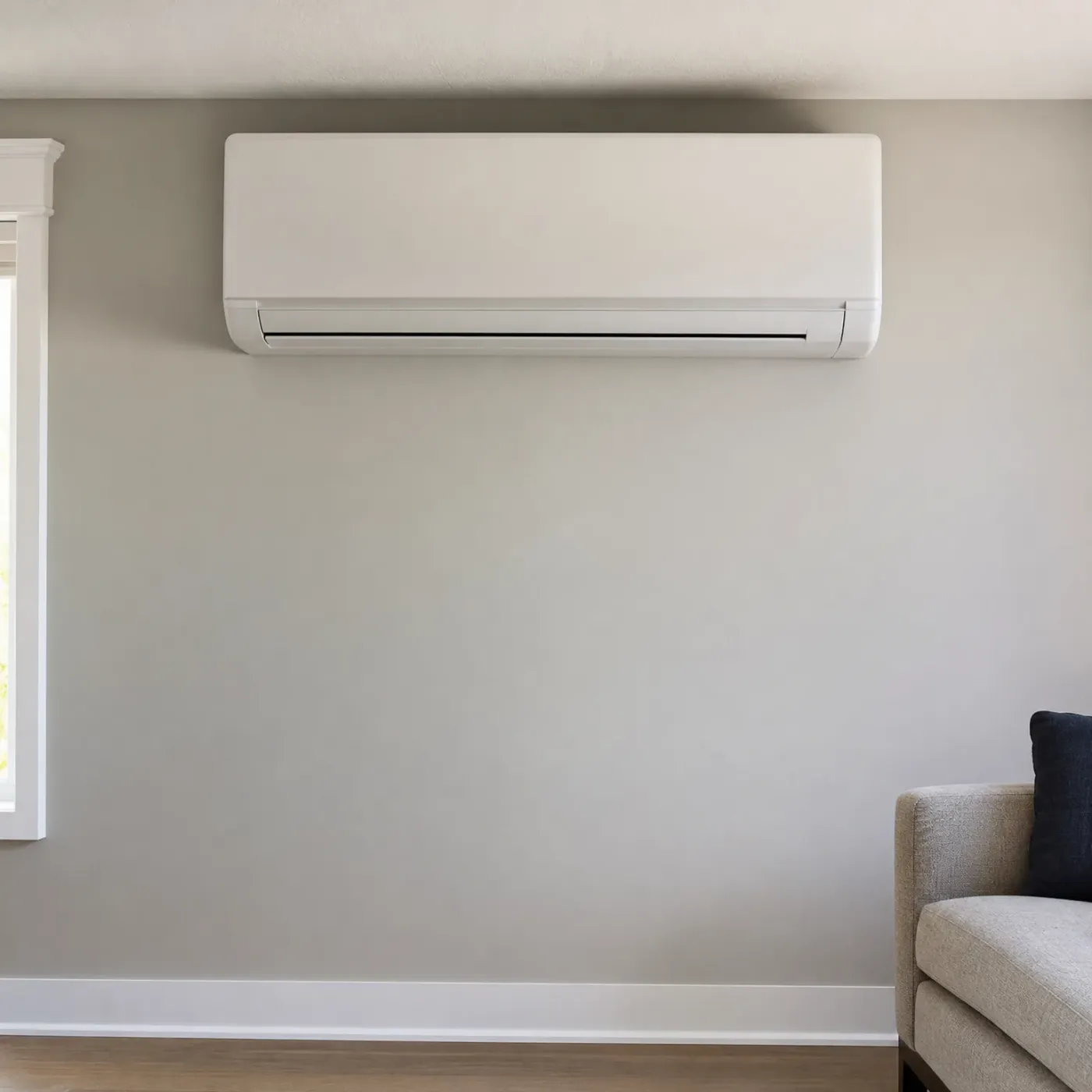
A clean mini split pulls warm air out of a room with no fuss, the head quiet above the window. Outside, the coil stays clear and the system cycles on its own schedule, not fighting ice. Nothing about it asks for your attention.

A mini split that won't turn on in a cold snap is usually stuck in defrost, locked out by its own safety controls, or frozen solid on the outdoor coil. Below freezing, frost builds up on that outdoor unit, and the system has to pause heating every so often to melt it off before it can keep going. In a hard Illinois cold stretch, nights well below 20 degrees, that cycle runs harder and longer, and some units will shut down and refuse to restart if ice gets ahead of the defrost cycle or if airflow is blocked by snow or ice around the outdoor unit. A unit that was sized or installed for shoulder-season use can struggle once temperatures drop hard. None of this means the system is ruined. It means something in the defrost control, the sensor reading the coil temperature, or the outdoor unit itself needs a licensed technician to look at it before it will run again.
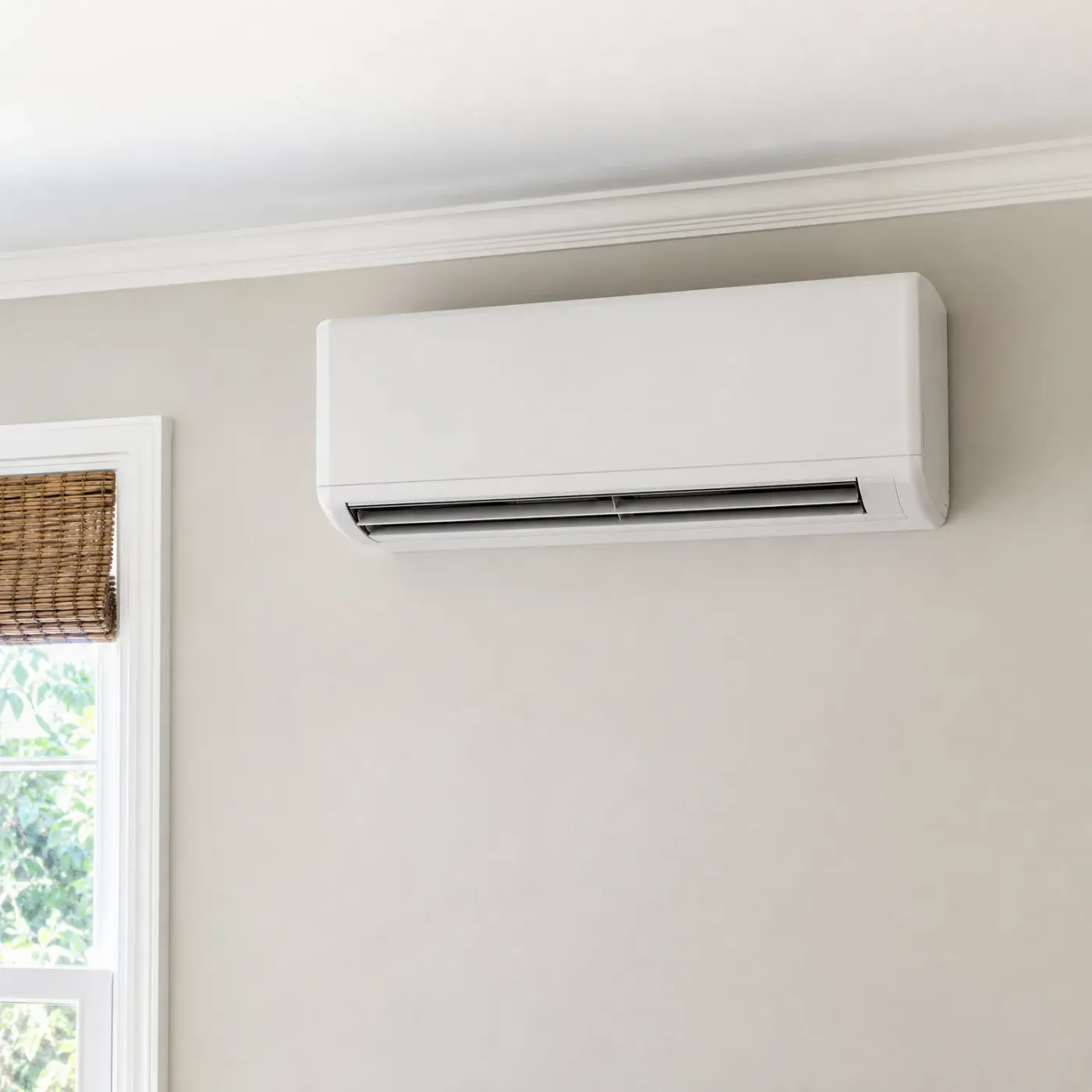
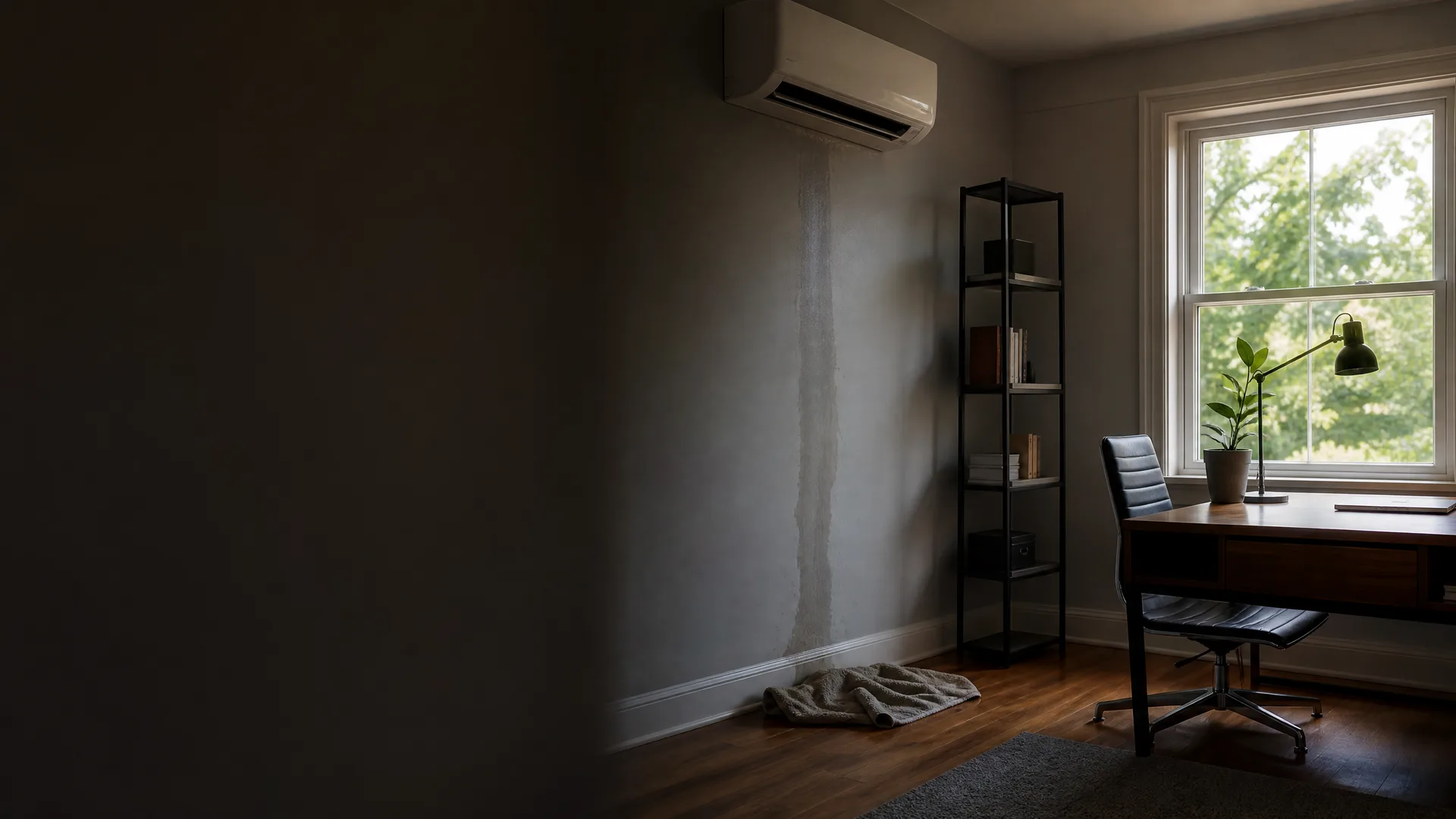
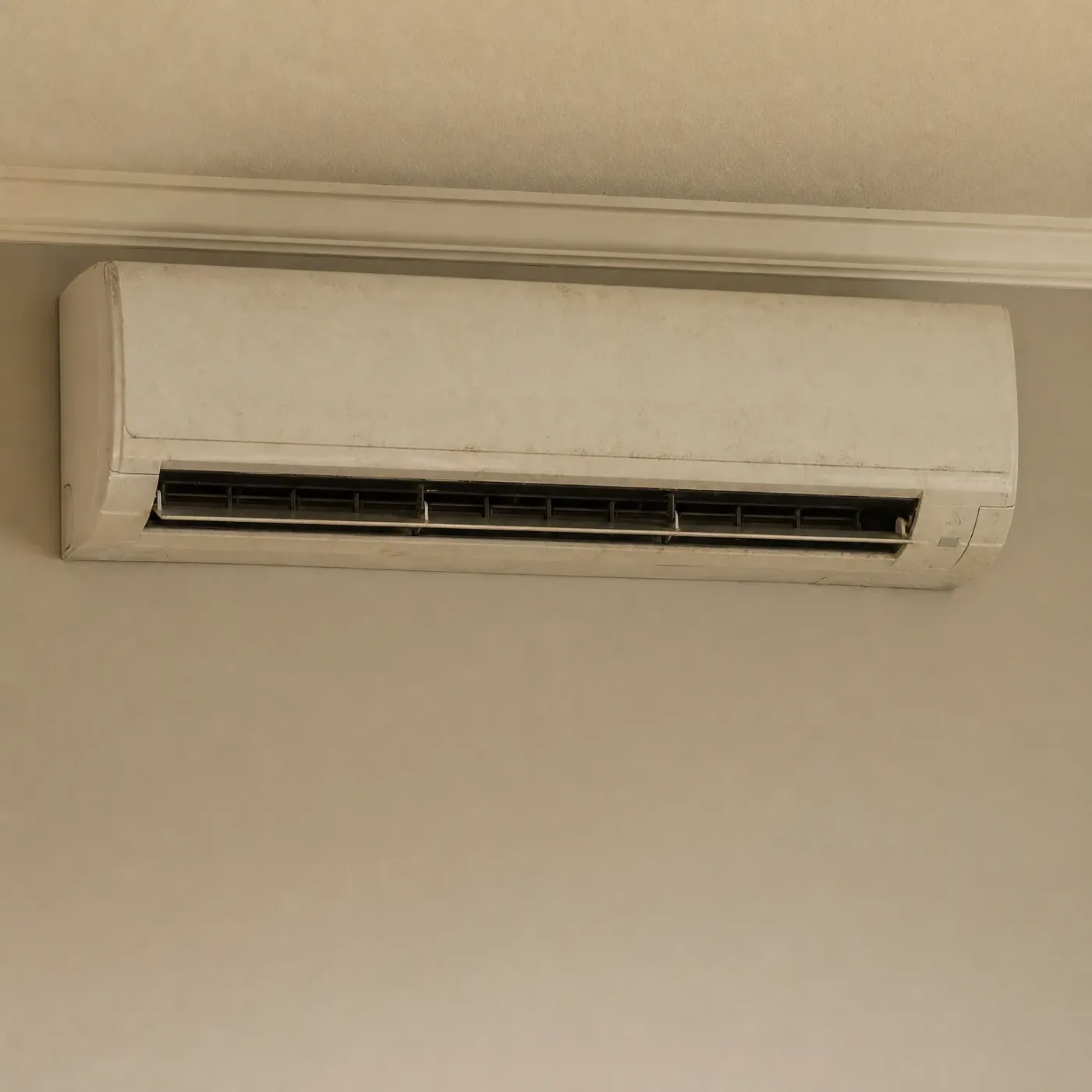
Wrong room, wrong season for this one, but here's the moment anyway. This one's wrong on purpose, since the image shows summer, not January.
It's a July afternoon and you're at the desk in your home office, the mini split humming above you, when you notice the wall under it looks dark. You get up and find a wet streak running down the drywall, and the carpet below is already damp. You grab a towel and press it against the baseboard, trying to figure out how long it's been dripping. Outside, it's the kind of sticky Illinois afternoon that makes you run the system all day, and you wonder if that's what pushed it past whatever it could handle.
You walk past the outdoor unit and see ice built up across the coil, maybe even on the lines running to the wall. Inside, the head is blowing cold air or no air at all, and the display is flashing a code you don't recognize. Sometimes it runs for a few minutes, stops, and won't start again no matter how many times you hit the remote. If this is your only heat in that room, or you've let it run this way for days without checking, you're looking at a bigger repair than if you'd caught it the first night it happened. A unit that keeps locking out isn't resetting itself back to normal.




Your mini split's outdoor unit is built to handle frost. When the coil gets cold enough to ice up, the system reverses itself for a few minutes, sending hot refrigerant outside instead of in, so the indoor head goes quiet or blows cool air while the coil clears. That's normal and it corrects on its own. What isn't normal is a unit that won't come back afterward. The system relies on a thermistor to track coil temperature, and if that sensor is reading wrong, it can skip defrost entirely or refuse to restart once the cycle ends. A code flashing on the display usually means the control board shut things down on purpose, to protect the compressor, not that the compressor itself has failed. If ice is building up faster than the unit can clear it, that often points to refrigerant running low or the outdoor fan not pulling enough air across the coil. And on some models, once a fault gets logged, the system stays locked out even after the ice is long gone, until that code gets cleared by someone who can read it.
A mini split that sits dead during an Illinois cold snap is not a problem to puzzle over on your own. You've already read why it happens: frost on the coil, a safety lockout, a defrost cycle that mimics a failure. Knowing the cause doesn't put heat back in the room, and most of this state leans on gas furnaces for that, so a mini split stuck off can leave one room genuinely cold while you figure out what to do next. The usual next step is calling around, explaining the symptoms to whoever picks up, waiting on callbacks, then doing it again with the next name on the list, all while electricity here costs more than it does almost anywhere nearby and a system left alone doesn't fix itself. Sending this request means you stop doing that. One contractor who works on mini splits gets what you've described, and the search that was yours to do is no longer yours to do.
A clean mini split pulls warm air out of a room with no fuss, the head quiet above the window. Outside, the coil stays clear and the system cycles on its own schedule, not fighting ice. Nothing about it asks for your attention.
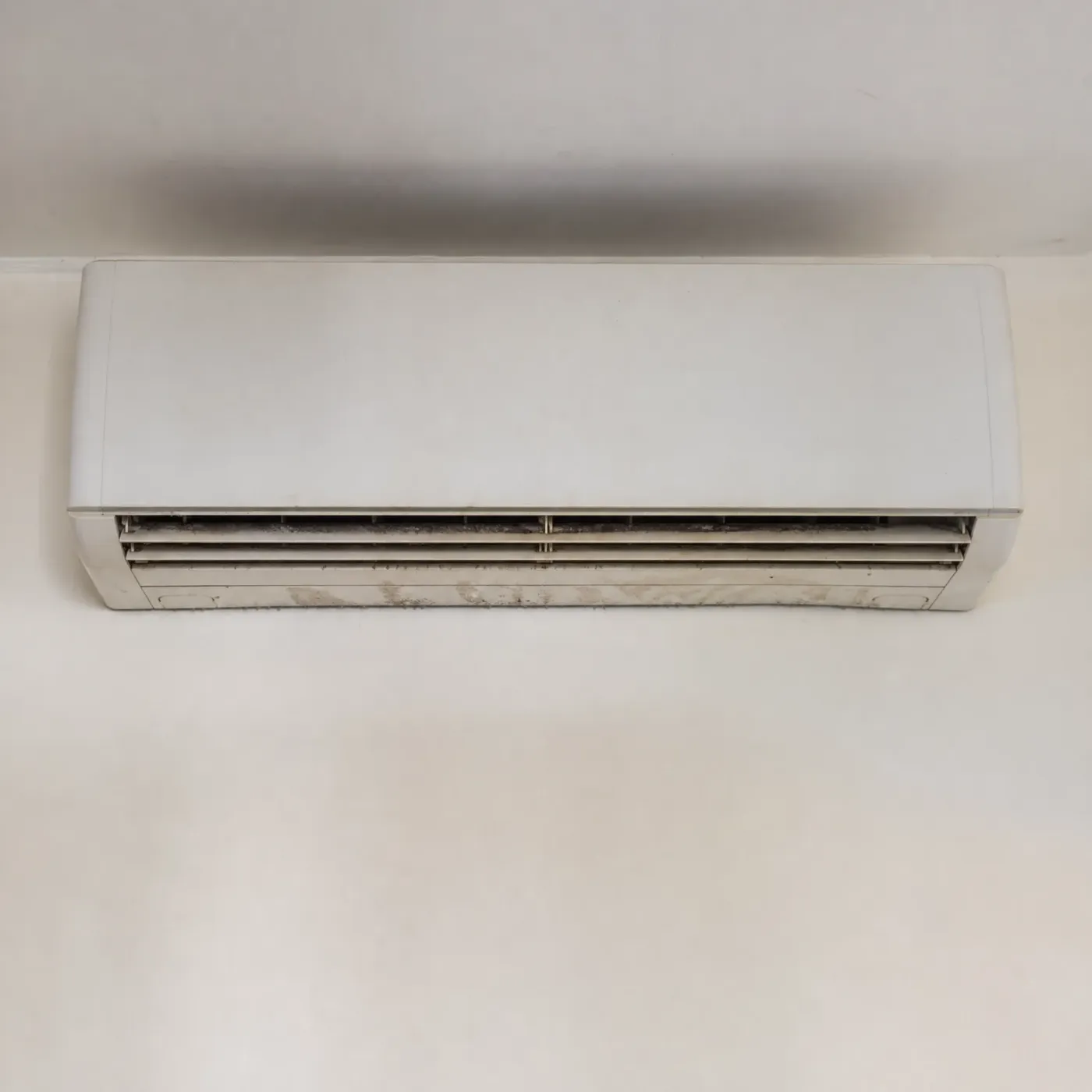
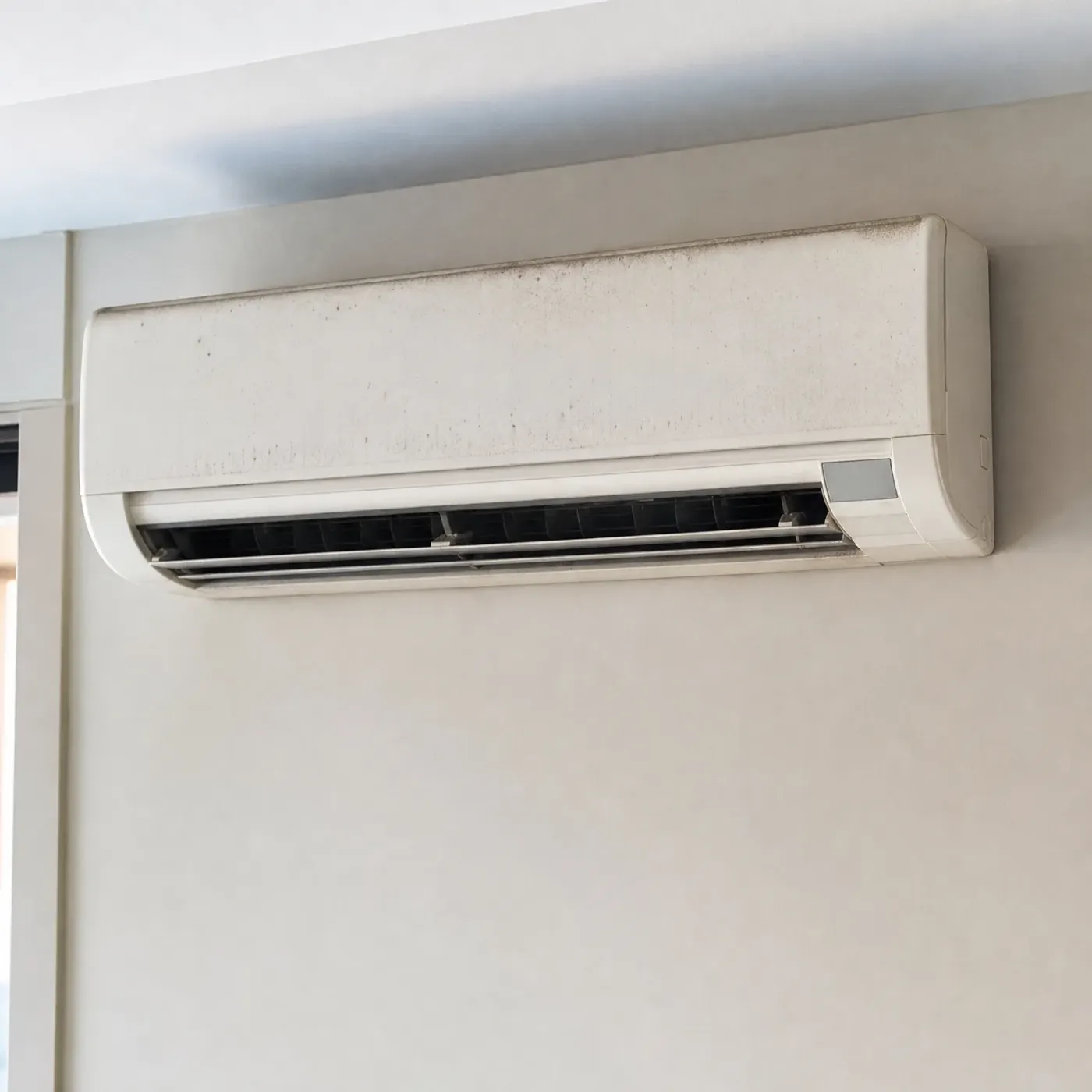
Dirt and mold along the vents and lower casing mean the coil underneath is just as neglected. A unit in this state can't shed frost the way it should in an Illinois cold snap, and it's more likely to lock out and sit dead instead of cycling back on.



That 63°F summer dew point, averaged across Illinois homes by NOAA, is what makes your mini split work hard all summer pulling moisture out of the air, not just cooling it. That load matters once winter hits. Come a cold snap, the same system is trying to pull heat out of 20-degree air instead, and it's the outdoor coil, worn down by a summer of heavy dehumidifying, that has to shed frost fast enough to keep up. A coil that went into winter dirty or strained has less margin, and a unit with less margin is the one that locks out and won't turn back on.
NASA POWER T2MDEW county cells weighted by homes
You've checked the breaker, the remote has fresh batteries, and the thing still sits dead. Before anyone touches it, you want to know what's going on inside the cabinet itself, not just the list of possible causes. There's an actual sequence happening in there, a reason it picked this moment to quit, and it helps to know it before a contractor shows up.
Inside the outdoor unit, a sensor on the coil tracks temperature, and the control board compares that reading against limits built into its programming. When frost gets too thick or refrigerant pressure moves outside its range, the board cuts power to the compressor rather than let it run into damage. That's the lockout. It isn't random, and it isn't the board failing. It's doing its job. The problem is whatever pushed the readings past the limit in the first place, usually ice the system can't clear fast enough once outdoor temperatures in Illinois drop well below freezing. Until that gets cleared and the fault reset, the unit stays off no matter how many times you cycle the remote.
The outdoor coil senses frost building past a set thickness.
The reversing valve switches the system into defrost mode.
Hot refrigerant routes through the outdoor coil to melt the ice.
The indoor fan shuts off so it won't blow cold air.
That rate matters most when a mini split sits dead and you're leaning on gas heat or space heaters to cover the gap. Every hour spent running backup heat while it's down costs more here than in most states.
EIA-861 2025 statewide residential average
A mini split that won't come on in an Illinois cold snap is telling you something specific. It's frozen on the outdoor coil, locked out by a safety control, or stuck mid-defrost, and each of those is the system protecting itself, not failing outright. The frost means it's shutting down to keep from damaging the compressor. The lockout means it sensed something outside normal range and stopped rather than push through it. The defrost cycle means it's doing exactly what it's built to do, even though the cold air or silence from the indoor head makes it feel broken. None of that tells you whether the fix is simple or whether something underneath has actually failed, and that's the part that needs a contractor's eyes on it, not a guess from the kitchen table.
What changes once you send the form is what's no longer on your plate. You're not searching through listings trying to tell which company actually works on mini splits versus central systems. You're not calling two or three places, describing the ice on the coil and the flashing display to each one, then doing it again when the first one can't come out soon enough. You're not sitting with quotes side by side trying to guess which number is fair. That search and that comparing is work, and it's work that happens while the house is cold and the backup heat is running. Handing it off doesn't make the repair itself faster or cheaper. It just means the next call you get is from someone qualified to look at the unit, instead of being the fifth call you made trying to find them.

No charge to send it. You decide if you hire them.
A mini split that sits dark through a cold snap means gas and space heaters covering the gap, and Illinois power rates make that expensive fast. Sending the request now means you stop hunting for who can look at it and start waiting for someone who will.